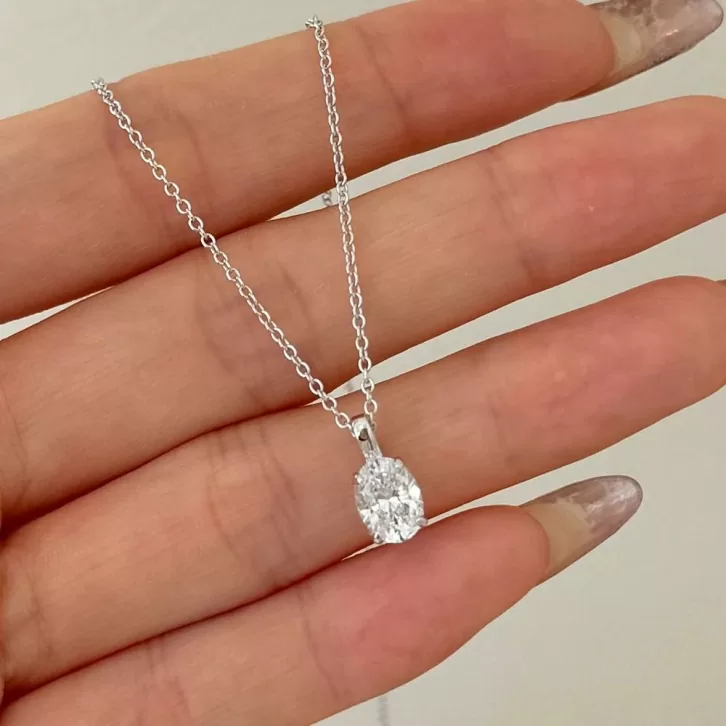
Hardness is one of diamond's defining traits. At 10 on the Mohs scale, it cannot be scratched by any other natural gem or by everyday surfaces. But the same property that makes diamond indestructible also means it is capable of scratching almost anything softer that comes into contact with it. That matters for how you store and wear the rest of your jewellery.
The Mohs scale in everyday terms
Diamond is 10. Moissanite is 9.25, sapphire and ruby 9, and most other gems — emerald, aquamarine, topaz, garnet, quartz — sit between 7 and 8.5. Gold, platinum, and silver fall around 2.5 to 4.5, far softer than a diamond's edge. When a diamond rubs against a gold band over and over, the gold is the material that gives way. This is the same reason our diamond vs moissanite hardness comparison emphasises toughness alongside hardness.
Does a diamond scratch other rings?
Yes. Wearing a diamond solitaire next to a plain wedding band is normal and safe, but over years the band can develop fine scuffs where the stones meet. More noticeable is what happens inside a jewellery box: a loose diamond ring tossed next to a soft silver bangle will leave fine lines on the bangle's surface. You rarely notice it day to day, but over months the softer piece loses its mirror finish.
Does a diamond scratch glass or surfaces?
It can. A diamond ring dropped onto a glass table can chip or crack the glass, and the pavilion edge dragged across a glass screen will leave a mark. This is also why the old "scratch glass" test for real diamonds is unreliable — plenty of imitations can also mark glass, and the test risks damaging the stone. The safer route to identifying a stone is covered in diamond vs cubic zirconia.
Can a diamond scratch another diamond?
Yes. Two diamonds rubbing together can scratch each other, because they are the same material. More commonly, a diamond's girdle or corner chips against a neighbouring diamond in a pavé setting if prongs loosen. This is why routine prong checks at home matter — a loose stone that clatters against its neighbour can damage both.
What about moissanite, sapphire, and gems
Moissanite at 9.25 can be scratched by a diamond, though rarely in normal wear. Sapphire and ruby at 9 are close enough to diamond that contact is mostly harmless. Softer gems — pearls, opals, emerald, turquoise — should never be stored loose with diamond pieces. Our habits that damage rings guide lists contact as one of the avoidable causes of wear.
How to protect the rest of your jewellery
The fix is storage, not avoidance. Keep diamond pieces in individual soft pouches or separate compartments rather than loose in one box. Our guide to jewellery storage shows the layout that works. When travelling, wrap each stone separately as covered in travelling with jewellery. At home, take off rings before sleeping so they do not grind against your other hand overnight.
When to worry
A few fine scuffs on a band are normal and part of the patina. But if a softer gemstone develops fresh scratches for no reason, or a gold band suddenly looks rougher, it is worth checking whether the diamond setting's prongs are catching. A jeweller can smooth and polish the affected area, usually as part of the repair and rhodium plating service.
Signs your jewellery is being rubbed
You will notice the effect long before it becomes serious. A gold band worn beside a diamond ring starts to look faintly polished on one edge; a silver bangle develops a matte patch where it rested against a stone; a soft gem suddenly picks up fine lines you do not remember. These are not defects in the piece — they are the contact pattern of harder against softer metal. Once you see them, the fix is simple: separate the pieces, store them in their own pouches, and consider whether the rings truly need to be on the same finger. For a deeper look at contact and storage, our long-term jewellery storage guide is the next read.
By contrast, two gold bangles rubbing together, or silver on silver, wear each other down only slowly. Diamond is the outlier because it sits so far up the hardness scale. Once you understand that, the rule is simple: let the hard piece have its own space, and the softer pieces keep their finish for far longer. This is the same storage logic behind removing your ring overnight.
A diamond will not break under normal use. It will, however, leave its mark on anything softer stored against it. Treat the stone as the strong piece in the room, give it its own space, and the rest of your jewellery stays untouched.
The Wikipedia article on rhodium explains why rhodium plating is applied to white gold and silver jewellery.
Related Reading
- Sweat and Jewelry: Which Metals Survive Everyday Wear
- Cleaning Jewelry: Which Cloths Actually Scratch Your Pieces
- Cleaning Moissanite: Why Toothpaste Is the Wrong Cleaner
Frequently Asked Questions
Is moissanite a good diamond alternative for retail buyers?
Yes for price-sensitive customers who want brilliance and hardness. Moissanite ranks 9.25 on the Mohs scale, holds up to daily wear and costs a fraction of a natural diamond of the same size, so it resells fast in bridal and fashion lines.
What is the minimum order for wholesale moissanite?
MOQ starts at 50 pieces per design for stock items. Custom cuts and private-label settings usually start at 100–300 pieces depending on the mold.
Do you provide certificates with moissanite stones?
Yes. Every parcel ships with GRA or IGI documentation listing carat weight, color grade and cut. We recommend passing the certificate to your end customer for trust.
How long does sample and bulk production take?
Samples ship in 3–5 days. Bulk runs take 15–20 days under 500 pieces, and 25–30 days for custom work.


