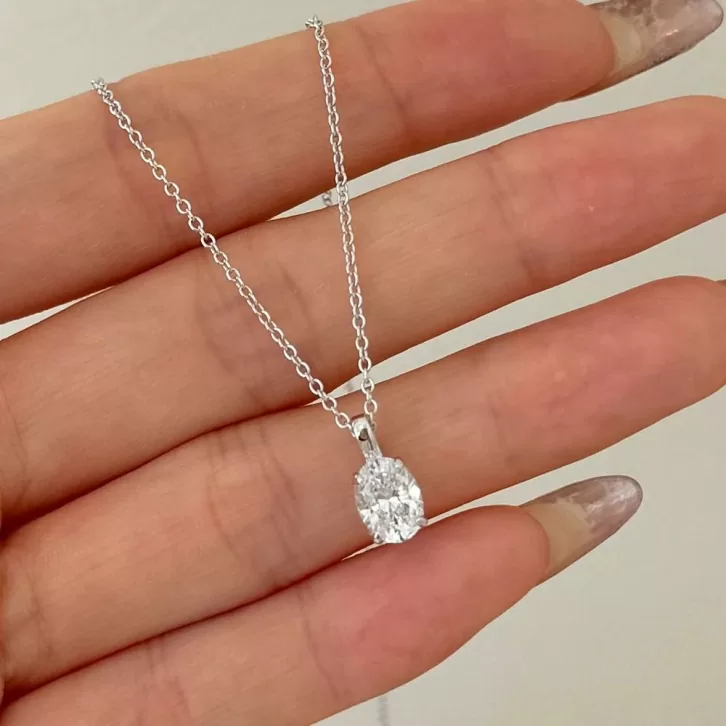
You are on holiday, the pool is warm, and you hesitate for half a second before jumping in with the engagement ring still on. Half a second is usually enough to decide. Most rings survive a single dip without drama. The trouble is that "one more time" adds up over years of summers, hotel hot tubs, and gym showers. Here is what the water actually does, and when the risk tips from tiny to real.
Cold water shrinks fingers
Body temperature drops in cool water, and fingers shrink along with it. A ring that fits snugly at room temperature can slide around in a pool. Combine that with a slippery hand on a pool ladder, a wave, or a dive, and the ring has a real path to the bottom. Divers and lifeguards know this well; it is why almost all of them work bare-handed. The diamond itself does not care about the water. The gravity part does.
Chlorine and white gold
Chlorine does not attack a diamond, and it does not harm platinum. It does, however, slowly affect white gold over years of repeated exposure. White gold is alloyed with nickel or palladium and plated with rhodium. Long-term chlorine contact can pit the gold alloy, weaken the solder joints, and strip the rhodium faster. Hot tubs are worse than pools because the heat accelerates the chemical reaction. A single summer afternoon will not do it. Fifteen years of weekly swims will.
Soap and shampoo in the shower
Hotel and gym showers are the quiet culprit. Soap residue makes prongs slick and makes the ring easier to nudge off on a wet hand. Most lost engagement rings are not lost in the ocean; they are lost in a bathroom, slipped off to wash hands, left on the edge of a basin, and swept into a bin. Our guide to storing a ring overnight covers the small dish habit that prevents this.
Saltwater and the beach
Saltwater is gentler on metals than chlorine, but sand is a separate problem. Sand is quartz, which rates 7 on the Mohs scale. It will not scratch a diamond, but it will scratch gold and platinum, and it can wedge under prongs. A ring washed in seawater needs a fresh-water rinse and a soft brush behind the stone to clear the grit.
What to actually do
The simplest rule is the safest one. Leave the ring in the hotel room, in the pouch it came with, not by the sink or on the pool edge where housekeeping can move it. If you must wear it, take it off before you get in, not after. Once a season, give it a warm soak and a soft brush to rinse off the chlorine and salt. And once a year, have a jeweller check the prongs; our prong check guide shows the monthly home version.
What about moissanite?
Moissanite owners face the same practical risks: shrinking fingers, slippery soap, and chlorine on the setting. The stone itself, rated 9.25 on Mohs, is more than hard enough for pool water. The setting is the weak point, exactly as it is for a diamond. Read more in moissanite cleaning and care.
The insurance angle
If your policy covers mysterious disappearance, a ring lost on holiday should be claimable. Filing a claim abroad is a paperwork slog, though, and most people would rather keep the ring than claim for it. The cheap insurance of taking the ring off before you swim beats the paperwork of replacing it after.
Bottom line
A single dip will not ruin a diamond or a moissanite. The slow wear on the setting, plus the one time a finger shrinks and the ring slips, is what costs people. Make "off before I get in" the default. The ring will look better, the prongs will last longer, and you will never have to explain to a partner why a beach holiday ended with a dive into the shallows.
The hotel room problem
The flip side of taking the ring off is knowing where to put it. Do not leave it on the bathroom edge, do not wrap it in a tissue that looks like trash, and do not tuck it into a beach bag that gets set down unattended. Use the small pouch the ring came in, drop that pouch into your wash kit, and keep the wash kit with you. Hotels have safes, but the most common lost-ring story is not a break-in; it is a guest forgetting where they put the pouch the night before checkout.
After-swim care
If you do wear the ring swimming, give it a rinse under fresh water as soon as you are out. Pool water leaves a thin film of chlorine on the gold, and seawater leaves salt crystals under the prongs. A thirty-second rinse and a dry with a towel removes both before they have time to work. Once a season, follow that with a warm soapy soak and a soft brush behind the stone. That habit alone keeps most rings looking new for decades.
Rhodium plating, which gives white gold jewellery its bright finish, is covered in the Wikipedia article on rhodium.
Related Reading
- Sweat and Jewelry: Which Metals Survive Everyday Wear
- Cleaning Jewelry: Which Cloths Actually Scratch Your Pieces
- Cleaning Moissanite: Why Toothpaste Is the Wrong Cleaner
Frequently Asked Questions
What ring sizes can you supply in bulk?
US sizes 5–12 including half sizes. Send a size breakdown with your order and we cast to that curve; comfort-fit inner bands reduce resize requests.
Can I order a mixed size run instead of one size?
Yes. Mixed runs are standard for wholesale: specify quantity per size and we pack and label by size at no extra labor cost.
What is the MOQ for custom ring designs?
50 pieces per design for existing molds; 100–300 pieces when a new mold or CAD model is required.
How should I price rings for retail margin?
Most partners use a 3–4x markup on FOB cost for sterling and 2.5–3x for moissanite solos, which keeps landed cost under 30% of retail.


