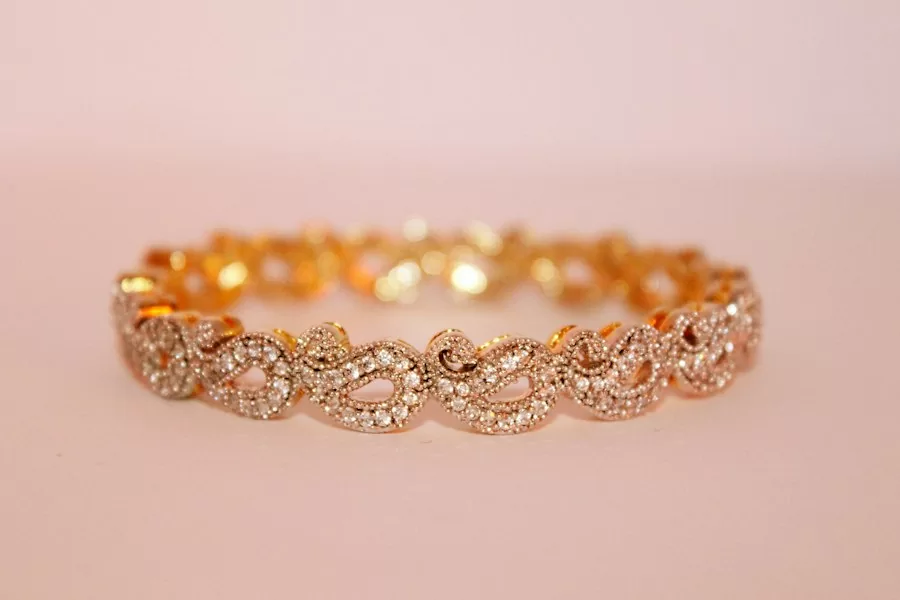
One of the reasons people choose moissanite for daily wear is that it resists scratches far better than most gemstones, sitting at roughly 9.25 on the Mohs scale, just below diamond. Durable does not mean invisible to grime, though. The very faceting that throws its rainbow fire also traps skin oils, soap residue and hand cream, and that thin film is enough to make a brilliant stone look dull and gray within weeks.
The safest at-home method
Fill a small bowl with warm water and a few drops of mild dish soap. Let the ring soak for twenty minutes to soften the film around the pavillion and the prongs. Then use a soft, lint-free brush, like a clean makeup brush, to gently sweep around the basket and under the stone, where lotion and soap accumulate invisibly. Rinse thoroughly under warm running water, ideally with a drain stopper in place, and pat dry with a lint-free cloth. That routine removes most of the buildup that mutes the fire, and it works on the setting as well as the stone.
How often to clean
How fast your ring clouds depends on your skin. Oily skin, frequent hand-washing, cooking and regular lotion use all build film faster. A realistic target is a gentle clean every two weeks, with a deeper soak once a month. You can follow the general rhythm in how often to clean an engagement ring, because moissanite and diamond rings are cared for the same way at home.
Ultrasonic and steam
Moissanite itself is stable enough for most home ultrasonic cleaners, and many owners use them with good results. The caution is not about the stone but about the setting: vibrations can loosen prongs over time, and a ring set with softer accent stones may not tolerate the same treatment. Steam cleaning carries a similar risk, especially on older mounts or plated white gold. When in doubt, stick to the warm-soap method, which is always safe. If you already own an ultrasonic machine, follow best-practice home cleaning and inspect the prongs afterward.
What to avoid
Bleach and chlorine can damage the metal mount, especially white gold that relies on rhodium plating, so take the ring off before swimming or cleaning with chemicals. Abrasive toothpaste, baking soda pastes and stiff brushes can scratch the metal finish even if they will not scratch the moissanite. Perfume, hairspray and lotion should go on before the ring, not after, because those products leave the waxy film you are trying to remove. Harsh jewelry dips marketed as "instant shine" usually strip plating rather than clean the stone, so skip them.
Check the prongs while you clean
Since moissanite is hard and brittle rather than tough, a sharp knock can chip an edge even though it resists scratches. Every few weeks, look at the stone through a magnifier and run a finger around the girdle. If a prong catches on clothing or the stone feels loose, stop wearing it until a jeweler checks it. Combine this with the routine described in checking ring prongs, and do not wait for a loose stone to book the appointment.
Keeping the fire bright for years
A well-cared-for moissanite keeps its double-refracted sparkle for decades, and its near-colorless grade does not fade with cleaning. The work is small: a monthly soak, a soft brush, and a jeweler check once a year to tighten prongs and refresh any plating. Treat the ring with ordinary care, and you will not need to replace it because it lost its shine.
What the setting needs
The stone itself needs almost nothing beyond cleaning, but the setting ages on its own. White gold rings are rhodium-plated, and that plating wears off over one to two years, leaving a slightly warmer tint. Platinum develops a soft patina rather than wearing thin, and yellow gold simply shows surface scratches. None of these are damage; they are normal wear. A jeweler can re-plate white gold and polish out light scratches, which restores the finish without touching the moissanite. Plan that refresh every year or two, and the ring keeps looking new.
When to see a professional
If the stone ever looks dull even after a warm-soap clean, or if you see a crack rather than surface film, stop wearing it and have it checked. A chip on the pavilion edge can spread if ignored, and a loose stone can fall out if the prongs go unchecked. The at-home routine handles ordinary buildup, but an annual inspection catches the problems you cannot see.
Between visits, the ring needs nothing more than the same common sense you would give any fine jewelry: take it off before harsh work, keep it away from chemicals, and give it a gentle clean when the sparkle starts to look soft. That is enough to keep a moissanite ring looking fresh for the whole of its long life.
The Wikipedia article on rhodium explains why rhodium plating is applied to white gold and silver jewellery.
Related Reading
- What Is Moissanite Complete Guide to Quality - HOLYCOME
- Moissanite Hardness Durability and Care Guide - HOLYCOME
- What Is Moissanite Complete Guide to Properties Value and Care - HOLYCOME
Frequently Asked Questions
Is moissanite a good diamond alternative for retail buyers?
Yes for price-sensitive customers who want brilliance and hardness. Moissanite ranks 9.25 on the Mohs scale, holds up to daily wear and costs a fraction of a natural diamond of the same size, so it resells fast in bridal and fashion lines.
What is the minimum order for wholesale moissanite?
MOQ starts at 50 pieces per design for stock items. Custom cuts and private-label settings usually start at 100–300 pieces depending on the mold.
Do you provide certificates with moissanite stones?
Yes. Every parcel ships with GRA or IGI documentation listing carat weight, color grade and cut. We recommend passing the certificate to your end customer for trust.
How long does sample and bulk production take?
Samples ship in 3–5 days. Bulk runs take 15–20 days under 500 pieces, and 25–30 days for custom work.


