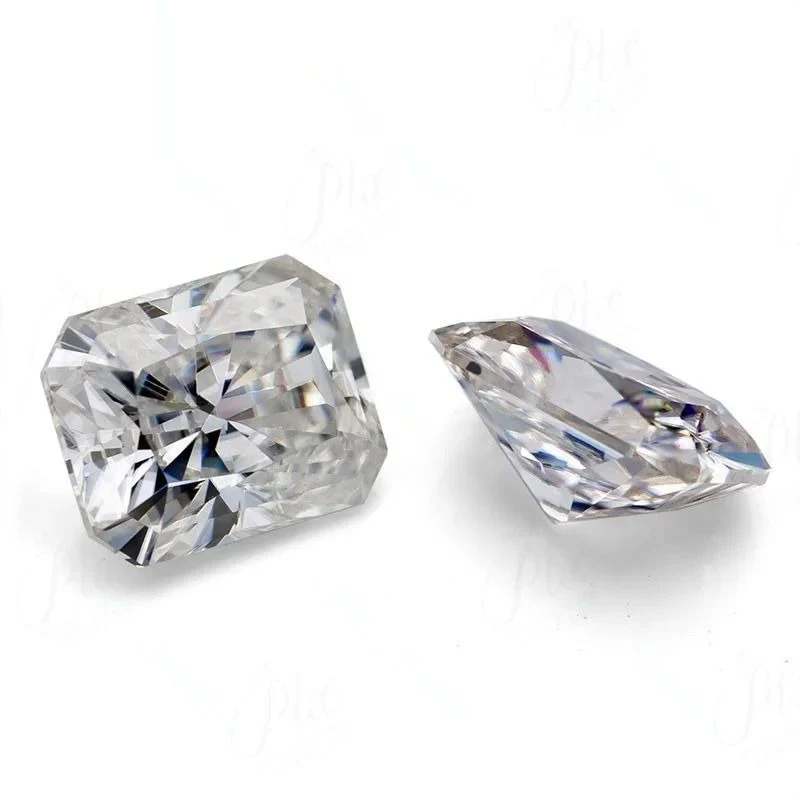
What Is Moissanite Complete Guide to Properties Value and Care - HOLYCOME
Moissanite has become one of the most popular diamond alternatives in fine jewelry over the past decade, appearing everywhere from engagement rings to tennis necklaces to men's chains. But many buyers and even some jewelers do not fully understand what moissanite is, where it comes from, how it compares to diamond, and how to care for it properly. This guide from HOLYCOME covers moissanite from its scientific origins through to purchase, wear, and maintenance, giving consumers and retailers a complete reference.
What Is Moissanite?
Moissanite is silicon carbide (SiC), a crystalline mineral first discovered by French chemist Henri Moissan in 1893 while examining rock samples from the Canyon Diablo meteor crater in Arizona. Moissan initially thought he had found diamonds, but further analysis revealed a new mineral composed of silicon and carbon, which was named moissanite in his honor.
Natural moissanite is extraordinarily rare, occurring only in tiny quantities in certain types of meteorites, kimberlite, and upper mantle rock. The moissanite sold in jewelry today is not mined - it is grown in laboratories using thermal crystallization processes that produce large, gem-quality silicon carbide crystals. All commercial moissanite is lab created, which makes it an ethically attractive and affordable alternative to mined diamonds.
Physical and Optical Properties
Moissanite's properties make it a genuinely exceptional gemstone in its own right, not merely a diamond imitation.
| Property | Moissanite (SiC) | Diamond (C) | Cubic Zirconia (CZ) |
|---|---|---|---|
| Chemical formula | SiC (silicon carbide) | C (carbon) | ZrO2 (zirconium oxide) |
| Mohs hardness | 9.25 | 10 | 8-8.5 |
| Refractive index | 2.65-2.69 | 2.42 | 2.15-2.18 |
| Dispersion (fire) | 0.104 | 0.044 | 0.060 |
| Specific gravity | 3.22 | 3.52 | 5.6-6.0 |
| Critical angle | ~21.7° | ~24.4° | ~27.7° |
| Thermal conductivity | High (tests as diamond on basic testers) | Very high | Low |
| Toughness (resistance to chipping) | Excellent | Good | Fair |
Several points are worth highlighting. At 9.25 Mohs, moissanite is harder than every other gemstone except diamond - harder than sapphire (9), ruby (9), emerald (7.5-8), and cubic zirconia (8-8.5). This means moissanite resists scratching from everyday contact with glass, metal, stone, and other common materials. It is suitable for daily-wear jewelry including engagement rings, which face decades of abrasion.
Moissanite's refractive index (2.65-2.69) is actually higher than diamond's (2.42), meaning it bends light more sharply. Its dispersion - the optical property that produces colored "fire" or sparkle flashes - is more than double that of diamond (0.104 vs 0.044). This gives moissanite a distinctive, fiery brilliance that some wearers prefer over diamond, though it also means moissanite can look slightly "rainbow-heavy" compared to the white-bright sparkle of a well-cut diamond in certain lighting.
Early moissanite production (1990s-early 2000s) had a noticeable greenish or grayish tint in certain light, especially in larger sizes. Modern manufacturing processes (especially the colorless DEF-grade moissanite introduced from 2015 onward) have largely eliminated this, producing near-colorless stones visually comparable to G-J color diamonds to the untrained eye.
Moissanite vs Diamond: Practical Comparison
Appearance
To most observers in normal lighting, a well-cut DEF moissanite is visually indistinguishable from a good-cut G-H color diamond, especially in sizes under one carat. Close comparison by a trained gemologist can reveal moissanite's higher dispersion (more colorful flashes) and subtle double-refraction (facets appear doubled when viewed through the side of the stone at magnification - diamond is singly refractive). Under certain LED and fluorescent lighting, older-technology moissanite can show subtle green or gray tints; modern premium moissanite shows almost none.
Durability
Moissanite is suitable for everyday wear in all jewelry types. It resists scratching, chipping, and breaking better than most gemstones, including CZ and many natural gems. For engagement rings worn daily, moissanite performs comparably to diamond in terms of wear resistance - both will outlast decades of normal use without visible damage.
Price
Moissanite retails at roughly 80-90% below an equivalent-size, equivalent-quality diamond. A 1-carat DEF VVS moissanite retails for $200-$600; a 1-carat D VVS1 diamond retails for $4,000-$10,000+. The price gap widens with carat size - a 2-carat moissanite is $400-$1,000 while a 2-carat diamond is $15,000-$40,000. This pricing is the primary driver of moissanite's popularity.
Testing and Identification
Basic thermal diamond testers (the handheld pens used in jewelry stores) detect thermal conductivity - moissanite has high thermal conductivity, so it tests as "diamond" on these. Multi-tester devices that combine thermal and electrical conductivity can correctly identify moissanite because moissanite and diamond differ in electrical conductivity. Under 10x magnification, a gemologist can identify moissanite by its double refraction (diamond is singly refractive, so facet junctions appear single; moissanite's appear doubled through the pavilion).
Ethical Considerations
Because all commercial moissanite is lab created, there are no concerns about conflict mining, environmental damage from mining, or exploitative labor conditions. The carbon footprint of lab-grown moissanite is a tiny fraction of mined diamond production. This ethical profile is a significant purchasing factor for many buyers.
Moissanite Grading and Quality Tiers
Moissanite does not have a universal grading system like the GIA's 4C's for diamond, but manufacturers and sellers use analogous categories:
Color: Premium moissanite is sold as DEF (colorless - the equivalent of diamond's D-F range). Commercial-grade moissanite is often sold as GH (near-colorless). Older-generation moissanite carries a J-K tint and may show green/gray undertones. There are also fancy-colored moissanite varieties (blue, green, pink, yellow, black, champagne). Clarity: Commercial moissanite is consistently VVS (very very slightly included) by diamond standards - the lab-growing process produces very few inclusions visible under 10x magnification. Visible inclusions in moissanite are rare and generally considered defects. Cut: Moissanite is cut to various faceting patterns. The most common is the brilliant cut patterned after round brilliant diamonds. Some brands offer proprietary "hearts and arrows" ideal cuts. Quality of cut varies by manufacturer - a well-cut moissanite maximizes its dispersion and brilliance, while a poorly cut stone can look dull or glassy. Carat: Moissanite is typically sold by millimeter size (5 mm = ~0.5 ct diamond equivalent; 6.5 mm = ~1 ct; 8 mm = ~2 ct; 9 mm = ~2.75 ct; 11 mm = ~5 ct). Because moissanite is lighter than diamond (specific gravity 3.22 vs 3.52), a 6.5 mm moissanite weighs approximately 0.88 grams per cubic centimeter less than a same-size diamond - sellers who list "carat weight" for moissanite are usually referring to diamond equivalent weight, not actual carat mass.
Caring for Moissanite Jewelry
Moissanite is exceptionally easy to care for, but proper maintenance keeps it sparkling:
Cleaning: Clean moissanite with warm water, mild dish soap, and a soft toothbrush. Ultrasonic jewelry cleaners are generally safe for moissanite (it is not susceptible to heat or vibration damage the way some treated gemstones are). Steam cleaners are also safe. Avoid harsh chemicals (chlorine bleach, abrasive cleaners) as they can damage metal settings even if they don't affect moissanite itself. Daily care: Remove moissanite rings before swimming (chlorine damages gold alloys), gardening (abrasion risks to prongs), heavy weight lifting, and applying lotion/perfume/hairspray (chemicals build up on stones and dull sparkle). Wipe the stone with a jewelry polishing cloth after wear if desired. Storage: Store moissanite pieces in soft fabric pouches or jewelry boxes separate from other jewelry to avoid scratching softer gems (moissanite is harder than everything but diamond and will scratch other gems if rubbed against them). Professional maintenance: Have prongs and settings checked annually by a jeweler, especially for rings worn daily. Moissanite itself is almost indestructible but prongs can wear over decades, and a loose stone is at risk of falling out. Rhodium plating on white gold or silver settings will wear over 1-3 years and needs re-plating (the same as for diamond jewelry).
Common Moissanite Myths Debunked
Myth: "Moissanite looks fake." A well-cut modern DEF moissanite in a properly made setting is indistinguishable from diamond to the naked eye in normal lighting. Most people - including most jewelers - cannot identify moissanite without magnification or specialized equipment. The "fake" association comes from CZ, which is a much softer and less brilliant material.
Myth: "Moissanite clouds over time." This is not true. Moissanite is chemically inert and thermally stable; it does not cloud, craze, or degrade with age, wear, or exposure to light (unlike some CZ and glass imitations). Moissanite that looks cloudy has simply accumulated surface dirt and oils, which clean off with soap and water or professional cleaning.
Myth: "Moissanite can cut glass." Diamond can cut glass, and moissanite can too - but so can many other hard materials, including cubic zirconia. Cutting glass is not a reliable diamond test. Myth: "Moissanite is CZ." It is not. CZ (cubic zirconia) is zirconium oxide, softer (8-8.5 Mohs), lower refractive index, lower dispersion, noticeably heavier, and prone to scratching and clouding over 1-3 years of daily wear. Moissanite is a distinct mineral (silicon carbide) with superior optical and physical properties.
Frequently Asked Questions
Is moissanite a fake diamond?
Moissanite is a genuine gemstone in its own right - it is not a "fake diamond" in the way glass or CZ imitations are. It is a different mineral (silicon carbide vs carbon) with its own properties. When sold honestly as moissanite, it is a legitimate gem choice, not a counterfeit. Misrepresenting moissanite as diamond is fraud, and we strongly discourage this practice.
Can I wear moissanite every day?
Absolutely. Moissanite is one of the hardest and toughest gemstones suitable for jewelry. It is appropriate for daily-wear engagement rings, wedding bands, earrings, and pendants. With basic care it will remain brilliant and scratch-free for decades of regular wear.
Does moissanite get cloudy if worn daily?
No. Surface oils and soap residue can dull appearance temporarily, similar to how a diamond needs periodic cleaning, but the stone itself does not cloud, craze, or degrade. A quick clean with soap and warm water restores full sparkle.
Can moissanite be insured like diamond?
Yes. Most jewelry insurance policies (including specialty jewelry insurance like Jewelers Mutual) cover moissanite at its appraised value, the same as any other fine jewelry. Appraisals should describe the piece accurately as moissanite rather than diamond.
What ring settings work best with moissanite?
Moissanite works in every standard setting: prong (solitaire, halo, three-stone), bezel, channel, pave, tension, and halo settings. Because moissanite conducts heat differently from diamond during setting, experienced jewelers use slightly different prong pressure to avoid chipping, but standard jewelry setting tools and techniques work well.
Will a jeweler know my ring is moissanite?
A trained gemologist with 10x magnification can identify moissanite by its double refraction pattern. Most non-specialist jewelers working in sales or repair may not notice without deliberately testing. A multi-tester (thermal + electrical conductivity) will always identify it correctly. This is not a problem - there is no shame in wearing moissanite, and honest disclosure to a jeweler ensures proper handling during repair or resizing.
Does moissanite have resale value?
Moissanite resale value is lower than diamond (similar to most colored gemstones), reflecting the mass-produced nature of lab-grown material. Well-made moissanite jewelry in precious metal settings retains value for the metal and craftsmanship; the stone itself resells at roughly 20-40% of retail. For most buyers this is not a concern - they are purchasing jewelry to wear and enjoy, not as a financial investment.
Whether you are choosing an engagement ring stone, adding moissanite pieces to a retail collection, or simply curious about this remarkable gem, HOLYCOME provides both the knowledge and the direct-manufactured product quality to support your choice.
A concise scientific overview of moissanite is given in the Encyclopaedia Britannica entry on moissanite.
Authoritative References
For buyers who need to verify the technical and regulatory basis of this guide, the following independent institutions publish authoritative reference data:
- GIA Gem Encyclopedia - independent grading and identification reference for natural and lab-grown gems.
- Wikipedia: Moissanite - peer-reviewed background on moissanite chemistry, optics and history.
Related Reading
- What Is Moissanite Complete Guide to Quality - HOLYCOME
- Moissanite Hardness Durability and Care Guide - HOLYCOME
- Diamond vs Moissanite Carat: Why the Weight Number Misleads
Related reading: What Is 925 Sterling Silver Complete Guide to Quality Marks and Care, Moissanite Hardness Durability and Care Guide, What Is Moissanite Complete Guide to Quality.


