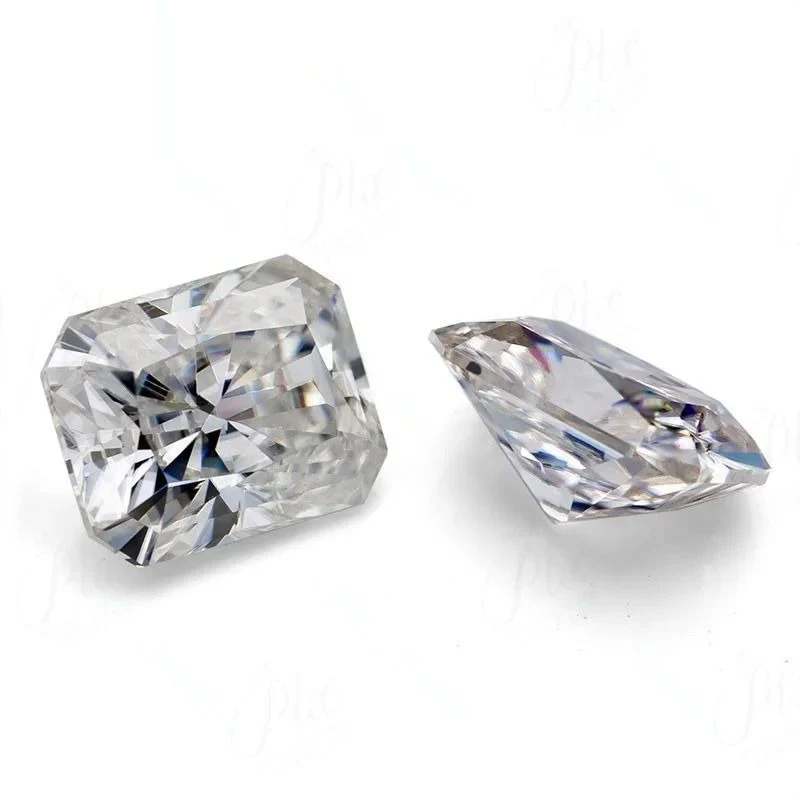
Moissanite has become one of the most popular diamond alternatives in engagement rings over the past decade, yet many buyers still walk into a jewelry store unable to distinguish moissanite from diamond, CZ, or white sapphire. In 2024 we spoke to a bridal customer who paid $4,500 for what the seller described as a "2-carat diamond" ring. She brought it to our gemologist for an insurance appraisal and learned the stone was moissanite, not diamond; the retail value of the ring was closer to $650. That purchase was not fraudulent in a legal sense if the seller disclosed it somewhere in paperwork, but the buyer could not tell the difference. This guide explains what moissanite is, where it comes from, how it compares to diamond and other simulants, how to evaluate quality, and what to expect from moissanite in everyday wear.
What Is Moissanite?
Moissanite is silicon carbide (chemical formula SiC), a crystalline mineral originally discovered in 1893 by Nobel Prize-winning chemist Henri Moissan in fragments of the Canyon Diablo meteorite in Arizona. Natural moissanite is extremely rare on Earth—essentially all moissanite used in jewelry today is lab-grown. For more historical and mineral background, see the moissanite entry on Wikipedia.
- Chemical composition: SiC (silicon carbide)
- Hardness: 9.25 on the Mohs scale (diamond is 10, sapphire is 9, CZ is 8-8.5)
- Refractive index: 2.65 (diamond is 2.42; higher RI means more light return and sparkle)
- Dispersion (fire): 0.104, roughly 2.4x diamond's 0.044 (moissanite throws more colored flashes, especially in sunlight and warm light)
- Specific gravity: 3.22 (diamond is 3.52, so a moissanite weighs ~10% less than a diamond of the same millimeter size)
- Crystal structure: Hexagonal (diamond is isometric cubic), which is why faceted moissanite can show subtle double-refraction or "doubling" of facet edges when viewed through the side under 10x loupe—one of the key identification features
- Thermal conductivity: Very close to diamond (a property that fools most basic diamond testers); electrical conductivity differs, so gemologists use dedicated testers that measure both thermal and electrical conductivity to separate moissanite from diamond
Modern jewelry moissanite is grown in laboratories using physical vapor transport (PVT), where silicon carbide powder is sublimated at high temperature (~2300°C) in an inert atmosphere and recrystallized on a seed crystal. Two dominant production sources supply the market today: original Charles & Colvard (North Carolina, with brands Forever One, Forever Brilliant, Forever Classic) and Chinese foundry production, which now supplies most of the global wholesale market at comparable optical quality.
Moissanite vs Diamond vs CZ vs White Sapphire
Moissanite sits between diamond and cubic zirconia in price, and between diamond and white sapphire in hardness. It is a durable, high-sparkle stone that looks very close to diamond in everyday viewing conditions but has its own distinct characteristics.
| Property | Diamond | Moissanite | Cubic Zirconia (CZ) | White Sapphire |
|---|---|---|---|---|
| Chemical | C (carbon) | SiC | ZrO2 | Al2O3 (corundum) |
| Mohs hardness | 10 | 9.25 | 8-8.5 | 9 |
| Refractive index | 2.42 | 2.65 | 2.15-2.18 | 1.76-1.78 |
| Dispersion | 0.044 | 0.104 | 0.060 | 0.018 |
| Specific gravity | 3.52 | 3.22 | 5.6-6.0 | 4.0 |
| Price vs diamond (1ct equivalent) | $4,000-6,000 (natural); $250-500 (lab) | $25-70 wholesale | $2-10 wholesale | $80-300 wholesale (1ct white sapphire) |
| Wear durability | Lifetime, scratches only by other diamond | Lifetime, scratches only by diamond and moissanite | Scratches and clouds over 2-5 years of daily ring wear | Lifetime but chips more easily than diamond/moissanite |
| Appearance notes | White, bright, crisp facet edges | Slightly more "rainbow" fire; very bright; subtle double refraction visible at angle | Softer sparkle; heavier; clouds over time | More subdued, less sparkle; subtle gray/blue undertone common |
Moissanite's higher dispersion is its most distinguishing visual trait: moissanite throws more colored flashes ("fire") than diamond in sunlight or warm light. Some buyers prefer this for extra sparkle; others feel it looks "too sparkly" compared to a diamond. Side-by-side with a diamond in cool white light, high-color moissanite looks nearly identical to the untrained eye.
Moissanite Quality Grades
Unlike diamond, moissanite has no universal GIA grading scale, and IGI issues reports but does not use the exact 4C scale. Reputable suppliers grade moissanite by color, clarity, and cut using diamond-like terms.
Color
Color is the biggest driver of moissanite price. The whitest (most colorless) moissanite is graded D, moving down through E, F, G, H, I, J, K as warmth increases. Most moissanite sold for engagement rings is D-E-F (colorless); G-H-I (near colorless) is sold at lower price points and shows faint warmth in direct side-by-side comparison.
- D color: Whitest commercially available; icy white under all lighting; used in premium lines.
- E-F color: Colorless to the naked eye; only an experienced gemologist with a master stone comparison set can see warmth; standard for high-end engagement.
- G-H-I: Near colorless; slightly warm in cool light; good value for earrings, pendants, and budget engagement lines.
- J-K and below: Noticeably tinted; appropriate for costume fashion pieces, not premium bridal.
Note: older generations of moissanite (particularly 1990s-2000s production) carried a noticeable greenish-gray or yellowish tint in larger sizes. Modern PVT-grown moissanite produced since ~2018 is nearly colorless in D-E-F grades.
Clarity
Moissanite is grown in a controlled lab environment, so clarity grades run high. The vast majority of jewelry-grade moissanite is VVS (very very slightly included) to VS (very slightly included); stones with eye-visible inclusions are unusual in premium grades. Common inclusions in moissanite are tiny needle-like white crystals, faint pinpoint inclusions, and (in older production) metallic flux from growth. These are usually invisible to the naked eye but can be seen under 10x loupe.
Cut
Moissanite is faceted using similar proportions to round brilliant diamond, but its higher refractive index means slightly different proportions maximize brightness. The best moissanite cuts are proportioned for moissanite's RI rather than copied from diamond proportions. Hearts-and-arrows patterns (visual evidence of excellent symmetry) are available at a premium.
Cut issues to watch for: overly shallow pavilion (windowing—you can see through the stone), overly deep pavilion (nail-head or dark center), misaligned facets, off-center culets, and frosted or unpolished girdles. Premium and super-premium grade moissanite is cut with excellent symmetry and polished girdles; economy-grade may have thinner girdles and variable proportions.
Shapes and Sizes
Moissanite is available in all standard diamond shapes:
- Round brilliant (most popular; best light return because moissanite's high RI favors brilliant cut)
- Princess (square brilliant)
- Cushion (both "classic crushed ice" and "modern brilliant" cushion variants)
- Oval, pear, marquise, radiant, emerald (step cut), asscher, heart, trillion
- Baguettes and tapered baguettes for accent stones
- Fancy colors: gray/black, blue, green, yellow/champagne, pink (coated or treated; confirm color stability with supplier)
Sizes range from 0.8mm melee up to 15mm+ in rounds. Moissanite is sold by millimeter size (mm diameter), not by carat weight, because its lower specific gravity means "1 carat" moissanite (6.5mm) weighs about 0.88 carats actual, and describing it as "one carat" can mislead buyers. Reputable sellers describe moissanite by "mm size" or "diamond equivalent carat (DEW)" rather than claiming direct carat weight. The FTC Jewelry Guides require clear disclosure when a stone is not diamond.
Durability and Everyday Wear
At 9.25 Mohs, moissanite is one of the hardest gemstones used in jewelry—harder than sapphire, ruby, and emerald, and only slightly softer than diamond. It is suitable for daily wear in engagement rings. Like all gemstones, moissanite can chip under a hard blow at the girdle or a sharp point (the culet and sharp facet edges), but it holds up to normal wear—washing hands, typing, daily activities—without scratching or abrading.
Moissanite is also highly resistant to heat and chemicals, which makes cleaning straightforward: warm soapy water and a soft brush, or occasional ultrasonic cleaning (use low power), or steam cleaning. Avoid harsh abrasives and chlorine bleach, which can damage some metal settings and prongs even though they do not damage moissanite itself.
How to Tell Moissanite from Diamond
Basic diamond testers that measure only thermal conductivity cannot reliably separate moissanite from diamond because both conduct heat well. A gemologist or jeweler uses one or more of these tests:
- Electrical conductivity tester: Diamond is an electrical insulator (except rare blue Type IIb); moissanite is a semiconductor and conducts electricity differently, giving a different reading.
- 10x loupe doubling: Look through the side of the stone (through the bezel) at facet junctions. Moissanite's hexagonal structure causes double refraction, so facet edges appear doubled. Diamond is singly refractive and shows sharp, single edges. This test does not work on perfectly round brilliant viewed straight down (the optic axis hides doubling).
- Weight for size: Moissanite weighs ~10% less than diamond of the same mm size. If you can weigh a loose stone and measure its diameter, the SG difference is diagnostic.
- Girdle polish and laser inscription: Certified lab grown and natural diamonds often carry laser inscriptions on the girdle; moissanite may or may not depending on brand (Charles & Colvard stones are inscribed with a serial number).
If you are buying a second-hand "diamond" that prices below market, always pay an independent appraiser (not the seller's jeweler) to verify the stone identity before purchase.
Caring for Moissanite Jewelry
- Clean at home: soak 10-15 minutes in warm water with mild dish soap, scrub gently with a soft toothbrush (pay attention to the back of the stone where lotion and skin oils build up), rinse, and pat dry with a lint-free cloth.
- Ultrasonic cleaners are generally safe for moissanite; we recommend occasional use rather than frequent to avoid stressing prongs over time.
- Remove rings during heavy work, gardening, gym workouts, and contact sports—hard impact can chip any gemstone including moissanite.
- Store moissanite jewelry separately from other jewelry to prevent scratching softer pieces (moissanite scratches most other gems except diamond, and diamond scratches moissanite).
- Have prongs checked by a jeweler once a year; worn prongs are the #1 cause of stone loss regardless of gem type.
Frequently Asked Questions
Q: Is moissanite a fake diamond?
Moissanite is its own distinct gemstone (silicon carbide), not a fake. It has different chemical, optical, and physical properties from diamond. It is a legitimate diamond alternative chosen for its high sparkle, durability, and lower price. FTC rules require that it be disclosed as moissanite—not sold as diamond.
Q: Will moissanite cloud or fade over time?
Modern high-quality moissanite does not fade, cloud, or change color with normal wear. Early generations (pre-2010) sometimes had coating issues on colored variants, but premium white D-E-F moissanite is stable for decades.
Q: Does moissanite get cloudy like CZ?
No—CZ clouds over time because its lower hardness (8-8.5 Mohs) allows micro-scratches from everyday wear and because CZ is slightly porous to skin oils. Moissanite at 9.25 Mohs does not micro-scratch in normal wear and is not porous. It stays bright indefinitely with cleaning.
Q: Can I use a standard diamond tester to test moissanite?
Most basic thermal-only diamond testers will read moissanite as diamond. Use a combined thermal/electrical tester designed to detect moissanite, or rely on loupe doubling and weight-for-size checks.
Q: Is moissanite ethical and conflict-free?
Moissanite is lab-grown in controlled facilities, so it carries no mining-related conflict or environmental concerns. This is one of its primary selling points for buyers concerned about diamond sourcing. Lab-grown moissanite has a smaller carbon footprint per carat than mined diamond.
Q: What size moissanite is right for an engagement ring?
The most popular engagement center stone sizes are 6.5mm (1ct DEW), 7.5mm (1.5ct DEW), and 8.0mm (2ct DEW). Smaller fingers (size 4-6) often look best in 6.5-7.5mm; larger fingers (size 7+) carry 8mm+ proportionally. Try on multiple sizes at a jeweler before committing to a large stone.
Key Takeaways
- Moissanite is silicon carbide, Mohs 9.25, RI 2.65, dispersion 0.104—the sparkliest common diamond alternative.
- D-E-F color with VVS clarity and excellent cut is the standard for engagement rings; G-H-I near colorless offers value for budget pieces.
- Buy by mm size, not by "carat" — moissanite's different density means "2-carat moissanite" refers to a diamond-equivalent visual size, not actual weight.
- Modern PVT-grown moissanite is colorless, stable, and does not cloud or fade like older production or CZ.
- Use an electrical-conductivity tester or loupe doubling (not a basic diamond tester) to distinguish moissanite from diamond.
- Moissanite is suitable for everyday engagement ring wear and is cared for like diamond—clean with soap and water, have prongs checked annually.
Understanding moissanite as a gemstone with its own properties—not as a "diamond substitute" but as a distinct choice—helps buyers make informed decisions and enjoy their jewelry for decades. Whether you are a consumer buying an engagement ring or a jeweler sourcing moissanite for inventory, start with grade (D-E-F VVS is the sweet spot for bridal), cut quality, and sizing by mm, and verify with an appropriate tester.
Related Reading
- Moissanite Hardness Durability and Care Guide - HOLYCOME
- What Is Moissanite Complete Guide to Properties Value and Care - HOLYCOME
- Diamond vs Moissanite Carat: Why the Weight Number Misleads
Related reading: What Is Moissanite Complete Guide to Properties Value and Care, What Is 925 Sterling Silver Complete Guide to Quality Marks and Care, Moissanite Quality Grading System 2026.


