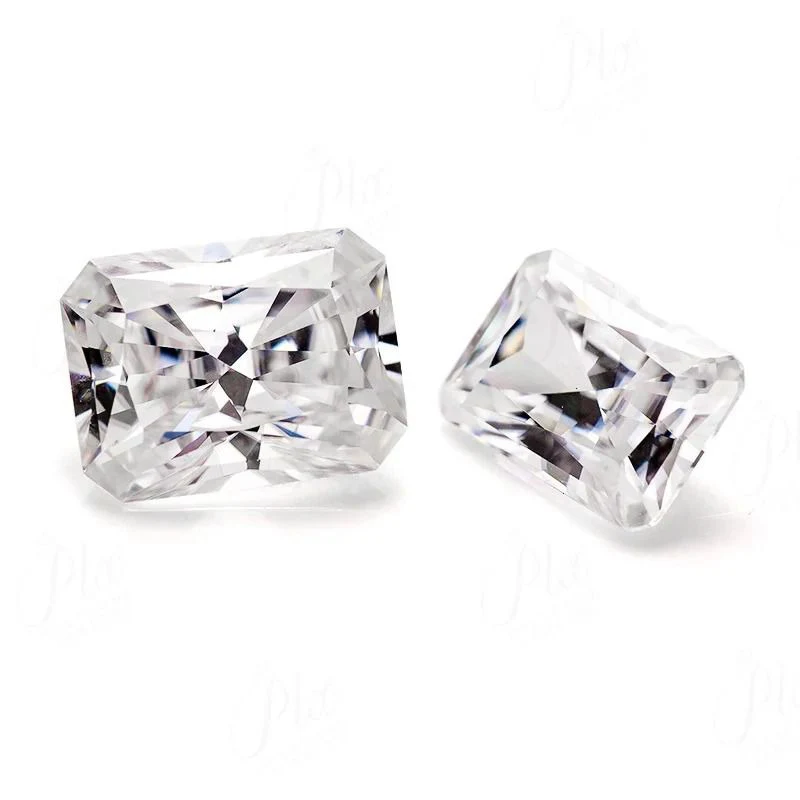
Lab Grown Diamonds Complete Education Guide CVD HPHT vs Natural - HOLYCOME
Lab grown diamonds have moved from scientific curiosity to mainstream jewelry in less than a decade. In 2024, lab grown diamonds accounted for nearly one in five engagement ring sales in the United States and a growing share of global jewelry demand. But despite their popularity, confusion persists: Are lab grown diamonds "real" diamonds? How are they made? How do they differ from mined diamonds? Should consumers and jewelers embrace them? This educational guide from HOLYCOME answers these questions with scientific accuracy and industry context, covering diamond formation, growing technologies, grading, value, and purchasing considerations.
What Is a Diamond, Chemically Speaking?
A diamond is a crystalline form of carbon in which each carbon atom forms covalent bonds with four neighboring carbon atoms in a tetrahedral lattice. This crystal structure gives diamond its extreme properties: hardness of 10 on the Mohs scale (the hardest known natural material), very high thermal conductivity, high refractive index (2.42), and characteristic adamantine luster.
The critical point for the lab-grown discussion: diamond is defined by its chemical composition and crystal structure, not by its origin. A carbon crystal with cubic structure grown in a laboratory is a diamond, in the same way that ice frozen in your freezer is ice, chemically identical to ice frozen on a lake. This is why the US Federal Trade Commission revised its Jewelry Guides in 2018 to clarify that "diamond" can include lab grown diamonds as long as origin is clearly disclosed.
How Natural Diamonds Form
Natural diamonds form 150-200 kilometers below the Earth's surface in the upper mantle, where temperatures of 900-1,300°C and pressures of 45-60 kilobars (about 50,000 atmospheres) create the conditions for carbon atoms to crystallize into diamond lattice. These conditions have existed at depth for billions of years; most natural diamonds are between 1 billion and 3.5 billion years old.
Diamonds reach the surface via volcanic eruptions of kimberlite (and lamproite) magma, which rises from the mantle rapidly (hours to days) through narrow pipe structures, carrying diamond-bearing rock (kimberlite) to the surface. Most of the world's diamond mines are located at these kimberlite pipes - in southern Africa, Russia, Australia, and Canada. Alluvial diamonds are diamonds eroded from kimberlite and deposited by rivers.
Only about 20% of mined diamonds are gem quality (suitable for jewelry); the remaining 80% are industrial-grade, used in cutting tools, abrasives, drill bits, and electronics.
How Lab Grown Diamonds Are Made
Lab grown diamonds replicate the high-pressure, high-temperature or chemical deposition conditions under which natural diamonds form, but in controlled laboratory environments over weeks rather than billions of years. Two commercial technologies dominate.
HPHT (High Pressure High Temperature)
HPHT was the first method to produce gem-quality diamonds, originally developed by General Electric in the 1950s for industrial diamonds and refined for gem use in the 1970s-1990s. The process places a small diamond seed crystal in a press with a carbon source (graphite) and a metal catalyst (iron, nickel, cobalt). The press applies pressures of 5-6 GPa (about 50,000 atmospheres) and temperatures of 1300-1600°C, replicating upper mantle conditions. Carbon dissolves in the molten metal catalyst and precipitates onto the seed crystal, growing a larger diamond over days to weeks.
HPHT diamonds grow in a cuboctahedral shape and often show metallic inclusions (from the catalyst) under magnification. HPHT is also used as a post-growth treatment to improve the color of some CVD diamonds - a treatment that must be disclosed on grading reports.
CVD (Chemical Vapor Deposition)
CVD diamond growth was developed in the 1980s and became commercially viable for gem-quality stones in the 2000s-2010s. CVD does not require extreme pressure - instead, a thin diamond seed is placed in a vacuum chamber filled with a carbon-rich gas mixture (typically methane and hydrogen) heated to 800-1200°C. Microwaves or other energy sources break gas molecules apart, and carbon atoms deposit onto the seed crystal, building up diamond material layer by layer.
CVD diamonds grow as flat, tabular crystals (as opposed to HPHT's cuboctahedral form) and often show distinctive striated growth lines and occasional graphite inclusions under magnification. CVD can produce very high-color stones, though many commercial CVD diamonds receive post-growth HPHT treatment to remove brownish tints and achieve DEF color grades.
| Characteristic | HPHT | CVD | Natural Diamond |
|---|---|---|---|
| Growth conditions | ~5 GPa, 1300-1600°C, press | ~10-100 kPa, 800-1200°C, vacuum | ~5 GPa, 900-1300°C, mantle |
| Growth time per carat | Days to weeks | 3-6 weeks | 1-3.5 billion years |
| Crystal shape | Cuboctahedral | Tabular/slab | Octahedral (most common) |
| Inclusions | Metallic flux (Fe/Ni/Co) | Graphite, pinpoint dark inclusions | Mineral inclusions (olivine, garnet, etc.) |
| Growth markings | Tree-ring/banding | Striated layers, "graining" | Natural graining, trigons |
| Color enhancement | Often not needed | Frequently HPHT-treated for color | Treated stones exist but less common |
| Identifiable by | Magnetic metallic inclusions, strain | PL spectroscopy, growth structure | UV fluorescence patterns, inclusions |
| Cost relative to natural | ~15-30% | ~20-35% | 100% (baseline) |
Are Lab Grown Diamonds Identical to Natural Diamonds?
Chemically, physically, and optically - yes. Both are pure carbon in cubic crystalline structure. Both have hardness 10 Mohs, refractive index 2.42, specific gravity 3.52, thermal conductivity ~2000 W/mK. A lab grown diamond cuts glass, scratches all other gems, and has the same brilliance and fire as natural diamond. Worn in a ring, no one can tell the difference visually.
However, trained gemologists with specialized equipment can distinguish lab grown from natural, because the growth process leaves characteristic signatures. Metallic flux inclusions in HPHT stones, graphite inclusions and layered growth patterns in CVD stones, and differences in photoluminescence and cathodoluminescence spectra allow identification. GIA, IGI, and GCAL all have the capacity to identify lab grown diamonds conclusively, and they laser-inscribe lab grown stones on the girdle to ensure transparency. This identification does not mean lab grown diamonds are "fake" - they are diamonds of different origin, just as a sapphire from Sri Lanka and a sapphire from Madagascar are both sapphires despite different geographic origins.
Grading Lab Grown Diamonds
Lab grown diamonds are graded on the same 4C scale as natural diamonds: cut, color, clarity, and carat weight. The major grading labs (IGI, GIA, GCAL) issue reports for lab grown diamonds with the same color (D to Z) and clarity (FL to I3) grades used for natural diamonds. The reports explicitly state the diamond is lab grown and identify the growth method (HPHT or CVD) and any post-growth treatments (e.g., "HPHT processed" for color enhancement).
Key point for consumers and buyers: the same grade on a lab grown report and a natural diamond report means the same thing in terms of appearance - a D VS1 Excellent-cut lab grown diamond looks equivalent to a D VS1 Excellent-cut natural diamond to the eye. The difference is origin and price.
Cost Comparison: Lab Grown vs Natural
Lab grown diamond pricing has dropped dramatically since 2018 as production capacity scaled and manufacturing efficiency improved. As of 2024-2025, lab grown diamonds retail for approximately 15-35% of the price of comparable natural diamonds, with larger sizes showing the greatest savings.
Indicative retail prices for round brilliant D-E-F VVS-VS stones:
| Carat Size | Natural Diamond (D VS1) | Lab Grown (D VS1, IGI) |
|---|---|---|
| 0.5 ct | $1,500 - $2,500 | $200 - $400 |
| 1.0 ct | $4,000 - $8,000 | $400 - $900 |
| 1.5 ct | $8,000 - $14,000 | $800 - $1,500 |
| 2.0 ct | $15,000 - $28,000 | $1,400 - $2,500 |
| 3.0 ct | $30,000 - $60,000 | $2,500 - $4,500 |
| 5.0 ct | $80,000 - $200,000 | $6,000 - $12,000 |
Both natural and lab grown prices fluctuate with supply, demand, and economic conditions, but the ratio has remained relatively stable at 70-85% discount for lab grown since 2023.
Environmental and Ethical Considerations
One of the primary motivations for choosing lab grown diamonds is reduced environmental and ethical impact. Mining a one-carat natural diamond moves approximately 250 tons of ore on average, requires significant water and energy inputs, and can disrupt ecosystems at mine sites. Lab grown diamond production produces an estimated 90-95% lower carbon footprint per carat (especially when facilities use renewable energy), does not require large-scale earth movement, and produces no conflict diamond risks.
That said, ethical sourcing of natural diamonds has improved significantly with the Kimberley Process Certification Scheme (established 2003 to reduce trade in conflict diamonds) and various responsible mining initiatives. Consumers concerned about ethical sourcing can look for Canadian diamonds (mined under strict labor and environmental standards), recycled diamonds (reclaimed from vintage jewelry), or Fairmined-certified stones. But the Kimberley Process has acknowledged limitations (it does not fully address all human rights concerns in mining), and no supply chain is entirely without complexity.
Lab grown diamonds are not without environmental impact - manufacturing requires significant energy for high-temperature processes - but the comparative impact per carat is substantially lower than mining.
Value Retention and Resale
A common question is whether lab grown diamonds hold value. The honest answer: lab grown diamond prices have declined as production scaled, and resale value is typically 20-40% of original purchase price - similar to most consumer luxury goods. Natural diamonds have historically held resale value better (typically 30-60% of retail depending on quality and market timing), but they are not investment assets for most consumers. The resale market for natural diamonds is also not as liquid as many consumers believe - selling a diamond back typically yields wholesale trade-in value, not retail price.
For most jewelry buyers, value is in wearing and enjoying the piece, not in investment resale. If your priority is a beautiful, durable, ethical stone at an accessible price point, lab grown diamonds deliver exceptional value. If asset value retention is a primary concern, you should understand the resale limitations of both categories.
Frequently Asked Questions
Are lab grown diamonds real diamonds?
Yes. They are pure carbon with cubic crystal structure, the same chemical composition and physical properties as natural diamonds. The FTC and major gemological labs recognize lab grown diamonds as diamonds, requiring only clear disclosure of origin. Terms like "synthetic" are technically accurate but discouraged because consumers interpret "synthetic" as "fake" - "lab grown," "lab created," and "man-made" are the preferred industry terms.
Can a jeweler tell a lab grown diamond from a natural one?
With the naked eye or a standard loupe, almost never. Specialized equipment (DiamondView, photoluminescence spectrometers, infrared spectroscopy) can conclusively distinguish them because of growth patterns and trace-element signatures. GIA and other labs use this equipment and laser-inscribe lab grown diamonds on the girdle with a report number and "LAB GROWN" designation.
Do lab grown diamonds test as diamond on diamond testers?
Yes. Basic thermal-conductivity diamond testers (the common pen testers) will test lab grown diamonds as "diamond" because lab grown diamond has the same high thermal conductivity as natural diamond. Advanced testers that combine thermal and electrical conductivity (e.g., Presidium ARI, Synthetic Diamond Screener) can flag lab grown diamonds for further testing, but definitive identification requires lab equipment.
Will lab grown diamonds cloud or degrade over time?
No. Diamond is chemically inert and thermodynamically stable at surface conditions. A lab grown diamond will remain unchanged over any normal human time scale - it will not cloud, fade, yellow, or degrade with wear or time. This is a fundamental difference from CZ, which can cloud with age, and from some treated gemstones.
Do lab grown diamonds get GIA certificates?
Yes. GIA has issued grading reports for lab grown diamonds since 2006 (originally as "Laboratory-Grown Diamond Reports" and more recently with updated report formats). IGI is the most commonly used lab for commercial lab grown diamond grading because of faster turnaround and lower cost. GCAL is also respected in the US market.
Should I buy lab grown or natural?
This depends on your priorities. Choose lab grown if: you want maximum size and quality for your budget, ethical/minimal environmental impact is important to you, you don't prioritize resale value. Choose natural if: you value geological rarity and natural origin, resale/traded value matters to you, you prefer the traditional history of natural diamonds, or you are purchasing vintage/estate pieces. Both are legitimate choices, and quality within each category matters more than the category itself.
Understanding diamonds - natural and lab grown - empowers better purchasing decisions for consumers and better recommendations for jewelers. HOLYCOME is committed to transparency in diamond sourcing and is happy to answer questions about lab grown diamonds in our jewelry.
For background on how lab-grown diamonds are produced, the Wikipedia article on synthetic diamonds explains the HPHT and CVD growth methods.
Related Reading
- Gemstone Buying Guide for Jewelry Makers & Buyers - HOLYCOME
- 925 Sterling Silver Care Maintenance Complete Guide - HOLYCOME
- Lab Grown Diamonds Complete Education Guide - HOLYCOME
Related reading: Lab Grown Diamonds Complete Education Guide, Lab-Grown Diamonds: How They Are Made, HPHT vs CVD Lab-Grown Diamonds: The Basics Buyers Ask.


