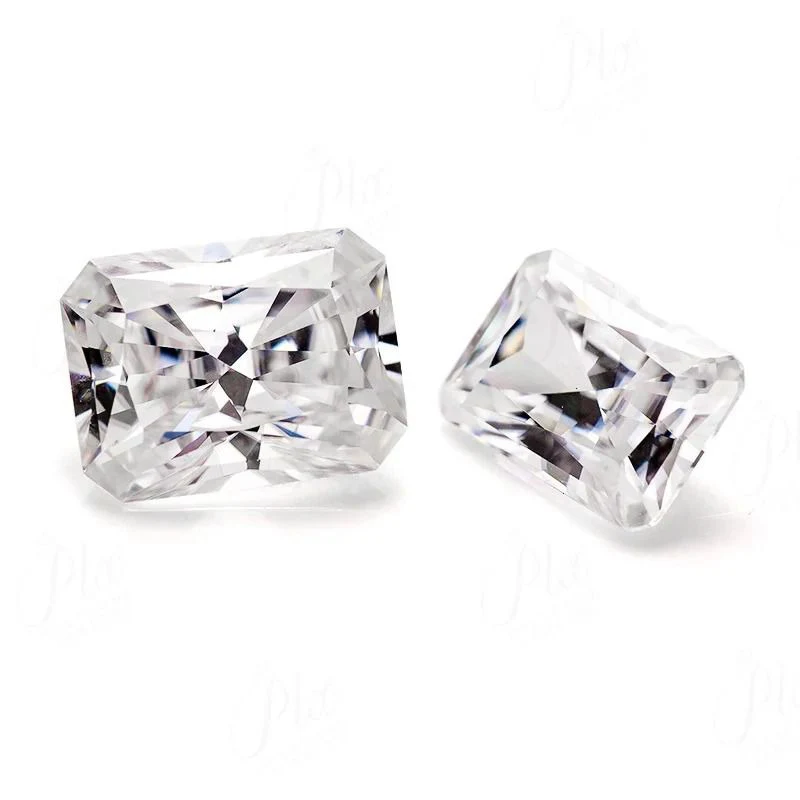
A couple came to our gemology desk in 2024 looking to sell a 1.5-carat diamond engagement ring they had purchased secondhand online for $8,500. The seller listed it as a natural diamond with an EGL report. We tested the stone under standard protocol—loupe inspection, UV fluorescence, and a DiamondSure screening device—and it screened as "refer, possible lab grown." We sent it to a gem lab for full spectroscopy, which confirmed it was a CVD lab grown diamond worth roughly $900 as a lab stone, not the $8,500 natural price they paid. The seller's EGL report, it turned out, was for a different stone entirely. Lab grown diamonds are real diamonds, but their identity, origin, and certification matter enormously—both for value and for the ethical reasons many buyers choose them. This guide explains what lab grown diamonds are, how they are made, how they compare to mined diamonds and simulants, how they are graded, and what to know before buying.
What Are Lab Grown Diamonds?
Lab grown diamonds (also called lab-created, man-made, laboratory-grown, or synthetic diamonds) are diamonds—pure carbon crystallized in a cubic crystal structure—produced in a controlled laboratory environment rather than mined from the earth. They are chemically, physically, and optically identical to mined diamonds: same hardness (10 Mohs), same refractive index (2.42), same dispersion (0.044), same thermal conductivity. Even trained gemologists cannot tell them apart without specialized equipment.
This is important to distinguish from diamond simulants: moissanite (SiC), cubic zirconia (ZrO2), white sapphire (corundum), and glass are not diamonds—they have different chemistry and physical properties. Lab grown diamonds are real diamonds, just grown in a lab rather than mined. The FTC Jewelry Guides require that they be labeled as lab-grown (never simply as "diamonds" without disclosure), and they cannot be described as "natural" or "mined." For more history and science, see the synthetic diamond entry on Wikipedia.
How Lab Grown Diamonds Are Made: CVD vs HPHT
Two technologies dominate commercial lab grown diamond production today:
HPHT (High Pressure High Temperature)
HPHT recreates the pressure and temperature conditions under which natural diamonds form deep in the earth. A tiny diamond seed crystal is placed in a press with carbon source material (graphite) and a metal flux catalyst (typically iron, nickel, cobalt). The press applies approximately 5 gigapascals of pressure and heats the chamber to 1300-1600°C. Under these conditions, carbon dissolves in the flux and precipitates onto the seed crystal, growing a larger diamond over days to weeks.
- Advantages: Fast growth, lower cost for smaller stones, produces fancy colors (yellow, blue, pink) efficiently, mature technology (1950s origin for industrial diamond).
- Disadvantages: Metal flux inclusions are common (visible under magnification as metallic needle-like inclusions), fluorescence patterns can be strong and distinctive, and post-growth treatment may be needed for high-color grades.
- Best for: Small melee (0.7-2.9mm), fancy colored diamonds, commercial-grade fashion stones.
CVD (Chemical Vapor Deposition)
CVD grows diamonds at much lower pressure (around 1/10 atmosphere) in a vacuum chamber filled with a carbon-rich gas mixture (typically methane plus hydrogen). The gas is energized into plasma (using microwave power in modern reactors), breaking molecular bonds and releasing carbon atoms that deposit layer by layer onto a flat diamond seed held at 800-1000°C. A CVD diamond grows as a flat plate of single-crystal diamond over several weeks.
- Advantages: Produces high-clarity, high-color rough over large areas; fewer metallic inclusions; the dominant method for D-F VVS/VS engagement-quality white diamonds 0.5ct and up.
- Disadvantages: Slower growth, higher equipment cost; brown color as-grown may require post-growth HPHT treatment to improve color to colorless.
- Best for: Larger white diamonds (0.5ct-5ct+), high-color engagement-quality stones.
Many finished CVD diamonds on the market today have received post-growth HPHT treatment to improve color from brownish as-grown to D-F colorless. This is a standard, stable industry practice (the treatment is permanent) and should be disclosed on the grading report. Reputable sellers disclose treatment; sellers who market their stones as "untreated" or "pure CVD" without disclosing post-growth HPHT may be omitting information.
Lab Grown vs Mined Diamond: Are They Different?
Chemically, physically, and optically, lab grown and mined diamonds are the same material. There is no difference visible to the eye, under a standard jeweler's loupe, or to basic diamond testers. Gemological labs (GIA, IGI, GCAL) distinguish them using specialized equipment:
- Photoluminescence spectroscopy: Detects nitrogen and silicon vacancy defects that differ between natural growth and lab growth, and between HPHT and CVD methods.
- UV fluorescence imaging (DiamondView): Natural and lab grown diamonds show different growth-structure fluorescence patterns under shortwave UV; HPHT and CVD also differ from each other.
- Inclusion patterns: HPHT lab grown stones often contain metallic flux inclusions; CVD stones may show graphite or pinpoint inclusions in distinctive layer patterns; natural diamonds have mineral inclusions (garnet, diopside, etc.) never seen in lab grown.
- Laser inscription: Certified lab grown diamonds are laser-inscribed on the girdle with their report number and typically the words "LABORATORY GROWN."
For normal wear as jewelry, a lab grown diamond behaves exactly like a mined diamond—same hardness, same scratch resistance, same optical performance, same cleaning and care requirements. The differences are origin, price, and certification.
Grading Lab Grown Diamonds: The 4Cs
Lab grown diamonds are graded on the same 4C scale as mined diamonds: Color, Clarity, Cut, and Carat weight. IGI is the dominant grading lab for lab grown diamonds today; GIA began issuing full lab grown reports in 2020 and is growing in adoption; GCAL also issues lab grown reports.
| Grade | Typical Wholesale Price (1ct round excellent cut, 2026) | Recommended Use |
|---|---|---|
| D VVS1 ideal cut | $450-550 | Signature solitaire, high-end bridal |
| D-E-F VS1-VS2 excellent | $220-380 | Engagement rings (the most popular sweet spot) |
| G-H-I VS1-VS2 very good/excellent | $140-220 | Earrings, pendants, fashion rings |
| J-K SI1-SI2 | $80-140 | Budget and fashion jewelry |
For comparison, a 1ct D VS1 natural round diamond runs $4,500-6,500 wholesale (retail $8,000-12,000). Lab grown pricing has fallen dramatically since 2018 as production capacity expanded; prices continue to trend slowly downward as reactor capacity scales.
Color
Color is graded on the D-to-Z scale developed by GIA for natural diamonds. D is colorless; E-F are colorless to expert eyes in controlled lighting; G-H-I-J are near colorless; K and below show visible warmth. In lab grown, D-F colorless is the standard for engagement rings, achievable reliably in CVD production with post-growth treatment.
Clarity
Clarity grades (FL, IF, VVS1, VVS2, VS1, VS2, SI1, SI2, I1-I3) apply identically to lab grown. Lab grown diamonds are generally higher clarity on average than mined because growth is controlled—VVS and VS grades dominate the market, while SI and I grades are relatively rare. The most common inclusions are pinpoint, needle, graphite, and (in HPHT) metallic flux.
Cut
Cut grades (Excellent/Ideal, Very Good, Good, Fair, Poor) describe how well-proportioned the faceting is, which determines sparkle and light return. For round brilliants, an Excellent/Ideal cut maximizes brightness, fire, and scintillation. Avoid Good or Fair cuts even at a discount—they leak light and look dark in certain lighting.
Carat Weight
Lab grown diamonds are sold by actual carat weight just like mined diamonds. One carat is 0.20 grams. Popular engagement sizes are 0.7ct, 1.0ct, 1.5ct, 2.0ct, and 3.0ct. Lab grown diamonds are available in larger sizes (3-5ct+) at much more accessible prices than natural, making big-stone looks achievable without the natural premium.
Identification: How to Tell Lab Grown vs Mined
No consumer can reliably identify lab grown vs mined diamond at home. Standard thermal diamond testers read both as diamond. Even most local jewelers cannot confirm origin without dedicated screening equipment. Proper identification requires:
- Certification from IGI, GIA, or GCAL: Every diamond 0.30ct and up should come with a report from a recognized lab, laser-inscribed on the girdle with the report number. Verify the report number against the lab's online database, and match the inscription to the stone under 10x loupe.
- Diamond screening devices: Machines like DiamondSure, DiamondView, and AMS2 screen for possible lab grown origin; referral stones are sent to full spectroscopy.
- Independent appraisal: When buying secondhand or high-value natural diamonds, always pay an independent appraiser (not the seller's jeweler) to verify origin before completing the purchase.
Sellers who cannot produce a matching lab report for a "natural" diamond should be treated with caution—especially if the price looks too good to be true. The FTC requires disclosure of lab grown origin, but bad actors exist.
Fancy Color Lab Grown Diamonds
Lab grown technology produces fancy colored diamonds (pink, blue, yellow, green, orange, red) at a fraction of natural fancy color prices.
- Yellow and orange: Produced efficiently by HPHT by adding nitrogen during growth. Vivid yellows are available at wholesale prices of $200-600 per carat (vs. $5,000-20,000+ per carat for natural vivid yellow).
- Blue: HPHT or CVD with boron doping produces blues; fancy vivid blues run $400-1,500 per carat wholesale depending on saturation.
- Pink and red: Produced via post-growth irradiation and annealing, or via CVD with specific defect engineering. Pinks range from $300-1,500 per carat at wholesale depending on saturation and tone.
- Green: Irradiated colors; relatively affordable.
Color treatments (irradiation, annealing) for fancy colors in lab grown are permanent and should be disclosed on the report.
Durability and Care
Lab grown diamonds are diamonds—they are the hardest substance on earth, cannot be scratched by anything except another diamond, and are inert to most chemicals. Care is identical to natural diamonds:
- Clean with warm soapy water and a soft brush; ultrasonic and steam cleaners are generally safe (avoid ultrasonic if the stone has significant fractures or fillings, which is rare in lab grown).
- Remove during heavy work, gym, contact sports—hard blows can chip the girdle or culet of any diamond.
- Store separately from other jewelry; a diamond scratches other gemstones and other diamonds can scratch your diamond if they rub together.
- Have prongs checked by a jeweler once a year to prevent stone loss.
Frequently Asked Questions
Q: Are lab grown diamonds real diamonds?
Yes. They are pure carbon in cubic crystal form, same as mined diamonds, with identical physical, chemical, and optical properties. They are not simulants like CZ or moissanite. The FTC requires them to be labeled as lab-grown rather than natural, but they are genuine diamonds.
Q: Do lab grown diamonds test as diamond on a diamond tester?
Yes—basic thermal-conductivity diamond testers will pass lab grown as diamond. Dedicated moissanite/diamond testers may flag moissanite but will still pass lab grown diamond as diamond. Only spectroscopy-grade screening (DiamondSure/AMS2/DiamondView) can reliably distinguish lab from natural.
Q: Will a lab grown diamond fade, cloud, or change color over time?
Properly grown untreated and post-growth-treated CVD/HPHT diamonds are permanent and stable—they do not fade, cloud, or change color with normal wear or time. Coated "color-enhanced" diamonds (which are different from standard lab grown) can wear over time, but these are a separate category and are disclosed as treated.
Q: Are lab grown diamonds cheaper than natural?
Lab grown diamonds typically cost 70-90% less per carat than equivalent natural diamonds at wholesale. At retail, a 1ct D VS1 natural diamond typically runs $6,000-10,000 while a 1ct D VS1 lab grown runs $400-800 retail.
Q: Are lab grown diamonds ethical and conflict-free?
Lab grown diamonds avoid the mining-related environmental and human rights concerns associated with mined diamonds (the original motivation for the Kimberley Process). They are grown in controlled labs primarily in the US, India, China, and Singapore, with measurable energy inputs. Whether they are "more ethical" is a personal decision—some buyers prefer lab grown for traceability, others prefer responsibly-sourced natural. Look for growers who publish energy sourcing data and carbon footprint information.
Q: Do lab grown diamonds come with GIA certificates?
Yes—GIA issues full grading reports for lab grown diamonds (distinguished by report format and a "Laboratory-Grown" designation), and IGI and GCAL also issue reports. Always buy certified stones for pieces over 0.30ct and match the laser inscription to the report.
Key Takeaways
- Lab grown diamonds are real diamonds (carbon, cubic crystal, Mohs 10) grown in labs via HPHT or CVD; they are not simulants.
- CVD dominates high-color (D-F) engagement-quality white diamonds 0.5ct+; HPHT dominates melee and fancy colors.
- IGI, GIA, and GCAL grade lab grown on the same 4C scale as natural; always buy certified stones with verified laser inscriptions.
- Lab grown costs 70-90% less per carat than natural at the same grade—an enormous price difference that opens up larger sizes and higher grades for more buyers.
- No consumer or basic jeweler loupe can tell lab from natural; use certification, inscription verification, and independent appraisal to confirm origin.
- Care is identical to natural diamond: simple cleaning, annual prong checks, separate storage.
Understanding lab grown diamonds as diamonds—with their own production story, grading framework, and certification pathway—helps buyers make informed decisions. Whether you are choosing a lab grown center stone for ethical reasons, for price, for larger size, or simply because it is visually indistinguishable from natural, start with certification and buy from a seller who is transparent about origin, treatment disclosure, and grading reports.
Related Reading
- Gemstone Buying Guide for Jewelry Makers & Buyers - HOLYCOME
- 925 Sterling Silver Care Maintenance Complete Guide - HOLYCOME
- Gemstone Jewelry Buyer Education Guide - HOLYCOME
Related reading: Lab Grown Diamonds Complete Education Guide CVD HPHT vs Natural, Lab Grown Diamonds vs Moissanite Guide, Lab Grown vs Mined Diamonds: Which Should UK Buyers Choose?.


