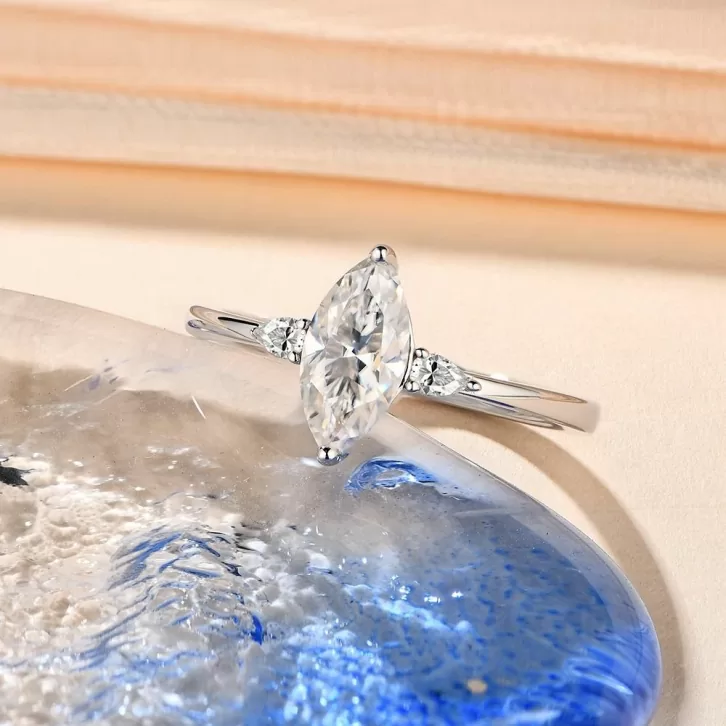
Independent jewelry designers and small jewelry brand founders ask us every month how to buy colored gemstones without overpaying or getting scammed. The biggest mistake we see new buyers make is chasing certificate grades on stones where certification is rare, or buying based on photos without understanding how grading actually works for colored stones. A buyer recently ordered 200 carats of "AAA grade" amethyst from an online supplier at $12/carat, only to receive banded, uneven-color commercial-grade material worth $2-4/carat wholesale. The supplier had photoshopped the listings and labeled commercial amethyst as "AAA," which no industry standard actually defines for amethyst. Colored gemstone buying rewards knowing the species, the grading factors that actually matter for each stone, the treatment disclosure questions to ask, and the supplier signals that correlate with fair pricing. This guide covers the basics of colored gemstone buying for jewelry makers: species and varieties, the 4Cs applied to colored stones (color is king), treatments and disclosure, origin, common synthetic and imitated stones, and how to buy confidently at wholesale.
Species vs Variety: Know What You Are Buying
In gemology, species refers to the mineral family, and variety refers to the color or phenomenon within a species. A few common examples:
| Species (Mineral) | Varieties |
|---|---|
| Corundum | Ruby (red), Sapphire (all other colors: blue, pink, yellow, padparadscha, etc.) |
| Beryl | Emerald (green), Aquamarine (blue), Morganite (pink), Heliodor (yellow), Goshenite (colorless) |
| Quartz | Amethyst (purple), Citrine (yellow), Rose Quartz (pink), Smoky Quartz (brown), Ametrine (bi-color), Rock Crystal (colorless), Prasiolite (green) |
| Garnet | Almandine, Pyrope, Rhodolite, Spessartite, Tsavorite, Demantoid |
| Chrysoberyl | Chrysoberyl (yellow-green), Alexandrite (color-change), Cat's Eye (chatoyant) |
| Topaz | Blue Topaz, Imperial Topaz (orange/pink), Pink Topaz, Colorless Topaz |
| Tourmaline | Rubellite (pink-red), Paraiba (neon blue-green), Indicolite (blue), Green Tourmaline, Watermelon Tourmaline, Black Schorl |
| Feldspar | Moonstone, Labradorite, Sunstone, Amazonite |
Sellers sometimes use trade names that obscure the actual species—"green amethyst" is prasiolite quartz, "Herkimer diamond" is quartz, "evening emerald" is peridot, "Baltic ruby" is actually garnet. Knowing the species lets you look up real pricing and treatment information instead of paying a premium for invented names.
Color Is King in Colored Gemstones
For colored gemstones, the 4Cs apply, but color (hue, tone, saturation) dominates value by a wide margin—often 60-70% of price is color alone. Unlike diamonds where cut and clarity dominate, colored stone buyers start with color and work backwards.
Hue, Tone, Saturation
GIA grades colored stone color on three dimensions:
- Hue: The basic color—red, blue, green, etc. The most valuable hues are the "pure" colors: for ruby, a pure red to slightly purplish red (not too pink, not too orange); for sapphire, a rich velvety blue to slightly violet blue (not too green, not too dark); for emerald, a pure green to slightly bluish green (not too yellow, not too dark).
- Tone: Lightness/darkness on a 0-10 scale (0 colorless, 10 black). Most fine colored gems fall in the medium to medium-dark range (tone 5-7). Stones that are too light look washed out; stones that are too dark look black in low light, and buyers often overpay for them because they look "intense" in direct sunlight.
- Saturation: Intensity or vividness. This is where value lives—high saturation (vivid, intense color) is rare and valuable; low saturation (grayish, brownish, dull) is cheap. An emerald with pure green hue and high saturation at medium tone can be worth 10-50x a similar-weight emerald with gray-green desaturation.
Color Distribution
Evenness of color matters. A ruby with vivid red in the center but pale near the edges ("windowed" or "color zoned") is worth less than an evenly colored stone. Some stones (like watermelon tourmaline, ametrine, or bi-color sapphire) have intentional color zoning that adds value; in most single-color stones, uneven color reduces value.
Clarity in Colored Stones
Colored stones have different clarity expectations than diamonds. Some gems form with many natural inclusions (emerald, ruby, tourmaline) and eye-clean stones command large premiums; others form clean (aquamarine, citrine, blue topaz) where eye-clean is standard and included stones are discounted. GIA's gem encyclopedia covers clarity types by species.
- Type I gems (typically eye-clean): aquamarine, blue topaz, citrine, amethyst, smoky quartz, chrysoberyl, tanzanite (mostly clean)
- Type II gems (usually included, eye-clean commands premium): ruby, sapphire, garnets (many), spinel, peridot, tourmaline
- Type III gems (almost always included): emerald, red beryl, paraiba tourmaline
For emerald, for instance, inclusions (called "jardin," French for garden) are universally expected and accepted—an eye-clean emerald without oil treatment is rare and commands a dramatic premium. For amethyst, by contrast, an included amethyst is simply low grade because eye-clean amethyst is common and cheap.
Cut Quality in Colored Stones
Cut matters in colored stones primarily for how well the cut shows off color and avoids "windowing" (a transparent area in the center where light leaks through, creating a pale patch). Unlike diamonds, colored stones are cut in a wide variety of shapes and custom cuts to preserve weight and maximize color:
- Calibrated sizes: Standard dimensions (e.g., 6x4mm oval, 7x5mm oval, 8mm round, 6mm round) are cut to fit standard commercial jewelry settings and command a small premium because they are consistent for production.
- Native/uncut/pie cut: Rounds, ovals, and cushions cut primarily to retain weight with less attention to symmetry and windowing—typically cheaper commercial grade material from Indian and Chinese cutting centers, suitable for everyday commercial jewelry.
- Custom/precision cut: Custom faceting optimized for brilliance, symmetry, and color in each individual stone; commands significant premium but is standard for high-end designer pieces.
When buying calibrated stones for production, check actual dimensions with calipers rather than trusting labels—we see ±0.2-0.3mm variation common in commercial lots, which matters when setting into tight castings.
Treatments and Disclosure
The vast majority of colored gemstones sold commercially are treated to improve color or clarity. Treatments are not bad—they are standard industry practice—but they must be disclosed, and some treatments affect price, durability, and care requirements dramatically.
| Treatment | Common Stones | Stability | Price Effect |
|---|---|---|---|
| Heat treatment | Sapphire, ruby, tanzanite, aquamarine, citrine, amethyst, topaz | Permanent, universal in commercial supply | Expected; untreated stones command premium |
| Oil/resin filling (clarity) | Emerald (nearly universal) | Can dry/leach over time with heat or ultrasonic cleaning | Standard; minor oil = normal; significant resin filling = reduced price |
| Diffusion (color added to surface) | Sapphire (some fancy colors), ruby (rare) | Color is surface-only; repolishing removes it | Major price discount; must be disclosed |
| Irradiation (color) | Blue topaz, some tourmaline, some diamond colors | Permanent for blue topaz; variable for some others | Universal for commercial blue topaz; expected |
| Dyeing | Howlite (dyed to imitate turquoise), agate, chalcedony, jade | Not stable; color can leach with wear, sweat, solvents | Cheap; must always be disclosed |
| Glass filling (fractures) | Ruby (lead-glass filled), some sapphire | Not durable; damaged by heat, ultrasonic, common chemicals | Huge discount; must be disclosed clearly |
The basic disclosure question when buying any colored stone above $50/stone is: "Is this stone treated in any way? What treatment, and is it disclosed on the report?" Reputable wholesale suppliers will tell you straight. Sellers who claim every stone is "natural untreated" for very low prices are almost always lying. For a legal framework on disclosure, see the FTC Jewelry Guides.
Synthetics, Imitations, and Doublets
Several categories of non-natural or assembled stones regularly enter the market, and they look like natural stones to most buyers:
- Synthetic stones: Same chemistry and crystal structure as the natural stone but grown in a lab (synthetic ruby, synthetic sapphire, synthetic emerald, synthetic opal, cubic zirconia is a diamond simulant, not a synthetic ruby). They are real mineral material but man-made; they sell for 5-20% of natural equivalent prices and must be disclosed.
- Imitations/simulants: Different material that looks similar—glass "ruby," CZ "sapphire," howlite dyed to look like turquoise, assembled doublets (a thin layer of real opal or garnet bonded to glass or quartz backing). These must be disclosed and are cheap.
- Doublets/triplets: Assembled stones, common in opal (opal doublets = thin opal layer on ironstone or glass; opal triplets = opal layer under clear quartz cap). These are a legitimate product category sold at doublet/triplet prices, but they should never be sold as solid opal.
For high-value stones (individual stones over $500 wholesale), always request a GIA, AGL, GRS, or Lotus report and verify the report number with the issuing lab. For commercial production stones (under $20/stone), ask for a treatment guarantee and build trust with a supplier over repeat orders.
Origin and Its Effect on Price
Origin (where the stone was mined) can dramatically increase price for some varieties, especially at the top end:
- Ruby: Burmese (Myanmar) ruby commands the highest premium, especially "pigeon's blood" color; Mozambique ruby is currently the dominant commercial source with excellent color; Thai/Cambodian, Madagascar, and Sri Lankan rubies vary widely.
- Sapphire: Kashmir sapphires (legendary velvety blue, no longer mined) command the highest prices; Burmese and Ceylon (Sri Lankan) sapphires are highly prized; Madagascar and Montana (US) sapphires are commercial favorites today.
- Emerald: Colombian emeralds (especially Muzo and Chivor mines) command the highest premium for vivid saturated green; Zambian emeralds are commercial workhorses with slightly more bluish-green; Brazilian and Afghan are also sourced.
- Paraiba tourmaline: Original Brazilian Paraiba commands 5-10x the price of Mozambique/Nigerian paraiba, even with similar appearance.
For commercial production jewelry (fashion pieces, designer lines, bridal under $2,000 retail), origin usually does not matter enough to justify the premium—it is the color and clarity that the buyer sees. Origin premiums matter most for collector pieces and high-jewelry retail.
Buying Wholesale: Practical Steps
For jewelry brands and makers buying colored stones at wholesale:
- Start with a reliable supplier relationship. Build trust with one or two wholesalers over several orders; consistent suppliers know your quality expectations and will not send junk to a repeat buyer.
- Ask for calibration certification and treatment disclosure in writing on orders over $500. Reputable suppliers provide this without hesitation.
- Buy calibrated for production to avoid setting headaches; match mm size to your casting supplier's tolerances (we recommend ±0.1mm for channel setting, ±0.15mm for prong).
- Ask for photos in multiple lightings: natural daylight, indoor warm light, and cool LED. Stones can look completely different in each lighting; a vivid red ruby in sunlight can look purplish and dark under indoor warm light.
- Order samples first for new suppliers or new stone types; inspect under 10x loupe for chips, windowing, color zoning, and treatment signs before committing to bulk.
- Check the return policy. Legitimate wholesale suppliers offer 3-7 day inspection returns on loose stones; no-return sellers are higher risk.
- Use independent appraisers for orders over $5,000 to confirm quality before final acceptance.
Frequently Asked Questions
Q: What does "AAA grade" mean for colored gemstones?
"AAA," "AA," and "A" grades are dealer grading terms—not a standardized industry scale. Different suppliers use the labels differently; one supplier's AAA might be another's A. Ignore letter grades and instead evaluate hue, tone, saturation, clarity, cut quality, and whether the stone is calibrated. For reference on standards, see Wikipedia's gemstone overview.
Q: Is it safe to buy gemstones online?
Yes, if you use established suppliers with inspection returns, verify high-value stones with independent appraisal, and start with small orders. Online wholesale is how the majority of commercial colored stone buying happens today; the risk comes from anonymous no-return sellers on auction sites or social media with no verifiable history.
Q: What does "natural" mean in gemstone selling?
"Natural" means mined from the earth rather than lab-created. Natural stones can still be heat-treated, oiled, irradiated, or otherwise treated—natural does not mean untreated. Ask specifically: "natural and untreated?" or "natural, what treatments?"
Q: Do I need a GIA report for every colored stone?
No. GIA and other lab reports are cost-effective for individual stones over roughly $500 wholesale (the report itself costs $50-150 per stone). For commercial melee and calibrated stones under $50 each, rely on a trusted supplier relationship and treatment guarantees rather than per-stone reports.
Q: How can I tell if a stone is synthetic?
Most synthetics cannot be reliably identified by eye or loupe—curved growth lines, gas bubbles, and distinctive inclusions may be visible under magnification for some synthetics, but many require gemological testing (refractive index, specific gravity, fluorescence, spectroscopy). For stones over $500 with no report, pay an independent gemologist or appraiser to verify natural origin.
Q: Are lab-created colored gemstones worth buying?
Lab-created ruby, sapphire, and emerald are chemically and optically real, consistent in color, and sell for a small fraction of natural prices. They are excellent choices for commercial fashion jewelry, budget bridal lines, and designs where consistent calibrated color matters more than natural origin. They must be disclosed as lab-created at point of sale under FTC rules.
Key Takeaways
- Know the species and variety; ignore invented trade names that obscure what the stone actually is.
- Color dominates value in colored stones—hue purity, medium-to-medium-dark tone, and high saturation are what to look for.
- Treatments are common and often expected (heat in ruby/sapphire, oil in emerald, irradiation in blue topaz); disclosure is non-negotiable; avoid undisclosed glass-filled, dyed, or diffusion-treated stones at regular prices.
- Synthetics and imitations exist at every price point; for high-value stones, buy with a report and verify.
- Clarity expectations vary by species—Type III stones like emerald are expected to have inclusions; Type I stones like amethyst should be eye-clean.
- For production buying, focus on calibrated sizes, consistent color across the lot, and a supplier relationship you can trust with inspection returns.
Buying colored gemstones is a skill built over repeated orders, but the fundamentals are the same whether you are buying a single sapphire for an engagement ring or 5,000 calibrated amethysts for a production run: know the species, evaluate color first, ask about treatment, verify with reports when value justifies it, and work with suppliers who stand behind their goods.
Related Reading
- 925 Sterling Silver Care Maintenance Complete Guide - HOLYCOME
- Lab Grown Diamonds Complete Education Guide - HOLYCOME
- Gemstone Jewelry Buyer Education Guide - HOLYCOME
Related reading: Gemstone Jewelry Buyer Education Guide, Gemstone Identification Wholesale Buying Guide, 925 Silver Jewelry: Wholesale Buying Guide.


