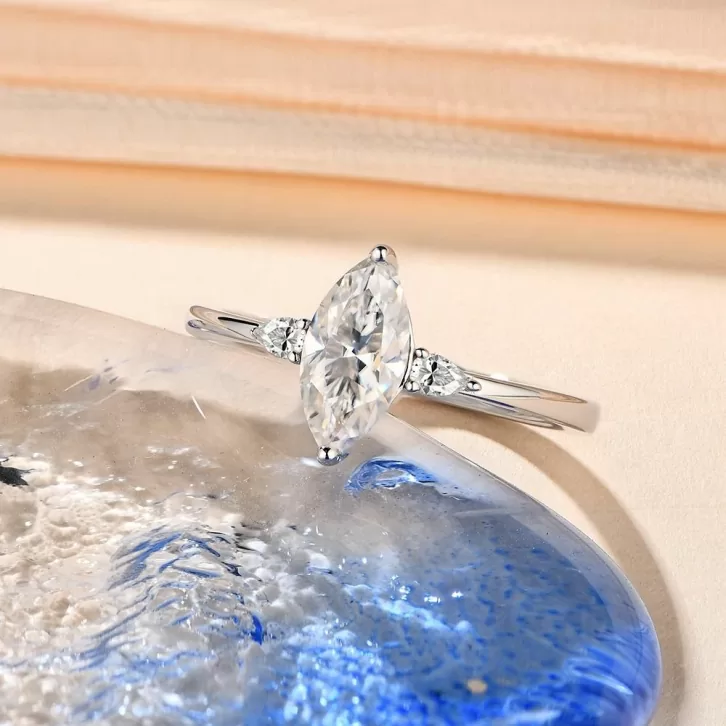
Gemology 101 Introduction to Precious and Semi-Precious Gemstones - HOLYCOME
Gemology is the science of identifying, grading, and evaluating gemstones. For anyone buying, selling, designing, or wearing jewelry, basic gemological knowledge transforms the experience - from guessing at what a stone is worth to understanding why some gems command premium prices while others are accessible, how to distinguish natural from lab created from imitation, and how to care for each stone properly. This introduction covers the core concepts every jewelry enthusiast, buyer, and professional should know.
What Makes a Material a Gemstone?
A gemstone (or gem) is a mineral, rock, or organic material that is cut and polished for use in jewelry or adornment and that possesses sufficient beauty, durability, and rarity to command value. Most gemstones are minerals (naturally occurring inorganic substances with defined chemical composition and crystal structure), but some gem materials are organic (pearl, amber, coral, jet, ivory) or even rock (lapis lazuli is a rock, not a single mineral).
Three properties define gem value:
Beauty: Color, luster, brilliance, fire, transparency, and special optical effects (phenomena like star effect, color change, opalescence). Beauty is partly subjective (cultural preferences vary), but standards exist within the trade for evaluating each factor. Durability: A gem must withstand the wear, heat, chemicals, and impacts of jewelry use. Durability has three components: hardness (resistance to scratching), toughness (resistance to chipping and breaking), and stability (resistance to heat, light, and chemical change). Rarity: Stones that form rarely and in few locations command higher prices than abundant stones. Rarity alone does not create value - there must also be demand. Many extremely rare minerals are not well-known gems because of lack of color or demand.
Precious vs Semi-Precious: An Outdated Distinction
Traditional classification divides gems into "precious" (diamond, ruby, sapphire, emerald) and "semi-precious" (everything else). This distinction originated in the 19th century and is now considered misleading by gemologists - some semi-precious gems (high-quality paraíba tourmaline, fine jadeite, top Kashmir sapphires) far outprice low-quality examples of the "precious" four. The modern gem trade avoids the precious/semi-precious terminology and evaluates each stone on its individual merits of color, clarity, cut, and carat weight. Nevertheless, the historical "big four" remain the most commercially important gems globally.
The Major Gemstone Families
Diamond (Carbon, C)
Mohs hardness 10 (the hardest natural material). Refractive index 2.42. Dispersion 0.044. Colorless to yellow/brown; also fancy colors (pink, blue, yellow, green, red, etc.). Diamond is valued for its extreme hardness, brilliance (white light return), and fire (colored flashes). The 4C grading (cut, color, clarity, carat) is the standard evaluation framework. Sources: South Africa, Botswana, Russia, Canada, Australia. Lab grown diamonds are chemically identical and widely available.
Corundum (Ruby and Sapphire, Al2O3)
Mohs hardness 9. Ruby is the red variety of corundum (colored by chromium); all other colors of corundum are sapphire (blue sapphire colored by iron and titanium; fancy sapphires in pink, yellow, padparadscha, green, purple, colorless). Corundum is the second-hardest natural gem, making it excellent for everyday wear. Sources: Myanmar (Burma), Sri Lanka, Madagascar, Thailand, Australia, Montana (US). Synthetics have been produced since the early 1900s; heat treatment is extremely common to improve color.
Beryl (Emerald, Aquamarine, Morganite, Heliodor, Goshenite, Bixbite)
Beryl is a beryllium aluminum silicate (Be3Al2Si6O18) that forms gem-quality crystals in different colors depending on trace elements: green (emerald, colored by chromium/vanadium), blue (aquamarine, iron), pink/morganite (manganese), yellow (heliodor, iron), colorless (goshenite), red (bixbite/red beryl, extremely rare). Mohs hardness 7.5-8. Emerald is a Type III gem (almost always included; eye-clean emeralds command extreme premiums). Sources: Colombia, Zambia, Brazil, Afghanistan, Ethiopia, Madagascar. Emeralds are commonly oiled to fill surface-reaching fractures.
Quartz (Amethyst, Citrine, Rose Quartz, Smoky Quartz, etc.)
Silicon dioxide (SiO2), the most common mineral in the Earth's crust. Mohs 7. Quartz forms many gem varieties: purple (amethyst), yellow-orange (citrine), pink (rose quartz), brown (smoky quartz), colorless (rock crystal), multi-color (ametrine), agate, chalcedony, onyx, carnelian, jasper, tiger's eye, and aventurine. Widespread and affordable in most varieties, making quartz a staple of commercial jewelry. Sources: Brazil, Uruguay, Madagascar, Zambia, many other locations.
Feldspar (Moonstone, Sunstone, Labradorite, Amazonite)
The most abundant mineral group in the Earth's crust. Gem varieties include moonstone (adularescence - the floating blue light effect), sunstone (schiller from copper/hematite inclusions), labradorite (iridescent play of color), and amazonite (green microcline). Mohs 6-6.5 (some feldspars are too soft for rings; good for pendants and earrings). Sources: Sri Lanka, India, Norway, Madagascar, Oregon (US sunstone).
Garnet Group
A family of closely related minerals including pyrope, almandine, spessartine, grossular (tsavorite and hessonite), and andradite (demantoid). Garnet occurs in every color except pure blue. Mohs 6.5-7.5 depending on species. Deep red pyrope/almandine is the traditional January birthstone; demantoid (green andradite) and tsavorite (green grossular) are premium garnet varieties. Sources: worldwide; notable sources include Kenya/Tanzania (tsavorite), Russia/Namibia (demantoid), Sri Lanka (hessonite).
Topaz
Aluminum silicate with fluorine/hydroxyl, Mohs 8. Occurs in colorless, yellow, brown, blue, pink, and the prized imperial orange-pink. Most commercial blue topaz is irradiated and heat-treated from colorless material. Sources: Brazil, Sri Lanka, Nigeria, Pakistan, Mexico.
Tourmaline
Complex boron silicate, Mohs 7-7.5. Occurs in a remarkable range of colors (often multiple colors in a single crystal - watermelon tourmaline is green with a pink center). Paraíba tourmaline (neon blue-green from Brazil/Mozambique, colored by copper) commands among the highest per-carat prices of any gem. Sources: Brazil, Mozambique, Nigeria, Afghanistan, Madagascar, Maine/California (US).
Opal
Amorphous (non-crystalline) hydrated silica, Mohs 5-6. Prized for play-of-color (iridescent flashes of spectral color caused by light diffraction through silica spheres). Types: white opal, black opal (most valuable - dark body color with bright play-of-color, primarily Lightning Ridge, Australia), boulder opal, crystal opal, fire opal (yellow/orange, often no play-of-color). Opal has high water content and is sensitive to heat and drying (can craze/crack). Sources: Australia (95%+ of world production), Ethiopia, Mexico.
Jade (Jadeite and Nephrite)
Two distinct minerals are called jade: jadeite (rarer, harder, more valuable - especially the vivid green "imperial jade" from Myanmar) and nephrite (more common, darker green, used historically across Asia and Mesoamerica). Jadeite is a sodium aluminum silicate; nephrite is a calcium magnesium iron silicate. Both are extremely tough (resistant to breaking) despite modest hardness (6-6.5 jadeite, 6-6.5 nephrite). Jade is carved as well as faceted. Sources: Myanmar (jadeite), New Zealand, Canada, Russia, China (nephrite).
Pearl
Organic gem formed by mollusks (oysters, mussels). When an irritant enters the mollusk, it secretes nacre (mother-of-pearl) in concentric layers around it. Natural pearls are extremely rare; almost all commercial pearls are cultured (farmers insert a bead or tissue graft into the mollusk to initiate pearl growth). Types: Akoya (classic white, Japan/China), South Sea (large white/golden, Australia/Philippines/Indonesia), Tahitian (dark gray/black/peacock, French Polynesia), freshwater (Chinese, various shapes/colors, more affordable). Evaluated on luster, surface, shape, color, and size (in mm). Pearls are soft (2.5-4.5 Mohs) and sensitive to chemicals, perfume, and acids.
Other Notable Gems
Peridot (olivine, green, Mohs 6.5-7), spinel (historically confused with ruby, red/blue/pink, Mohs 8, no longer commonly treated), zircon (natural, high dispersion, Mohs 6.5-7.5 - not CZ), turquoise (copper aluminum phosphate, blue-green, Mohs 5-6, often stabilized), lapis lazuli (rock, deep blue with pyrite flecks, Mohs 5-5.5), tanzanite (blue/violet zoisite, single source Tanzania, Mohs 6-7, always heat-treated), alexandrite (chrysoberyl, color change green-to-red, Mohs 8.5, extremely rare), cubic zirconia (CZ, synthetic, diamond simulant, Mohs 8-8.5), moissanite (silicon carbide, natural or lab grown, Mohs 9.25).
Gemological Properties and Tools
Gemologists identify gems by measuring their physical and optical properties, using standard tools:
Refractometer: Measures refractive index (RI), the primary identifying property. Diamond has RI 2.42; quartz 1.544-1.553; corundum 1.76-1.77; CZ ~2.15. Specific gravity (SG): Density measured hydrostatically or via heavy liquids. Diamond 3.52; quartz 2.65; CZ 5.6-6.0 (much heavier). Polariscope: Determines if a gem is singly refractive (diamond, spinel, garnet) or doubly refractive (quartz, corundum, tourmaline, moissanite - shows doubling of facet junctions under magnification). Spectroscope: Examines absorption spectrum (each gem absorbs characteristic wavelengths of light, creating a unique fingerprint). Microscope: 10x-60x magnification reveals inclusions, growth patterns, and treatment clues (fracture filling, diffusion treatment, doubling, gas bubbles in glass). Chelsea filter: A colored filter that helps distinguish emerald from simulants and separate natural from synthetic in certain stones. UV lamp: Many gems show characteristic fluorescence under long-wave and short-wave UV light. Thermal/electrical conductivity tester: Distinguishes diamond from simulants (and moissanite specifically). X-ray fluorescence (XRF): Identifies chemical composition for precise identification and metal testing.
Gem Treatments Every Buyer Should Know
The vast majority of commercial gemstones receive some treatment to improve appearance. Treatments are not inherently deceptive as long as they are disclosed, but undisclosed treatment significantly affects value:
Heating: The most common treatment. Rubies and sapphires are routinely heated to improve color and clarity (ancient practice, stable, usually not disclosed unless heavily heated). Aquamarine is heated to remove green and produce blue. Tanzanite is always heated to produce its signature violet-blue. Amethyst is heated to produce citrine or prasiolite. Heating is generally considered permanent.
Oiling/resin filling: Emeralds are almost universally treated with colorless oil or resin to fill surface-reaching fractures and improve apparent clarity. Standard practice in the trade; the oil can dry out over time. Disclosure expected for heavily filled stones but not for minor oiling.
Irradiation: Blue topaz is nearly always irradiated and heated (colors from colorless starting material). Some diamonds receive irradiation to produce fancy colors. Stable.
Diffusion treatment: Color-causing elements are diffused into the surface of corundum to produce sapphire/ruby colors. The color is skin-deep and can be removed during repolishing. Must be disclosed.
Fracture filling (glass filling): Fractures in rubies (especially Mong Hsu, Myanmar) are filled with lead glass to improve transparency. Filled rubies are much less valuable and sensitive to heat/damage during repair. Disclosure required.
Clarity enhancement for diamonds: Fracture filling with glass-like substances (e.g., Yehuda treatment, Kessler process) to improve apparent clarity. Must be disclosed and significantly reduces value. Laser drilling to remove dark inclusions.
Dyeing: Agates, howlite (dyed to imitate turquoise), pearls, jade, and coral are commonly dyed. Disclosed.
Buying Gems Smartly
Practical principles for buying gemstones with confidence: Buy from sellers who disclose treatments and provide clear information about origin and any enhancements. Ask for certificates from reputable labs (GIA, AGL, SSEF, Gübelin, IGI) for significant purchases. Learn to use a loupe (10x magnification) and examine stones yourself for inclusions, chips, and wear. Be suspicious of deals that seem too good to be true - they almost always are. Buy the best color you can afford before upsizing; color dominates value perception in colored stones. Understand which treatments are common and acceptable in each gem type (heat in sapphire is universal; dyeing in turquoise is problematic). Buy from sellers with return policies and reputations for honesty. Build relationships with trusted jewelers and gem dealers.
Frequently Asked Questions
What is the difference between natural, synthetic, and imitation gems?
Natural gems are formed in the earth without human intervention. Synthetic (lab created) gems have the same chemical composition, crystal structure, and properties as natural gems but are grown in a lab (e.g., lab grown diamond, synthetic ruby, synthetic sapphire, moissanite). Imitation (simulant) gems look like a natural gem but are made of different material (e.g., CZ imitating diamond, glass imitating emerald, doublets). Synthetic and imitation must be disclosed.
What are the "four precious stones" and why?
The historical "precious" gems are diamond, ruby, sapphire, and emerald. This classification reflects their historical rarity (before modern sources), hardness (all 7.5+ Mohs), and long-term commercial dominance. Modern gemology does not use the distinction because many "semi-precious" gems can be rarer and more valuable.
What is the hardest gemstone?
Diamond at 10 Mohs is the hardest natural gemstone (and hardest natural material). Moissanite is 9.25, ruby/sapphire (corundum) is 9, emerald and topaz are 8, and quartz is 7. Hardness matters for durability in rings - gemstones under 7 Mohs will scratch from household dust (which contains quartz, 7 Mohs) and are not recommended for daily-wear rings.
What does "eye-clean" mean?
Eye-clean means inclusions are not visible to the unaided eye from a distance of about 15 cm (6 inches), viewed face-up in normal lighting. This is a practical quality threshold for most jewelry buyers; inclusions visible only under 10x magnification do not affect beauty or wearability but can significantly reduce price for diamonds and transparent colored stones.
Are lab created gems worth less than natural?
Almost always yes in resale value, though lab created gems offer equivalent beauty and physical properties at a fraction of the price. Some consumers prefer natural gems for their geological rarity and history; others prefer lab created for ethics and price. Both preferences are legitimate.
How can I start learning gemology?
The Gemological Institute of America (GIA) offers professional gemology education (Graduate Gemologist diploma). For hobbyists and jewelry professionals, introductory courses and books (Gem Identification Made Easy, by Matlins and Bonanno; GIA's reference guides) plus hands-on practice with a loupe, refractometer, and known gem specimens build practical skill quickly. Local gem and mineral clubs are excellent resources.
Gemology is a deep and rewarding science that combines geology, optics, chemistry, and art. Whether you're buying your first colored stone, building a jewelry collection, or entering the jewelry trade, gemological knowledge is the foundation of confident decisions.
The Gemological Institute of America’s gem encyclopedia is an authoritative, widely cited reference on moissanite and diamond quality factors.
Related Reading
- Gemstone Buying Guide for Jewelry Makers & Buyers - HOLYCOME
- 925 Sterling Silver Care Maintenance Complete Guide - HOLYCOME
- Lab Grown Diamonds Complete Education Guide - HOLYCOME
Related reading: Lab Created Gemstones Gemology Guides, Lab Created Gemstones Factory Direct, Lab Created Gemstones Custom OEM Private Label.


