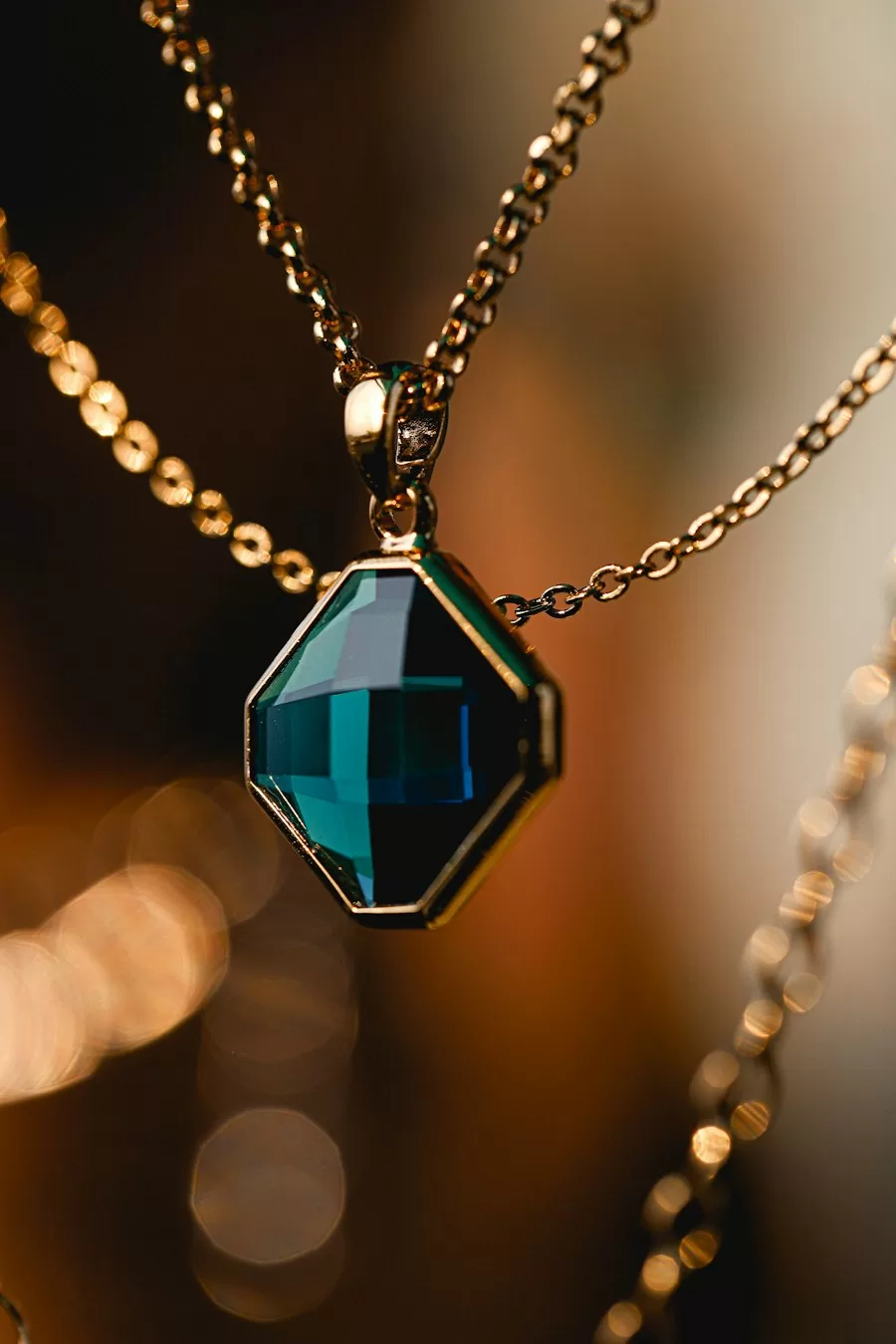
Open any diamond grading report and you will see a list of measurements: table, depth, girdle, culet. The table is the largest single facet on the crown of a polished diamond, the flat octagon on the very top. Its size, expressed as a percentage of the diamond's total width, has a real effect on how the stone looks in daylight. It is part of the wider story of diamond cut grading, and it is worth understanding before you compare stones side by side.
What table percentage actually measures
The table percentage is the width of the top flat facet divided by the average diameter of the diamond, times 100. A 6.5 mm round diamond with a 4.0 mm table has a table of about 62%. That number appears on the report as a single figure, usually between 53% and 75% for round brilliants. The same measurement is taken for fancy shapes, though the ideal ranges differ by cut.
Why table size changes the look
Think of the table as a window into the stone. If the window is very large, more light enters straight down and reflects straight back out, which can make the diamond look bright and glassy but a little flat. If the window is very small, more of the angled crown facets are visible from the top, which increases the contrast between light and dark areas and can make the stone look sharper and more patterned. The sweet spot balances brightness (white light) and contrast (the dark arrow or star patterns you see through the table).
Ideal table ranges for round brilliants
For a modern round brilliant, most gemological laboratories consider a table between about 54% and 60% to be in the ideal to very good range, assuming depth proportions are also in check. Tables around 56% to 58% are widely regarded as producing a lively, balanced stone. A table above 65% tends to look open and bright but lower in contrast. A table below 53% can look very contrasty and dark if the rest of the proportions are not carefully tuned. Remember that table percentage never acts alone; it works together with crown angle, pavilion angle and depth. Our article on ideal cut proportions covers the full picture.
Fancy shapes are different
Ovals, pears, cushions and emerald cuts do not have a single universal ideal table. Emerald cuts, for example, often look their best with a larger table, because the step-cut style relies on broad open facets and reflections rather than the tiny sparkling facets of a round brilliant. Cushions and ovals can tolerate a slightly wider table because their rounded corners soften the effect. If you are comparing fancy shapes, look at the actual stones in person rather than chasing a round-brilliant number.
How it relates to hearts and arrows
Hearts-and-arrows diamonds are a subset of very precisely cut round brilliants. Their table is usually on the smaller, tighter side of the ideal range, because a controlled table helps the eight arrows line up cleanly when viewed from the top. If you are paying a premium for hearts and arrows, check that the table percentage sits within the lab's ideal range and that the symmetry grade is Excellent or Very Good. If you want the background, our hearts and arrows guide explains what to look for.
What the report does not tell you
A printed table percentage is a starting point, not a verdict. Two diamonds with identical table numbers can look different because of crown height, star facet length and the quality of the polish. This is why experienced buyers still want to see the stone under an ideal-cutscope or at least in good diffused light. The number tells you what to expect; the stone tells you the rest.
Do not over-optimise on one number
It is easy to fall into the trap of hunting for a 57.5% table and ignoring colour or clarity. Table percentage is one of several cut factors, and cut itself is one of the 4Cs. A well-proportioned stone with a slightly larger table will usually outperform a poorly made stone that hits the exact number you wanted. Treat it as a filter, not a destination.
The practical takeaway
When you compare two similar stones, glance at the table percentage on the report. If one is 56% and the other is 64%, ask why they look different in photos. The wider table will often read brighter and whiter; the tighter table will read sharper and more contrasty. Knowing that helps you pick the look you actually want rather than guessing from carat weight alone.
Gemstone grading terminology used here follows the Gemological Institute of America’s gem encyclopedia.
Related Reading
- I1, I2, I3 Clarity: What Included Diamonds Actually Mean
- Diamond Table and Depth Percentages: What the Numbers Actually Mean
- VS1 vs VS2 Diamond Clarity: Which Grade to Buy
Frequently Asked Questions
Is moissanite a good diamond alternative for retail buyers?
Yes for price-sensitive customers who want brilliance and hardness. Moissanite ranks 9.25 on the Mohs scale, holds up to daily wear and costs a fraction of a natural diamond of the same size, so it resells fast in bridal and fashion lines.
What is the minimum order for wholesale moissanite?
MOQ starts at 50 pieces per design for stock items. Custom cuts and private-label settings usually start at 100–300 pieces depending on the mold.
Do you provide certificates with moissanite stones?
Yes. Every parcel ships with GRA or IGI documentation listing carat weight, color grade and cut. We recommend passing the certificate to your end customer for trust.
How long does sample and bulk production take?
Samples ship in 3–5 days. Bulk runs take 15–20 days under 500 pieces, and 25–30 days for custom work.


