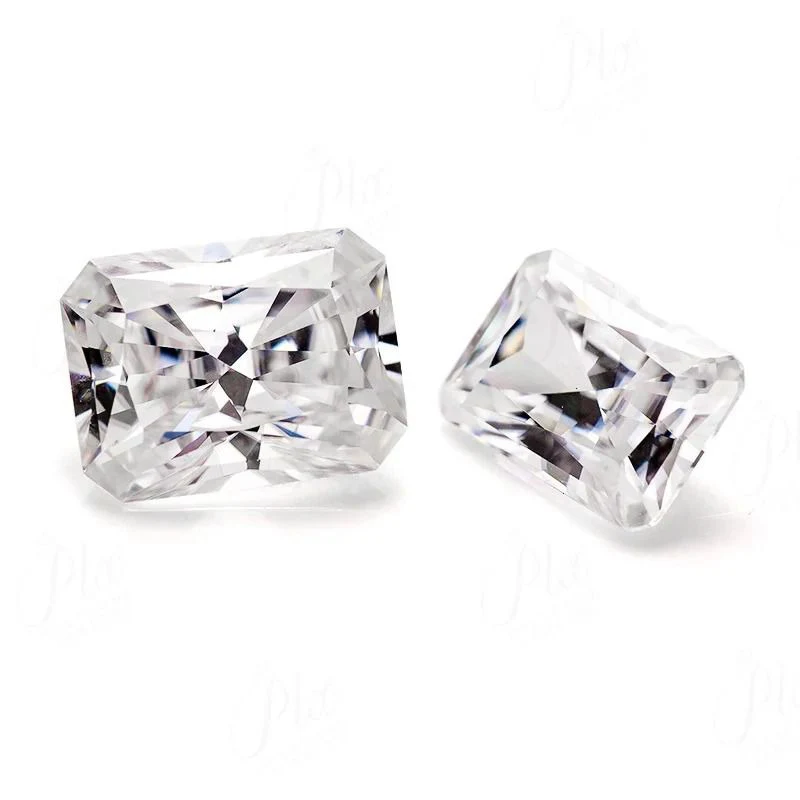
A GIA 'Excellent' cut grade tells you a diamond is well proportioned, but it hides the actual numbers. If you want to understand why one Excellent-cut stone looks livelier than another, or compare a stone that has no formal cut grade, you have to read the proportions. This is the plain-English version of the numbers that matter on a round brilliant.
The four numbers to look at
| Measurement | Ideal range (round brilliant) | What it does |
|---|---|---|
| Table % | 54–60% | Too big looks flat; too small looks chunky |
| Depth % | 59–62.5% | Too shallow leaks light; too dark goes dark |
| Crown angle | 34–35 degrees | Sets the white sparkle |
| Pavilion angle | 40.5–41 degrees | Sets the light return |
What each number feels like
The table is the large flat facet on the top. A table over 65% makes the stone look broad and flat, like a window. A table under 53% makes it look chunky and heavy. The ideal middle — around 57% — balances sparkle and proportion. Depth % compares the stone's total height to its width: a shallow stone (under 57%) lets light leak out the bottom and looks see-through; a deep stone (over 64%) goes dark in the centre and looks smaller face-up. Crown and pavilion angles are the geometry that bounces light back to your eye — get them right and the stone sparkles at arm's length, whatever its other grades.
Fancy shapes have their own rules
The price of a top cut
An Excellent-cut stone costs more than a Good-cut stone of the same carat, colour and clarity — usually 15–25% more. That premium is real, but it is the one upgrade you will actually see every day. People occasionally ask whether they can skip the Excellent cut to afford a bigger stone. Usually the answer is no: a smaller, lively stone beats a larger, dull one on the hand. If the budget is tight, step carat down rather than cut down.
These ranges are for round brilliants. Oval, pear and cushion cuts have ideal length-to-width ratios rather than a single cut grade, and emerald cuts are judged on their step-cut lines rather than the same angles. If you are buying a fancy shape, the proportion numbers on the certificate are less useful than a daylight photo of the actual stone. Trust the photo over the table of numbers for oval, pear and emerald cuts.
Use the numbers, do not worship them
Polish and symmetry complete the picture
Two more terms sit alongside the proportions on a cut-grade report: polish and symmetry. Polish grades how smooth the facets are; symmetry grades how evenly they are aligned. Both are graded Excellent, Very Good, Good downwards. A stone with ideal angles but poor symmetry will look slightly lopsided and will not sparkle evenly. A stone with Excellent everything — angles, polish and symmetry — is the cutter's best work, and it shows at arm's length. When you pay for an Excellent cut, you are paying for all of these, not just the angles.
Why cut is worth more than the other Cs
Cut is the one 4C that no later upgrade fixes. A warm-coloured stone can be set in yellow gold and look fine; an included stone can be chosen at a lower clarity grade and look clean. But a poorly cut diamond looks dull for as long as you own it, and nothing you do to the setting changes that. This is why, on a tight budget, we recommend spending on cut first and holding colour and clarity a grade lower. The cut is what makes a diamond look alive at a dinner table.
A stone with ideal numbers can still look dull if the polish or symmetry is poor, and a stone a fraction outside these ranges can still look beautiful. The numbers are a screening tool, not a verdict. If two stones both grade Excellent, the proportion numbers tell you which one the cutter really cared about. For the girdle and culet details that sit alongside these, our girdle guide covers the rim of the stone. Spend on cut first, and the rest of the 4Cs fall into place around it. A well-cut stone in yellow gold beats a poorly cut stone in platinum every time. The proportions on the certificate are a guide; the sparkle on the finger is the verdict. If the two disagree, trust the sparkle — you will look at the ring, not the report, every morning for the rest of your life. That alone justifies paying the cut premium. A 1.0ct Excellent-cut stone will out-sparkle a 1.25ct Good-cut stone on the hand, every time, and it will keep doing so for decades. Save on carat before you save on cut. A smaller, livelier stone reads as more valuable on the hand than a larger, dull one ever will.
The Gemological Institute of America’s gem encyclopedia is an authoritative, widely cited reference on moissanite and diamond quality factors.
Related Reading
- I1, I2, I3 Clarity: What Included Diamonds Actually Mean
- Diamond Table and Depth Percentages: What the Numbers Actually Mean
- VS1 vs VS2 Diamond Clarity: Which Grade to Buy
Frequently Asked Questions
Is moissanite a good diamond alternative for retail buyers?
Yes for price-sensitive customers who want brilliance and hardness. Moissanite ranks 9.25 on the Mohs scale, holds up to daily wear and costs a fraction of a natural diamond of the same size, so it resells fast in bridal and fashion lines.
What is the minimum order for wholesale moissanite?
MOQ starts at 50 pieces per design for stock items. Custom cuts and private-label settings usually start at 100–300 pieces depending on the mold.
Do you provide certificates with moissanite stones?
Yes. Every parcel ships with GRA or IGI documentation listing carat weight, color grade and cut. We recommend passing the certificate to your end customer for trust.
How long does sample and bulk production take?
Samples ship in 3–5 days. Bulk runs take 15–20 days under 500 pieces, and 25–30 days for custom work.


