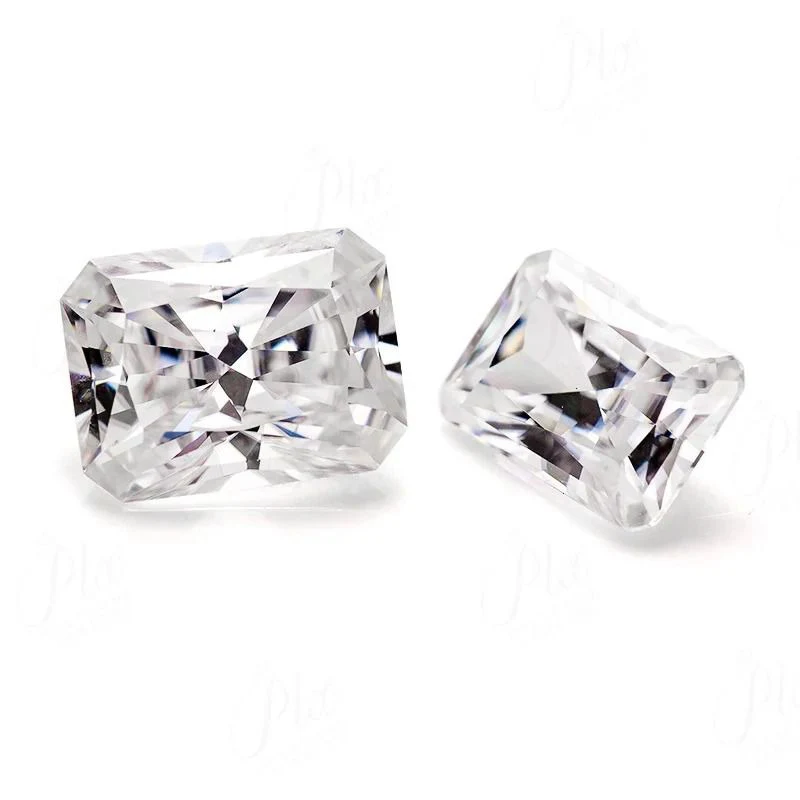
Shop for a round brilliant and you will eventually meet the phrase "hearts and arrows." Vendors describe it as a mark of near-perfect cutting, and the images look impressive: eight tiny arrows across the top of the stone, eight hearts on the bottom. Understanding what the pattern actually proves helps you decide whether the price premium is worth it, and whether you are buying optics or just marketing.
What the pattern is
A standard round brilliant has 57 or 58 facets, arranged in repeating groups of eight. When the crown and pavilion facets are cut to near-identical angles and aligned dead-center, light bounces in a repeating optical pattern. Viewed through a hearts-and-arrows scope from the top, the alignment of the crown facets produces eight arrows. Viewed from the pavilion, the lower facets produce eight hearts. The effect is purely visual, and it only appears in round brilliants; oval, cushion, pear and emerald shapes do not produce it because their faceting is different.
What it signals about the cut
A clean, complete, centered hearts-and-arrows pattern is strong evidence that the cutter controlled the symmetry and alignment carefully. It usually correlates with excellent or ideal proportions, a tight table and girdle alignment, and a high level of finish. In that sense, it is a useful optical confirmation that the stone was cut with precision rather than rushed to save rough. Cutters who chase the pattern deliberately sacrifice a little weight from the rough to get the alignment right, which is part of why these stones cost more.
What it does not prove
Here is the catch. Hearts and arrows is not a grade that any major lab prints on a standard report, and a diamond can receive an Excellent cut grade without displaying a textbook pattern. Conversely, a stone with a visible hearts-and-arrows look can still fall short on depth or table percentage if the proportions are off. The pattern rewards alignment, but brilliance also depends on the actual angles between crown and pavilion. Treat the pattern as a supporting clue, not as a substitute for reading the full cut grade, and never let the label override the numbers on the certificate.
Authentic versus marketed stones
The phrase is used loosely online. Some stones are sold as "hearts and arrows" when the arrows are blurry, lopsided or incomplete. A genuine pattern shows sharp, evenly spaced shapes that sit symmetrically around the center, with hearts that are not pinched or skewed. Ask the vendor for a scope video rather than a stylized graphic, and study the actual footage. If the seller hesitates to show the real pattern, that hesitation tells you something about the stone.
How it relates to "Triple Excellent" stones
You will often see hearts-and-arrows stones bundled with the phrase "Triple Excellent," meaning Excellent cut, Excellent polish and Excellent symmetry. That pairing is sensible, because the pattern is hard to achieve on a stone with sloppy finish. But Triple Excellent is itself a certificate conclusion, and a stone can be Triple Excellent without a perfect optical pattern. When comparing, read the certificate first and let the scope footage confirm it, rather than the other way around.
Is the premium justified?
Hearts-and-arrows stones are often priced higher because the cutter wastes more rough to achieve the alignment, and the result tends to look crisp and symmetrical in person. For a ring that will be worn every day, that optical precision translates into a bright, well-balanced sparkle that reads clearly at arm's length. If your budget is tight, though, an Excellent cut round brilliant with strong symmetry will already deliver most of that beauty without chasing a perfect pattern. Decide what your eye prefers under real lighting, and let the certificate do the verifying rather than the marketing label.
How the optics actually work
The arrows you see from the top are reflections off the bezel and star facets, arranged in a repeating eight-point rhythm. The hearts appear from the bottom because the pavilion mains angle light back in a paired, symmetrical shape. When those facets are slightly misaligned, the arrows look like broken segments and the hearts look lopsided, which is why the pattern is such a useful diagnostic. A stone that shows eight clean arrows and eight full hearts has been cut to tight tolerances, and that precision is what makes it look balanced when worn rather than lopsided under the light.
It is worth remembering that this is a round-only phenomenon. Fancy shapes show their own optical behaviors, like the bowtie shadow in ovals and pears, but there is no hearts-and-arrows equivalent for them. If a vendor claims the pattern on an oval, that claim is meaningless, and you should judge that stone on its proportions and symmetry instead.
In the end, hearts and arrows is best treated as one more clue among many. It rewards good cutting, but the certificate, the proportions and your own eyes under real light are what should make the final decision.
The Gemological Institute of America’s gem encyclopedia is an authoritative, widely cited reference on moissanite and diamond quality factors.
Related Reading
- I1, I2, I3 Clarity: What Included Diamonds Actually Mean
- Diamond Table and Depth Percentages: What the Numbers Actually Mean
- VS1 vs VS2 Diamond Clarity: Which Grade to Buy
Frequently Asked Questions
Is moissanite a good diamond alternative for retail buyers?
Yes for price-sensitive customers who want brilliance and hardness. Moissanite ranks 9.25 on the Mohs scale, holds up to daily wear and costs a fraction of a natural diamond of the same size, so it resells fast in bridal and fashion lines.
What is the minimum order for wholesale moissanite?
MOQ starts at 50 pieces per design for stock items. Custom cuts and private-label settings usually start at 100–300 pieces depending on the mold.
Do you provide certificates with moissanite stones?
Yes. Every parcel ships with GRA or IGI documentation listing carat weight, color grade and cut. We recommend passing the certificate to your end customer for trust.
How long does sample and bulk production take?
Samples ship in 3–5 days. Bulk runs take 15–20 days under 500 pieces, and 25–30 days for custom work.


