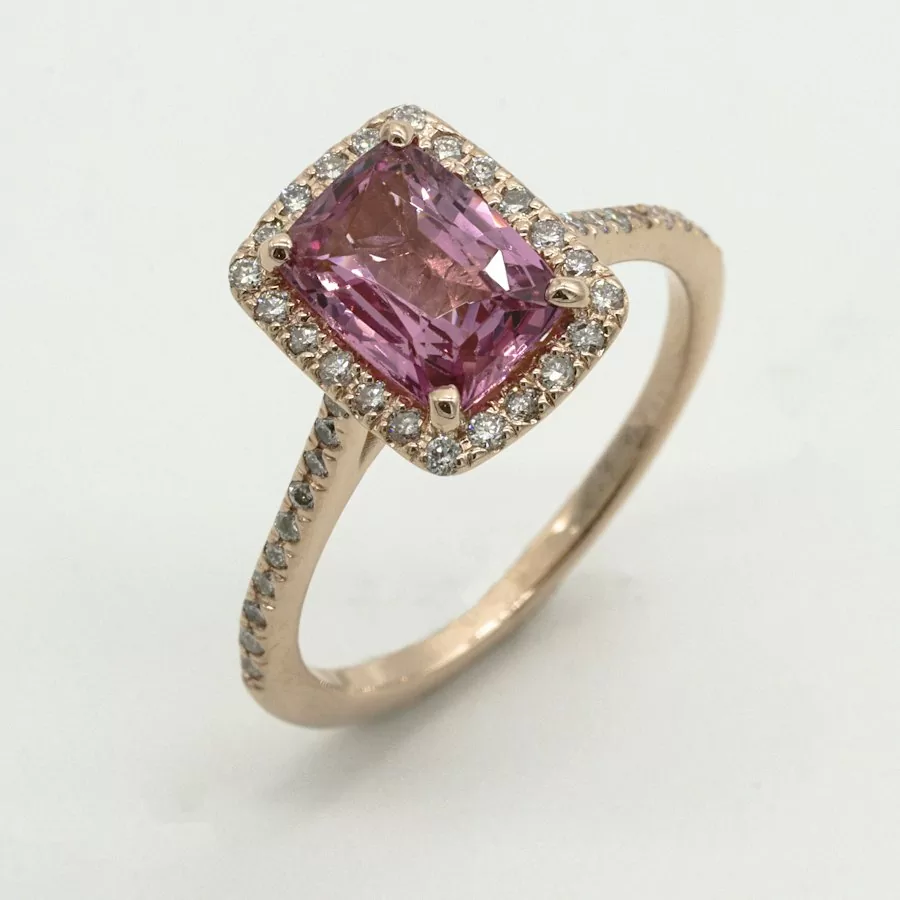
People choose platinum for its weight, its hypoallergenic qualities, and the fact it never needs rhodium plating. A common surprise, then, is when a brand-new platinum ring develops scratches within months. Those fine lines are not damage. They are the beginning of a patina—and understanding it changes how you care for the ring for life.
Why platinum scratches so readily
Pure platinum is dense and durable—yet it is also relatively soft in the way it responds to contact. When platinum touches another hard surface (a counter, a table, another diamond), the metal does not chip or break. Instead it displaces: it bends and moves along the surface, leaving a visible line. That line is what we call a scratch. The key point is that no metal is being removed. The atoms are still there, just shifted. Over years, this shifting creates the soft, matte, satin "patina" that platinum lovers prize.
Patina vs wear-through
This is where platinum differs from white gold. White gold is alloyed with harder metals and plated with rhodium; it scratches and eventually the plating wears off, requiring re-plating (see our rhodium plating guide). Platinum has no plating to wear off. The "scratches" you see are surface texture, not thinning. Platinum bands do lose tiny amounts of metal over decades of heavy abrasion, but a normal everyday ring develops patina long before it develops thin spots. Compare the two metals in our platinum vs white gold article.
To keep the patina or polish it back?
Here is the choice every platinum owner faces. Some people love the patina—it looks lived-in, elegant, and uniquely yours, and it hides minor dings. Others prefer the bright, mirror polish of a new ring. Both are valid. You can leave the ring to develop its satin finish naturally, or you can have a jeweller buff the surface to a high shine. A polish removes a microscopic layer of metal and smooths the displaced ridges back flat, which is why the ring looks new again.
Care best practice
Clean your platinum ring the same way you would fine jewellery: warm water, a little mild washing-up liquid, and a soft brush. Because platinum has no plating, it will not fade to yellow underneath the way white gold can—our gold vs platinum cleaning guide covers the differences. Avoid wearing the ring during heavy manual work, not because platinum is fragile, but because hard knocks can bend prongs or scratch stones. Have a jeweller check the setting at your annual clean.
How often to polish
There is a subtle long-term cost to polishing: each buff removes a tiny amount of metal. A ring polished every few years for a lifetime will eventually thin slightly at high-wear points. If you love the bright look, ask for a light "refurbish" rather than an aggressive cut back, and keep polishing to a minimum—every five to ten years is plenty for most rings. Between polishes, a professional steam and dip will lift the dullness without removing metal.
The bottom line
A scratched platinum ring is not a damaged platinum ring. It is a ring that is beginning to look like it has a story. Embrace the patina if you like the soft, vintage glow; book a polish if you want the showroom shine back. Either way, platinum's lack of plating means you will never face a yellow-underneath surprise, and that low-maintenance quality is exactly why so many people choose it for the band they never take off.
Platinum alloys: 950 vs 900
Not all "platinum" is identical. Most UK wedding bands are 950 platinum—95% pure, alloyed with small amounts of copper or cobalt for a little hardness. The higher purity makes it softer and quicker to develop patina, but also more hypoallergenic. Some settings use 900 platinum, with a little more alloy for extra grip on prongs. The practical difference for daily wear is small, but if you have sensitive skin, 950 is the safer, purer choice.
Dents vs scratches, and insurance
A scratch is surface texture; a dent is a bend. Dents happen when a platinum ring is struck hard enough to fold the metal, and they are usually visible as a flat spot or a kink. Those can be rounded out and re-finished by a jeweller, but a badly dented band may need rebuilding. If your ring is knocked in an accident, have it checked rather than assuming it is fine—a bent band can pull prongs out of alignment. And because platinum is a premium material, insure the band for its current replacement value, not what you paid years ago, and declare any re-finish so the valuation stays accurate.
The long view
Platinum ages better than almost any other ring metal precisely because it wears by moving rather than flaking. A ten-year-old platinum band that has never been polished will look like it belongs to someone who actually wears it—and that is not a defect, it is the point. Keep it clean, check the setting annually, and polish it only when the patina genuinely stops suiting you. Do that, and the band will outlive every plating and finish trend that comes and goes around it.
Rhodium plating, which gives white gold jewellery its bright finish, is covered in the Wikipedia article on rhodium.
Related Reading
- Sweat and Jewelry: Which Metals Survive Everyday Wear
- Cleaning Jewelry: Which Cloths Actually Scratch Your Pieces
- Cleaning Moissanite: Why Toothpaste Is the Wrong Cleaner
Frequently Asked Questions
How do I verify a factory before placing a bulk order?
Request a production video, business license, export records and a paid sample run. A factory that accepts a 50-piece test order is usually a real manufacturer.
What payment terms do you offer?
30% T/T deposit with the balance against the bill of lading. This protects both sides on first orders and can move to net terms after a track record.
What is your normal reject rate?
3–5% under 10x loupe inspection for cast and set pieces. Defective units are replaced free in the next shipment.
Where is the factory located?
Wuzhou, Guangxi, China—the core lab-grown and moissanite manufacturing cluster. Shipments go via Guangzhou or Shenzhen ports.


