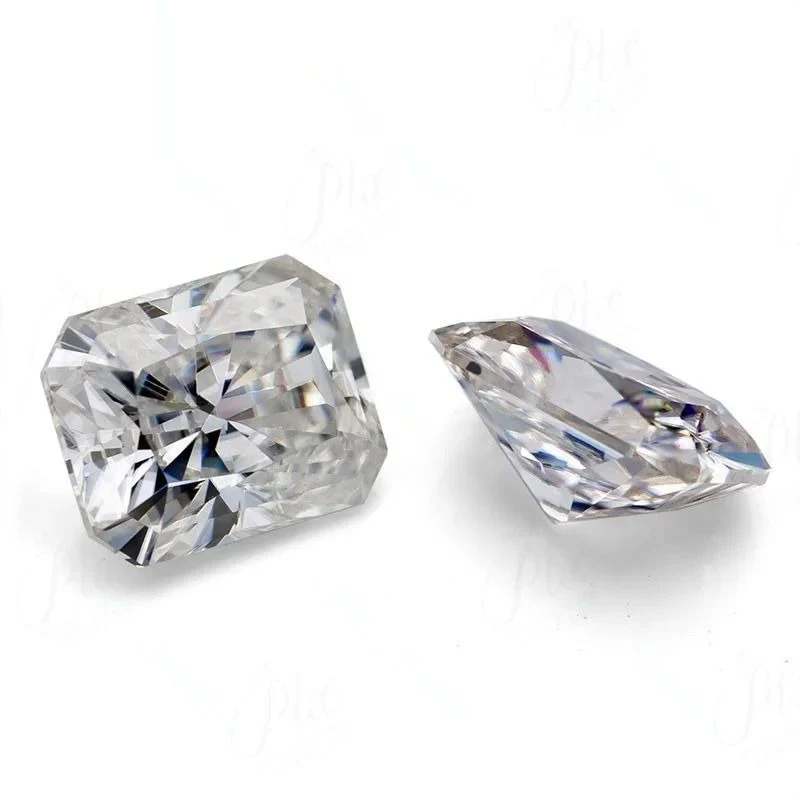
Two modern options dominate the "affordable, ethical sparkle" conversation: moissanite and lab grown diamonds. Both cost far less than mined diamonds, neither relies on traditional mining, and both look brilliant on a finger. But they are not interchangeable. They are different materials with different optics, different durability, and different long-term value. Here is the clear comparison.
What each material actually is
A lab grown diamond is physically and chemically identical to a mined diamond—pure carbon crystallized in a laboratory using HPHT or CVD processes. It rates a 10 on the Mohs hardness scale and is graded by the same 4Cs. Our explainer on what a lab grown diamond is covers the production methods in detail.
Moissanite is silicon carbide, a completely different mineral. It was first discovered in a meteorite and is now manufactured in controlled conditions. It rates roughly 9.25 on the Mohs scale—very durable, but a notch below diamond's 10. It is a diamond simulant and alternative, not a diamond.
The optical difference
This is where the two stop looking alike up close. Moissanite has a refractive index around 2.65, which is higher than diamond's roughly 2.42. A higher RI means light bends more, and moissanite's famous trait is doubly refracting: light splits as it passes through, so when you look through the back facets you can see facet doubling. Moissanite also produces more rainbow fire than diamond—more colorful flashes, sometimes described as extra sparkly or slightly disco-like in bright light. Diamonds produce a balanced mix of white brilliance and restrained fire.
In everyday wear, most people cannot tell the difference at arm's length. The divergence shows in close inspection, under bright light, and to trained eyes. If you want the classic diamond look, a lab grown diamond delivers it exactly. If you want a slightly more colorful, fiery stone that no one will be able to identify at a distance, moissanite is the bolder choice. Read our moissanite fire and brilliance piece for the visuals.
Price
Moissanite is dramatically cheaper—often a fraction of the price of even a lab grown diamond of the same apparent size. A one-carat-equivalent moissanite may cost a few hundred pounds, while a comparable lab grown diamond runs into the thousands. If budget is the deciding factor and you love the fire, moissanite wins comfortably. If you want a genuine graded diamond on a budget, a lab grown stone is the middle path between mined diamond and simulant.
Certification and resale
Lab grown diamonds are graded by IGI and other labs with a full 4Cs report, just like mined stones. Moissanite has its own certificates (often from the maker) but is not graded as a diamond. On resale, neither holds mined-diamond-style value, but lab grown diamonds at least retain recognition as real diamonds; moissanite resale is essentially nominal. Our lab grown resale analysis sets realistic expectations.
Durability and testers
A 10-hardness diamond will never scratch in normal wear. Moissanite at 9.25 is nearly as tough and is perfectly fine for an engagement ring, but it can scratch against other moissanites or diamonds over decades, and it can be mistaken for a diamond by basic thermal testers (covered in our moissanite tester article). For most wearers, both are everyday-wearable.
The bottom line
Choose a lab grown diamond if you want the genuine diamond experience—real 10-hardness carbon, graded optics, classic white brilliance—without the mined price tag. Choose moissanite if you want maximum size and fiery sparkle at the lowest cost, and you are comfortable owning a simulant. Neither is a "compromise" in quality; they are simply different materials for different priorities.
How they wear over decades
Daily wear exposes small differences. Diamond's hardness of 10 means it will never scratch, even against other diamonds, and its polish stays sharp for decades. Moissanite at 9.25 is extremely hard, but over very long wear it can develop fine micro-scratches if it rubs against other stones or hard surfaces, and its facet edges can soften slightly. Neither result happens in a few years—both materials are wedding-band-worthy for a lifetime—but if you want a stone that is literally untouchable, diamond (lab grown included) is the harder ceiling.
Ethics and origin claims
Both options sit well for buyers who want to avoid traditional mining. Lab grown diamonds are made in facilities powered (increasingly) by renewable energy, and moissanite is manufactured in clean-room conditions. Be sceptical of marketing that leans too hard on either: lab grown production still requires energy and equipment, and moissanite is a manufactured material rather than a "natural" gem. The honest advantage both share is transparency—you know where and how the stone was made, which is more than most mined diamonds can promise without full chain-of-custody paperwork.
A quick decision aid
If your priority is "I want a real diamond, graded and certified, at half the mined price," stop at a lab grown stone. If your priority is "I want a big, colourful, eye-catching centre on a shoestring and I do not care whether it is technically diamond," moissanite is the answer. A surprisingly common middle path is a small lab grown centre with moissanite accents—but that is a styling decision, not a material one. Either way, the choice you make should be the one you would still defend honestly to anyone who asks what you are wearing.
The distinction between mined and laboratory-grown diamond is covered in the Wikipedia article on synthetic diamonds.
Related Reading
- What Is Moissanite Complete Guide to Quality - HOLYCOME
- Moissanite Hardness Durability and Care Guide - HOLYCOME
- What Is Moissanite Complete Guide to Properties Value and Care - HOLYCOME
Frequently Asked Questions
Is moissanite a good diamond alternative for retail buyers?
Yes for price-sensitive customers who want brilliance and hardness. Moissanite ranks 9.25 on the Mohs scale, holds up to daily wear and costs a fraction of a natural diamond of the same size, so it resells fast in bridal and fashion lines.
What is the minimum order for wholesale moissanite?
MOQ starts at 50 pieces per design for stock items. Custom cuts and private-label settings usually start at 100–300 pieces depending on the mold.
Do you provide certificates with moissanite stones?
Yes. Every parcel ships with GRA or IGI documentation listing carat weight, color grade and cut. We recommend passing the certificate to your end customer for trust.
How long does sample and bulk production take?
Samples ship in 3–5 days. Bulk runs take 15–20 days under 500 pieces, and 25–30 days for custom work.


