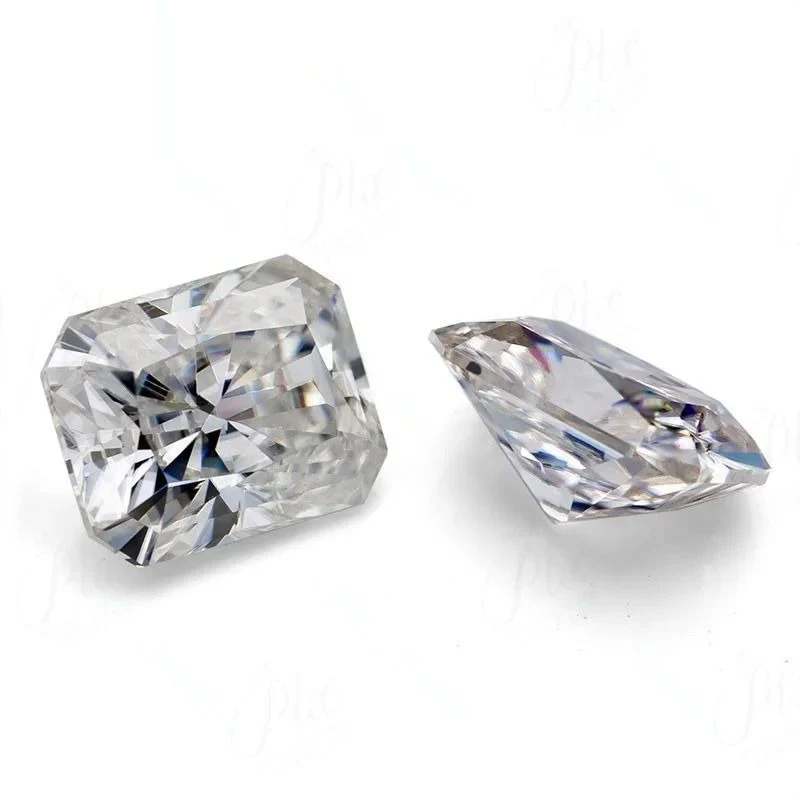
Lab-grown diamonds have reshaped the engagement ring market over the last five years. They cost roughly a quarter of a comparable mined diamond and are chemically and optically identical. The one place they fall down is the second-hand market. This is the honest resale picture, and who it actually matters for.
Why lab-grown resale is weak
Mined diamonds hold a small but real fraction of their value because supply is constrained by geology. Lab-grown diamonds, by contrast, can be manufactured in increasing volume at falling cost. In economic terms, there is no scarcity. A buyer in five years' time will be able to order a new stone of the same grade for less than today's price, which means they will not pay much for your pre-owned one. The market reflects that.
What buy-back schemes actually offer
Some lab-grown vendors advertise a 'buy-back' promise. Read the terms closely. Many offer 20–40% of the original price, and only if you trade up within the same brand. Some charge a restocking fee, or exclude stones that have been re-set. A genuine open-market resale — selling to a third party without buying another ring — usually recovers closer to 10–20%.
| Stone type | Typical resale recovery | Notes |
|---|---|---|
| Mined diamond, GIA certified | 20–40% of original | Better for large, well-documented stones |
| Lab-grown diamond, IGI | 10–20% of original | Brand buy-back can improve this |
| Moissanite | 5–15% | Effectively a wearable purchase, not an asset |
Who should care, and who should not
- Wearers: if you are buying the ring to wear for decades, weak resale is irrelevant. You are not selling it, and you paid a fraction of mined-diamond money for the same look.
- Investors: lab-grown diamonds are not an investment. Nobody should buy them expecting appreciation.
- Heirloom planners: if the ring is meant to pass to a child with 'it was a diamond' provenance, a mined stone carries that story more convincingly, even if it costs more.
Prices have fallen, and keep falling
The cost per carat of lab-grown diamonds has dropped steeply over the last five years as production technology improves. A stone that cost £1,500 in 2021 might cost £900 today. That is great news for buyers, but it is the mechanism behind the weak resale: the market price of the stone you bought last year is already lower this year. When you come to sell, the buyer can order new for less than your asking price, so they offer less. There is no realistic scenario in which a typical lab-grown diamond appreciates over time.
The trade-up loophole
Some vendors let you trade your lab-grown ring in part-exchange against a future purchase, often crediting 30–50% of the original price. If you think you might upgrade in five years — a larger stone, a different shape — buy from a seller who offers this. It is the one situation where the weak resale is mitigated, because you are not selling on the open market; you are using the ring as credit. Read the terms, though: most such schemes require the upgrade to be at least twice the trade-in value, and the credit is usually only valid at the same brand.
The honest verdict
If you want the look and identity of a diamond without a mined-diamond budget, lab-grown is excellent. If you want an asset that holds value, mined is only marginally better and still a poor investment. If you want maximum visual size for minimum money and do not care about resale at all, moissanite wins on price. None of these is a mistake — they are three different answers to the question of what you want the ring to do for you.
What this means for the insurance schedule
Because lab-grown prices keep falling, insure a lab-grown ring for its current replacement cost, not the price you paid. A ring that cost £1,000 new might cost £800 to replace next year, and the insurer will pay replacement cost anyway. Insuring for the original price over-pays the premium slightly. Update the schedule at the three-year review, the same as you would for any other jewellery.
If you have already bought a lab-grown ring, there is nothing to regret. You paid a fraction of the mined price for the look you wanted, and that is a fair exchange. The weak resale only matters if you intended to sell, and most people do not. Enjoy the ring for what it is: a beautiful stone you could afford, chosen because you like it, not because you expect it to be an investment. That is a perfectly good reason to buy any ring. The weak resale is only a problem if you bought it expecting otherwise, and nothing in this guide suggests you should.
The choice between lab-grown and moissanite is largely a cost-and-identity call; our moissanite versus diamond comparison lays out the trade-offs side by side.
The Gemological Institute of America’s gem encyclopedia is an authoritative, widely cited reference on moissanite and diamond quality factors.
Related Reading
- What Is Moissanite Complete Guide to Quality - HOLYCOME
- Moissanite Hardness Durability and Care Guide - HOLYCOME
- What Is Moissanite Complete Guide to Properties Value and Care - HOLYCOME
Frequently Asked Questions
Is moissanite a good diamond alternative for retail buyers?
Yes for price-sensitive customers who want brilliance and hardness. Moissanite ranks 9.25 on the Mohs scale, holds up to daily wear and costs a fraction of a natural diamond of the same size, so it resells fast in bridal and fashion lines.
What is the minimum order for wholesale moissanite?
MOQ starts at 50 pieces per design for stock items. Custom cuts and private-label settings usually start at 100–300 pieces depending on the mold.
Do you provide certificates with moissanite stones?
Yes. Every parcel ships with GRA or IGI documentation listing carat weight, color grade and cut. We recommend passing the certificate to your end customer for trust.
How long does sample and bulk production take?
Samples ship in 3–5 days. Bulk runs take 15–20 days under 500 pieces, and 25–30 days for custom work.


