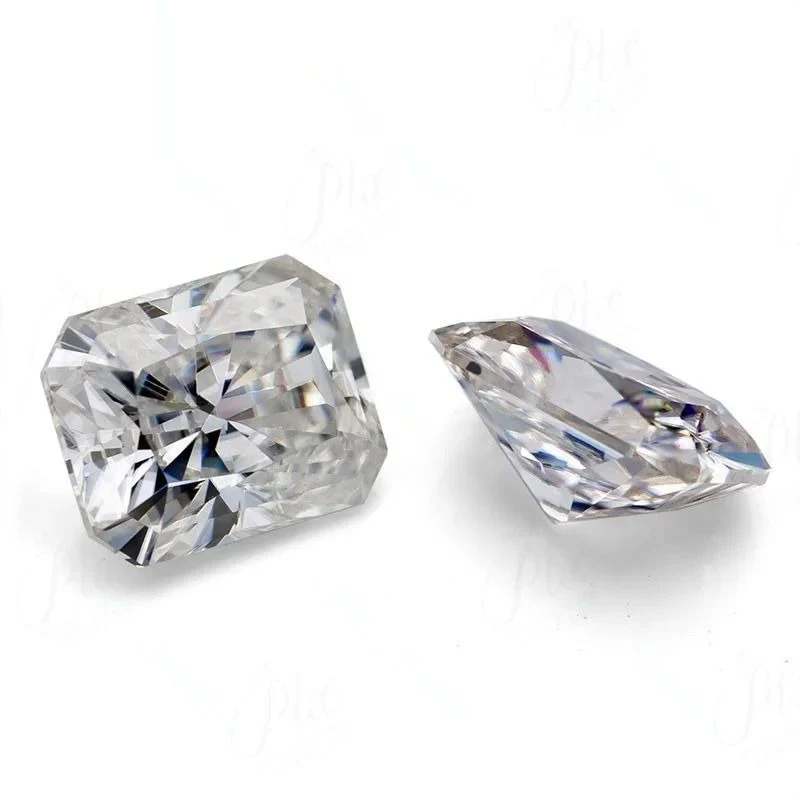
Walk into any modern jeweller and you will hear the word "ethical" attached to almost everything. Ethical sourcing, conflict-free stock, recycled gold, lab-grown stones. Moissanite is often marketed as one of the most responsible choices on the board, and there is truth to that, but the honest answer is more nuanced than the marketing suggests. If you care enough to ask, you deserve a straight picture of what moissanite actually is, where it comes from, and what the real trade-offs are.
It is not mined, but it is not zero-impact
Natural moissanite is extraordinarily rare on Earth; almost all of it is found in meteorites. The stones sold in rings are created in a laboratory using the thermal gradient flux or the CVD (chemical vapour deposition) process. Growing a gem in a reactor removes the habitat disruption, tailings and community displacement associated with diamond mining, which is a genuine ethical win. But the reactors run on electricity, and the carbon footprint of that electricity depends entirely on where the factory sits and how that grid is powered. A moissanite grown on a coal-heavy grid is not carbon-free; it is simply a different kind of footprint.
The conflict-free question
Conflict-free diamond certification has improved dramatically since the Kimberley Process, but the certification system still has well-documented gaps. Because moissanite does not come out of a mine at all, it sidesteps this entire supply chain. There is no artisanal digger, no export certificate, no origin dispute. That matters to buyers who want a ring they can explain without reaching for paperwork. It is worth noting, though, that "conflict-free" is not the same as "ethically made" — labour conditions inside the factories that grow and cut the stones are a separate question, and not all sellers are transparent about them.
Why supply-chain transparency varies
Moissanite is not a single branded product. A handful of companies originally grew and patented commercial moissanite, and as those patents expired, more manufacturers entered the market. The result is that stones sold under different brand names may come from different factories, with different energy mixes and different quality control. Reputable sellers will tell you who grew their stock, provide a certificate, and stand behind the stone. Sellers who cannot answer that question are selling a commodity, not a tracked product. Our guide to checking a moissanite certificate walks through what paperwork should actually accompany a stone.
Energy use and longevity
One honest argument in moissanite's favour is durability on a geological scale. Moissanite scores 9.25 on the Mohs hardness scale, second only to diamond among commonly used gems. A well-made moissanite ring can be worn daily for decades and passed down without being discarded. In lifecycle terms, a product that lasts a lifetime carries less environmental burden than a cheap, fast-fashion piece that tarnishes and breaks within a year. That is a more useful way to think about "green jewellery" than measuring factory emissions in isolation.
Pairing the stone with an ethical setting
The stone is only half the ethical story. The band you set it in is usually cast from gold, platinum or palladium, and the mining of those metals carries its own footprint. Many buyers choose moissanite and then pair it with recycled 18ct gold or fair-trade certified gold, which closes most of the remaining gap. If this matters to you, ask the seller specifically about the metal in the setting rather than accepting a general "ethical ring" label. Our guide to ethical and conflict-free diamond buying covers the same metal-sourcing questions, and they apply regardless of the centre stone.
What moissanite will not fix
Moissanite will not solve every ethical jewellery question. It does not address the wage conditions of the people cutting and polishing the stone, the water used in reactor cooling, or the packaging shipped to your door. It also has a limited resale market, which means the ring you buy is unlikely to hold a high second-hand value — an ethical buyer should think about that, too, because a ring with no resale option is a ring that may one day end up as waste. Read our breakdown of moissanite resale and insurance before you assume it will hold value like a diamond.
A balanced verdict
For most buyers, moissanite is a responsible choice. It removes the mining-and-conflict question entirely, it is exceptionally durable, and when paired with a recycled or fair-trade metal setting it is one of the lowest-footprint ways to buy a fine, everyday ring. It is not perfect, and any seller that presents it as entirely guilt-free is overselling. The most ethical choice you can make is to ask the right questions, buy from a transparent seller, and choose a ring you intend to keep for life.
Questions to ask your seller
Before you buy, ask three simple questions. Who actually grew the stone, and can you name the factory? What metal is the setting cast from, and is it recycled or newly mined? Finally, does the seller offer a take-back or recycling scheme if the stone is ever damaged beyond repair? The answers you get will tell you far more about the ethics of the ring than any marketing page. A seller who cannot answer comfortably is a seller you are entitled to walk away from.
On responsible sourcing of minerals, the OECD Due Diligence Guidance for Responsible Supply Chains of Minerals is the international reference framework.
Authoritative References
For buyers who need to verify the technical and regulatory basis of this guide, the following independent institutions publish authoritative reference data:
- GIA Gem Encyclopedia - independent grading and identification reference for natural and lab-grown gems.
- Wikipedia: Moissanite - peer-reviewed background on moissanite chemistry, optics and history.
Related Reading
- What Is Moissanite Complete Guide to Quality - HOLYCOME
- Moissanite Hardness Durability and Care Guide - HOLYCOME
- What Is Moissanite Complete Guide to Properties Value and Care - HOLYCOME
Frequently Asked Questions
Is moissanite a good diamond alternative for retail buyers?
Yes for price-sensitive customers who want brilliance and hardness. Moissanite ranks 9.25 on the Mohs scale, holds up to daily wear and costs a fraction of a natural diamond of the same size, so it resells fast in bridal and fashion lines.
What is the minimum order for wholesale moissanite?
MOQ starts at 50 pieces per design for stock items. Custom cuts and private-label settings usually start at 100–300 pieces depending on the mold.
Do you provide certificates with moissanite stones?
Yes. Every parcel ships with GRA or IGI documentation listing carat weight, color grade and cut. We recommend passing the certificate to your end customer for trust.
How long does sample and bulk production take?
Samples ship in 3–5 days. Bulk runs take 15–20 days under 500 pieces, and 25–30 days for custom work.


