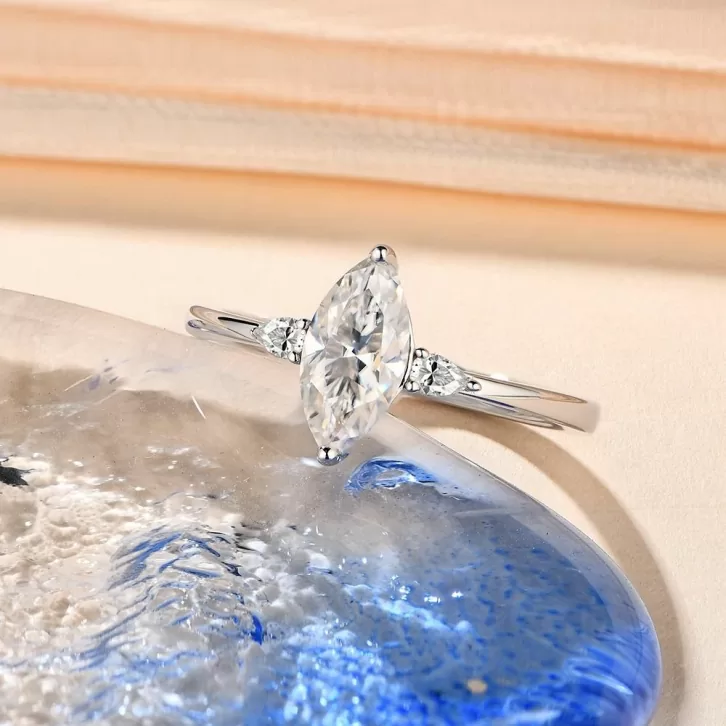
"Conflict-free" is the phrase every diamond buyer hears, and it is also one of the vaguest. It tells you a stone did not finance an armed war, but it says little about labor conditions, environmental impact or how fairly the mine was run. If ethical sourcing (FTC jewelry industry guides) matters to you, the work begins after you hear that reassuring word.
What the Kimberley Process actually covers
The Kimberley Process, launched in 2003, was designed to stop rough diamonds from war zones reaching the trade. It reduced the flow of conflict stones dramatically, but its scope is narrow. It focuses on government-to-government tracking of rough parcels and does not certify fair wages, safe mining conditions, environmental stewardship or the treatment of artisanal miners. So a "conflict-free" sticker is a floor, not a ceiling, and you should treat it as the minimum rather than the whole story.
Questions to ask the seller
Ask where the diamond was mined, not just that it is conflict-free. Ask whether the supplier belongs to the Responsible Jewellery Council, an industry certification scheme that audits social and environmental practices across the supply chain. Ask whether the stone can be traced from mine to polished piece, and whether any provenance documentation accompanies it. Ask what happens to off-cuts and whether the setting uses recycled gold or platinum. A reputable seller will answer these directly; vague answers or evasion are themselves information. Where you buy matters, so narrow your shortlist using trusted places to buy rather than an anonymous listing.
Certificates and origin reports
A standard grading certificate confirms the 4Cs, not the ethics. Some labs now offer diamond origin reports that use scientific screening to confirm geographic origin or to verify a stone was not treated. These do not replace due diligence, but they add a layer of traceability that a plain color grade cannot. Ask whether the report names the country of origin or the cutting center, and be wary of stones that arrive with no documentation at all.
Alternative ethical routes
If full mine-level traceability is hard to obtain, two alternatives give you transparency by design. The first is a lab-grown diamond, created in a controlled facility with a documented process and no artisanal-mining concerns. The honest caveat is that lab growth uses energy, so it is not without an environmental footprint, but it is far easier to audit than a distant mine. The second is a recycled or previously owned diamond, which reuses an existing stone and avoids new mining altogether. Both are widely available today, and both tend to be easier on the budget than a rare traceable natural stone.
Do not forget the setting
Ethical sourcing is not only about the center stone. The gold or platinum in the band has its own supply chain, and recycled metals are a practical way to reduce the impact of the ring as a whole. Ask whether the mounting uses recycled precious metal, and whether the workshop can tell you where it came from. A ring is a single object, and its ethics are the sum of every part of it.
Red flags and practical steps
Be wary of listings that claim "100% ethical" on appearance alone but offer no documentation. Look for written commitments, third-party memberships and, where possible, mine or country of origin. Buy from a retailer willing to put sourcing details in writing on the invoice. Doing that turns ethics from a feeling into something you can verify long after the ring leaves the shop, and it gives you a story about the stone that is worth telling for the rest of your life.
The honest limits of lab-grown ethics
Lab-grown diamonds are often described as the ethical default, and they do remove the mining questions. But growing a crystal uses energy, and older production methods had a heavier footprint than newer ones. That does not cancel the benefits, but it means "lab grown" is not automatically "zero impact." If you want the most transparent possible choice, ask the producer about how the stone is grown and whether the facility uses renewable power. Treat it like any other sourcing claim: ask for the detail rather than accepting the headline.
Keep the paperwork
Once you have confirmed the sourcing, keep the grading report, the invoice and any provenance card together. If the ring is ever resold, that documentation is what proves the stone's origin and protects its value. An undocumented diamond, even an ethical one, loses its story the moment the paperwork is gone, and the next buyer will not be able to verify what you verified.
Ethical buying is ultimately about asking more questions, not about paying a premium for a comforting label. The suppliers who can answer in writing are the ones worth trusting, and the ones who cannot usually reveal themselves the moment you ask.
Gemstone grading terminology used here follows the Gemological Institute of America’s gem encyclopedia.
Related Reading
- HPHT vs CVD Lab-Grown Diamonds: The Basics Buyers Ask
- When Your Ring Size Changes: Day to Day, Season to Season
- How Lab-Grown Diamonds Are Priced
Frequently Asked Questions
Is moissanite a good diamond alternative for retail buyers?
Yes for price-sensitive customers who want brilliance and hardness. Moissanite ranks 9.25 on the Mohs scale, holds up to daily wear and costs a fraction of a natural diamond of the same size, so it resells fast in bridal and fashion lines.
What is the minimum order for wholesale moissanite?
MOQ starts at 50 pieces per design for stock items. Custom cuts and private-label settings usually start at 100–300 pieces depending on the mold.
Do you provide certificates with moissanite stones?
Yes. Every parcel ships with GRA or IGI documentation listing carat weight, color grade and cut. We recommend passing the certificate to your end customer for trust.
How long does sample and bulk production take?
Samples ship in 3–5 days. Bulk runs take 15–20 days under 500 pieces, and 25–30 days for custom work.


