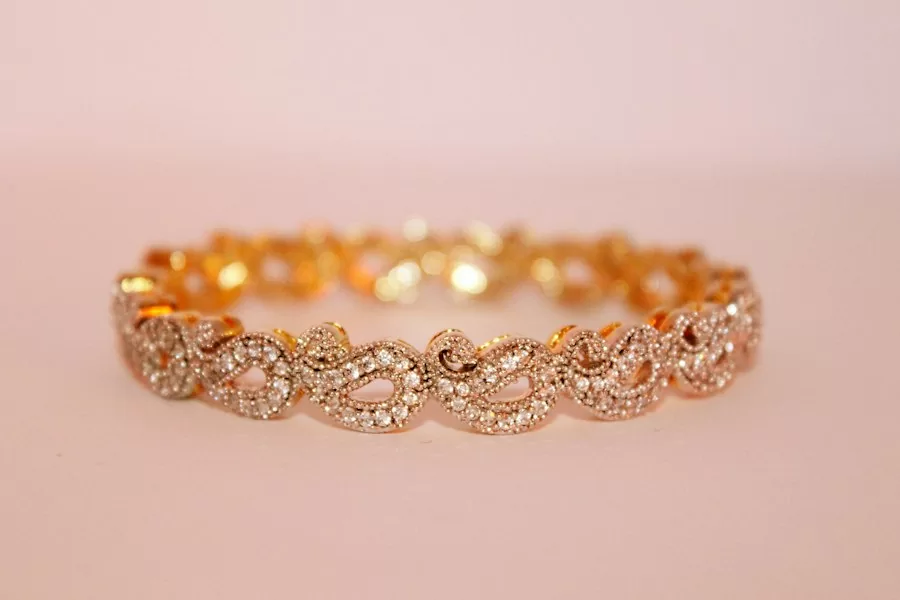
A jeweller's polishing cloth costs a few pounds and does more for the daily shine of your rings than almost any other tool. It is soft, portable, and gentle enough to use while you watch television. It is also surprisingly easy to misuse, and a cloth used the wrong way can put fine scratches into a gold band or push grit against a diamond pavilion. The technique takes thirty seconds to learn and lasts the life of the cloth.
First, understand what the cloth is. Most polishing cloths are woven cotton impregnated with a very mild jeweller's rouge or a fine abrasive. The light cutting action removes tarnish, skin oils and a thin layer of dull oxidation, leaving the metal brighter. This is not the same as a microfibre cloth used to wipe glasses; a plain microfibre removes dust but does not restore polish. If you want a fuller wash, our guide to cleaning jewellery at home covers the soapy-water step.
The correct technique
Lay the cloth flat on a table or hold it loosely in your palm. Place the ring on the cloth and move it in slow, gentle circular motions. You are not scrubbing; you are letting the treated surface kiss the metal. Spend ten to twenty seconds on the band, turn the ring, and repeat. A dull white gold or yellow gold band will start to shine within a few passes. Do not press hard; pressure only drives the cloth fibres into prongs and traps grit against the stone.
For areas you cannot reach, fold a corner of the cloth into a point and work it around the gallery under the stone. This is where dirt hides and where a quick buff makes the biggest visible difference. Avoid the stone itself; the cloth will not scratch a diamond, but rubbing the pavilion can dislodge dirt into the setting and waste the effort. Reserve the cloth for metal.
What it is safe on
Polishing cloths are safe on solid gold, platinum, sterling silver and most plated jewellery, provided the plating is intact. They are also safe around diamonds, sapphires and moissanite because those gems are hard enough that the treated cloth will not mark them. We cover stone-specific care in moissanite cleaning and care and in the broader gold versus platinum cleaning guide.
Where you should be cautious is soft gems. Pearls, opals, emeralds, turquoise and anything porous can be damaged by the mild abrasive in the cloth. Never use a treated polishing cloth on a pearl strand or an opal ring; a plain damp microfibre is enough. If your ring carries any of these, treat the metal only and keep the cloth away from the stone.
When to stop
A polishing cloth is not a magic fix. If the band is deeply scratched, the rhodium plating is wearing off, or the metal is bent or thinned, the cloth will not repair those problems. Over-buffing a worn band can actually remove tiny amounts of metal each time and accelerate band thinning. As a rule, use the cloth for quick upkeep between professional cleans, not as a substitute for a jeweller's visit.
Also watch the colour of the cloth. Once it is blackened with tarnish and residue, it stops working and starts transferring. Most treated cloths can be used for months if you let them dry flat rather than washing them; washing removes the abrasive. When the shine stops coming back, it is time for a new cloth rather than more effort.
What to avoid
Never use household paper towels, kitchen rolls or abrasive sponges on jewellery. They contain wood pulp that scratches soft gold faster than you would believe. Never combine a polishing cloth with toothpaste, bicarbonate of soda or vinegar; those are far too aggressive for everyday upkeep and can strip plating. And never buff a loose stone; if a centre stone wiggles, leave it alone and take it to a jeweller rather than pushing it around with a cloth.
A polishing cloth is the lowest-effort, lowest-risk way to keep a ring looking the way it did the day you bought it. Twenty seconds a week beats a yearly deep clean, and the ritual of checking the band, the prongs and the gallery as you buff is exactly how you catch a loose stone before it drops out. Keep one by the bedside and use it on a lazy Sunday; your rings will look decades younger for it.
Stock two cloths rather than one if you wear mixed jewellery. Keep a separate cloth for silver, because silver tarnish transfers onto the cloth and can leave grey marks on white gold or platinum. Keeping them labelled also stops you from accidentally using a treated polishing cloth on a soft stone. Treat the cloth as part of the jewellery itself: clean, stored flat, and replaced the moment the shine stops coming back. That small routine keeps every piece in your box looking like it left the shop yesterday.
Rhodium plating, which gives white gold jewellery its bright finish, is covered in the Wikipedia article on rhodium.
Related Reading
- Sweat and Jewelry: Which Metals Survive Everyday Wear
- Cleaning Jewelry: Which Cloths Actually Scratch Your Pieces
- Cleaning Moissanite: Why Toothpaste Is the Wrong Cleaner
Frequently Asked Questions
How do I verify a factory before placing a bulk order?
Request a production video, business license, export records and a paid sample run. A factory that accepts a 50-piece test order is usually a real manufacturer.
What payment terms do you offer?
30% T/T deposit with the balance against the bill of lading. This protects both sides on first orders and can move to net terms after a track record.
What is your normal reject rate?
3–5% under 10x loupe inspection for cast and set pieces. Defective units are replaced free in the next shipment.
Where is the factory located?
Wuzhou, Guangxi, China—the core lab-grown and moissanite manufacturing cluster. Shipments go via Guangzhou or Shenzhen ports.


