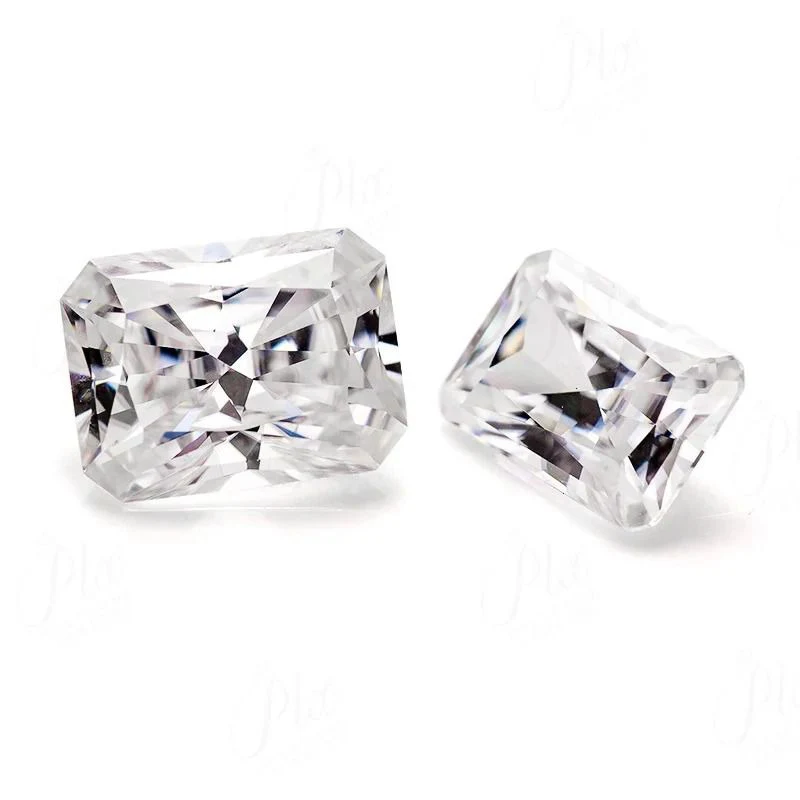
When shoppers talk about cut quality, they usually mean the label on the certificate — Ideal, Excellent, Very Good, and so on. But behind that label sits a set of raw measurements, and one of the easiest to understand is the table percentage. It is a single number, printed on every major diamond report, that tells you roughly how much of the diamond's face-up area is taken up by the big flat facet on top.
What is the table?
The table is the largest single facet on a faceted diamond — the flat, octagonal (on a round brilliant) surface at the very top. It is the facet your eye lands on first when you look down at a stone. The table percentage is the width of that facet, divided by the diamond's average width at the girdle, expressed as a percentage. So a round brilliant that is 6.5 mm across with a 3.75 mm table has a table percentage of roughly 58%.
You will find this number printed on GIA, IGI and AGS reports, usually in the "Proportions" section alongside depth percentage, crown angle, pavilion angle and girdle thickness.
Ideal table percentages by shape
For a round brilliant cut, the widely accepted ideal window is around 53% to 58%. Stones in this range return a good balance of brightness (white light reflected back to the eye) and fire (flashes of colour). AGS Ideal-0 cutters often target 55% to 57%; GIA Excellent stones commonly land anywhere from 54% to 60%. The exact sweet spot depends on how the table interacts with crown angle and pavilion depth — which is why cut graders look at the whole proportion set, not the table alone.
Fancy shapes have different targets. Emerald and asscher cuts, which are step-faceted, often look best with a larger table — 60% to 65% — because the open table emphasises the elegant corridor effect. Oval, pear and marquise stones usually sit in a slightly wider band, 56% to 62%, depending on the length-to-width ratio. Princess cuts tend to run smaller, around 65% to 75% of the square width, because their table is measured across a square rather than a circle.
What happens when the table is too large
A table above about 60% on a round brilliant starts to look open or windowed. Light enters the flat table, misses the angled crown facets that normally bounce it back, and leaks out the bottom of the stone. The result is a washed-out centre: the diamond looks bright but flat, with less sparkle and less colour fire. Shoppers sometimes describe it as looking empty from the top.
Very large tables also tend to make the crown look shorter, which can make the diamond appear slightly less three-dimensional when viewed from the side.
What happens when the table is too small
A table below about 52% on a round brilliant pushes more of the crown area into star and bezel facets. The stone starts to look chunky and dark in the centre, because there is less flat surface returning white light. Crown angles usually have to be steeper to compensate, and the overall look becomes tighter, with more contrast and less open brightness. Some collectors like this look — it can feel more antique — but for a typical engagement-ring shopper, a very small table reads as less lively.
How table percentage interacts with the rest of the cut
The table number is not a standalone verdict. A 60% table paired with a correct 34.5-degree crown angle and a 40.8-degree pavilion can still score Excellent, because the rest of the proportion set compensates. Conversely, a textbook 56% table paired with a too-deep pavilion will still look dark. That is why our guide to ideal cut proportions treats these numbers as a system rather than a checklist.
If you are comparing two stones that have the same cut grade but different table percentages, the one closer to 55% to 57% on a round is usually the safer visual bet. For a deeper dive on how cut grade is decided, see our cut grade explainer.
Reading the number on your certificate
When you pull up a diamond report online, look for the row marked "Table:" followed by a percentage. Compare it to the ideal window for that shape. If the stone is a round and the table reads 62%, do not panic — it can still be a lovely stone, especially if the crown angle is on the higher side. If it reads 48% with a very steep crown, expect a darker, chunkier look.
Remember that carat weight and face-up size are not the same thing, and the table is part of why two equal-weight stones look different on the finger. Our guide to carat size on the finger walks through that relationship in practical terms.
The bottom line
Table percentage is a quick, reliable sanity check on a diamond's cut. For a round brilliant, aim for 53% to 58%; for step cuts, expect a higher number; for fancy shapes, use the shape-specific range as a rough guide. Treat it as one piece of the proportion puzzle, not a verdict on its own, and you will avoid most of the "why does this 1-carat look small?" surprises shoppers run into.
The Gemological Institute of America’s gem encyclopedia is an authoritative, widely cited reference on moissanite and diamond quality factors.
Related Reading
- I1, I2, I3 Clarity: What Included Diamonds Actually Mean
- Diamond Table and Depth Percentages: What the Numbers Actually Mean
- VS1 vs VS2 Diamond Clarity: Which Grade to Buy
Frequently Asked Questions
Is moissanite a good diamond alternative for retail buyers?
Yes for price-sensitive customers who want brilliance and hardness. Moissanite ranks 9.25 on the Mohs scale, holds up to daily wear and costs a fraction of a natural diamond of the same size, so it resells fast in bridal and fashion lines.
What is the minimum order for wholesale moissanite?
MOQ starts at 50 pieces per design for stock items. Custom cuts and private-label settings usually start at 100–300 pieces depending on the mold.
Do you provide certificates with moissanite stones?
Yes. Every parcel ships with GRA or IGI documentation listing carat weight, color grade and cut. We recommend passing the certificate to your end customer for trust.
How long does sample and bulk production take?
Samples ship in 3–5 days. Bulk runs take 15–20 days under 500 pieces, and 25–30 days for custom work.


