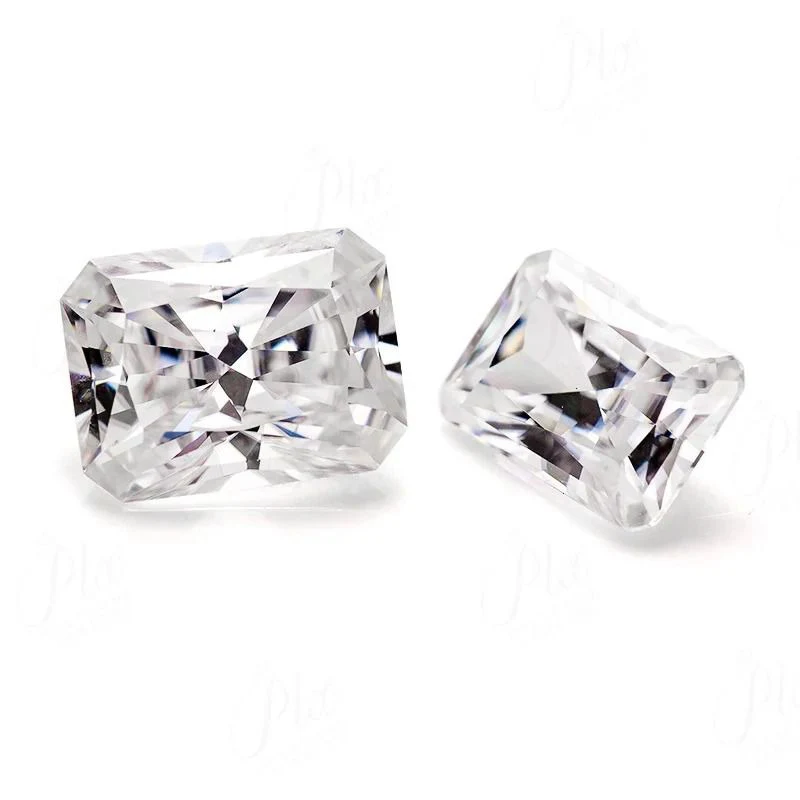
The culet is the smallest and most obscure part of a diamond on a certificate. It is the facet — or the absence of one — at the very bottom point of the pavilion, where all the lower facets meet. Most buyers have never heard of it, and most of the time it does not matter. But understanding it helps you read a certificate and spot an old-fashioned or poorly proportioned stone.
What it actually is
Cut a diamond to its mathematical point at the bottom and that point is sharp, fragile, and prone to chipping. Early diamond cutters added a tiny flat facet at the tip to protect it — that facet is the culet. Modern cutters go further and leave no culet at all, cutting the pavilion to a sharp point (graded 'None' on the certificate), because modern setting methods protect the tip.
What the grades mean
| Culet grade | What you see | Common on |
|---|---|---|
| None | Sharp point, ideal | Modern good-cut stones |
| Very small / small | Barely visible | Older or cheaper cuts |
| Medium | A small dot through the table | Vintage pieces |
| Large | A noticeable hole-like dot | Old European cuts |
Why a large culet is a problem
A large culet reads, when you look through the top of the stone, as a small dark dot in the centre — almost like an inclusion. It also lets light leak out the bottom, reducing brilliance. On a modern stone you want 'None' or 'Very small'. On an antique or vintage ring, a visible culet is part of the piece's character and is not a defect — it tells you the stone is genuinely old. If you are buying a modern engagement ring, though, a medium or large culet usually signals an older-style cut and a stone that will not sparkle as well as a modern one.
It is a small lever, not a deal-breaker
A visible culet is a dating clue
If you are looking at a second-hand or vintage ring, a medium or large culet is often a genuine sign that the diamond is old — cut before modern techniques sharpened the pavilion. That is not a defect; it is part of the piece's character, and it is one reason antique rings read differently on the hand. A modern solitaire should have 'None' or 'Very small'. If a seller is marketing a 'modern' ring with a large culet at modern prices, that is worth asking about, because the cut style is older than the price suggests.
How to spot it yourself
Look through the top of the stone at arm's length, in bright light. If you see a small dark dot dead centre that is not listed as an inclusion on the certificate, it is probably the culet showing through. On a modern good-cut stone, there is no dot — the pavilion comes to a sharp point and light returns cleanly. This is a quick way to tell, without a loupe, whether a stone has been cut to a modern standard or an older one.
Does the culet affect the price?
Barely. A stone with a 'small' culet usually costs a touch less than one graded 'None', but the difference is small — a few percent. The culet is not a feature you should negotiate hard on; it is a feature you should notice and understand. If two stones are otherwise equal and one has a slightly larger culet, take the small discount if the rest of the cut is good. Do not pay extra for a 'None' culet on a stone that is otherwise poorly proportioned.
Culet and the pavilion angle
The culet sits at the bottom of the pavilion, and its size is tied to how the pavilion is cut. A pavilion cut too shallow can show a large culet as a window through the stone. So when you see a medium or large culet, treat it as a hint to look at the rest of the proportions — the pavilion angle and the depth percentage — rather than judging it in isolation. A stone with a large culet and otherwise good angles is fine; a stone with a large culet and a shallow pavilion is not.
Culet is one of the least influential of the proportion details. A stone with a 'small' culet is not a bad buy; it is just not a top-modern-cut stone. Check it on the certificate, prefer 'None' on a new solitaire, and do not worry about it on a vintage piece. The other proportion numbers matter more — see our ideal cut proportions guide for the full picture. If the culet is the only thing that looks off on an otherwise excellent stone, it is not a reason to walk away. It is a detail to notice, not a deal-breaker, and it rarely changes the price you should pay.
The Wikipedia entry on engagement rings gives an independent overview of engagement ring traditions and settings.
Related Reading
- I1, I2, I3 Clarity: What Included Diamonds Actually Mean
- Diamond Table and Depth Percentages: What the Numbers Actually Mean
- VS1 vs VS2 Diamond Clarity: Which Grade to Buy
Frequently Asked Questions
Is moissanite a good diamond alternative for retail buyers?
Yes for price-sensitive customers who want brilliance and hardness. Moissanite ranks 9.25 on the Mohs scale, holds up to daily wear and costs a fraction of a natural diamond of the same size, so it resells fast in bridal and fashion lines.
What is the minimum order for wholesale moissanite?
MOQ starts at 50 pieces per design for stock items. Custom cuts and private-label settings usually start at 100–300 pieces depending on the mold.
Do you provide certificates with moissanite stones?
Yes. Every parcel ships with GRA or IGI documentation listing carat weight, color grade and cut. We recommend passing the certificate to your end customer for trust.
How long does sample and bulk production take?
Samples ship in 3–5 days. Bulk runs take 15–20 days under 500 pieces, and 25–30 days for custom work.


