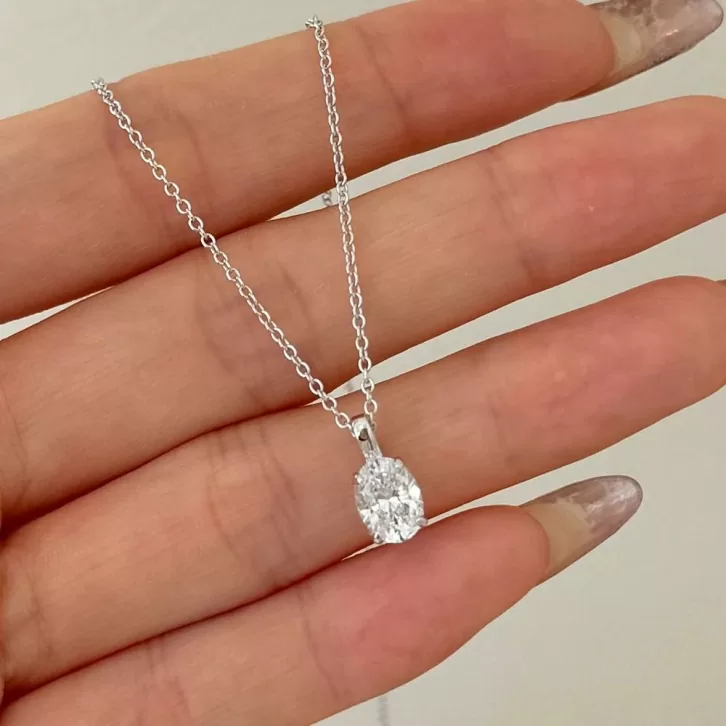
Most everyday chemicals are harmless to a diamond or moissanite. Soap, hand lotion, perfume and sunscreen leave a film but do not damage the stone or the metal. Chlorine is the exception. It is the one common household chemical that can genuinely weaken a gold ring, and it is the reason every jeweller will tell you to take your ring off before you get into a swimming pool, a hot tub or a heavily chlorinated bath.
What chlorine actually does
Chlorine is a strong oxidiser. At normal swimming-pool temperatures, with a typical pH-balanced concentration, it will not hurt a diamond, a moissanite, a sapphire or a ruby. The gem itself is safe. The metal around it is the problem. Gold used in jewellery is almost never pure 24k; it is alloyed with copper, silver, zinc, nickel or palladium to make it hard enough to wear. Chlorine reacts with those alloying metals, especially copper and nickel, and can cause the gold to develop a porous, pitted surface over repeated exposure. In severe cases it can weaken solder joints where the ring has been repaired, and it can accelerate corrosion in parts of the band that are slightly worn.
The effect is slow. One swim will not ruin a ring. A summer of daily hot-tub soaks, however, can leave a 9k or 14k gold band looking frosted or pitted, and it is not something polishing can fix. The damage is in the metal itself.
Hot tubs are worse than pools
The reason hot tubs get a special warning is heat. Chemical reactions run faster in warm water, and hot tub water is typically more heavily chlorinated than a public pool. The combination of heat and strong chlorine is exactly the condition that accelerates alloy corrosion. White gold is also hit harder because its rhodium plating can be stripped faster in warm chlorinated water, revealing the slightly yellower gold underneath. If you want to understand why white gold needs plating at all, our article on platinum vs white gold explains the plating cycle.
What about platinum and silver?
Platinum is much more resistant to chlorine than gold. It is not immune, but a platinum band worn occasionally in a pool is unlikely to show visible damage. Fine silver tarnishes faster after exposure to chlorinated water, and the silver chloride that forms can leave dark marks on the skin and on the jewellery itself. Sterling silver rings worn in a pool should be rinsed in fresh water afterwards and dried carefully.
The bigger risk: slipping off
There is a second reason to take rings off before swimming, and it has nothing to do with chemistry. Fingers shrink in cold water and expand in hot water, but the combination of wet skin, soap residue and the slippery edge of a pool is one of the most common ways rings slip off and are lost. Drain covers at the bottom of pools and hot tubs are notorious collectors of rings. If you do lose a ring near water, act quickly — our article on what to do when a stone is lost covers the immediate steps, including insurance and re-stoning.
Practical rules for pool and hot-tub days
The simplest rule is to leave the ring in a dry, safe place before you change into swimwear. A small zip pouch in your beach bag works, but a locked locker or a trusted friend's bag is better. Do not leave a ring on the edge of a pool; it can be knocked into the water by an elbow. If you forget and swim with it on, rinse it thoroughly under fresh tap water when you are out, dry it, and give it a quick visual check under good light. A single accidental swim is very unlikely to cause damage.
Hotel pool decks are a particular trap. Changing rooms are slippery, towels are piled up, and the ring that you take off to apply sunscreen can easily be knocked into a drain. Keep the ring on your person in a small pouch rather than balanced on a ledge. If you are staying somewhere for a week, leave the ring in the hotel safe rather than carrying it to the pool every day.
For routine care, warm soapy water and a soft brush is all your ring needs. Our guide to everyday jewellery care has the step-by-step. If you swim regularly, consider a cheap silicone "pool ring" to wear on your finger while your real band stays at home.
The bottom line
Chlorine will not scratch your diamond or moissanite, but repeated exposure — especially in warm, heavily chlorinated water — can pit gold alloys, weaken solder, and strip white gold plating. Take the ring off before you swim, rinse it in fresh water if you forget, and treat the pool edge as a slip-and-lose hazard. It is a small habit that prevents a very expensive problem.
Rhodium plating, which gives white gold jewellery its bright finish, is covered in the Wikipedia article on rhodium.
Related Reading
- Sweat and Jewelry: Which Metals Survive Everyday Wear
- Cleaning Jewelry: Which Cloths Actually Scratch Your Pieces
- Cleaning Moissanite: Why Toothpaste Is the Wrong Cleaner
Frequently Asked Questions
What ring sizes can you supply in bulk?
US sizes 5–12 including half sizes. Send a size breakdown with your order and we cast to that curve; comfort-fit inner bands reduce resize requests.
Can I order a mixed size run instead of one size?
Yes. Mixed runs are standard for wholesale: specify quantity per size and we pack and label by size at no extra labor cost.
What is the MOQ for custom ring designs?
50 pieces per design for existing molds; 100–300 pieces when a new mold or CAD model is required.
How should I price rings for retail margin?
Most partners use a 3–4x markup on FOB cost for sterling and 2.5–3x for moissanite solos, which keeps landed cost under 30% of retail.


