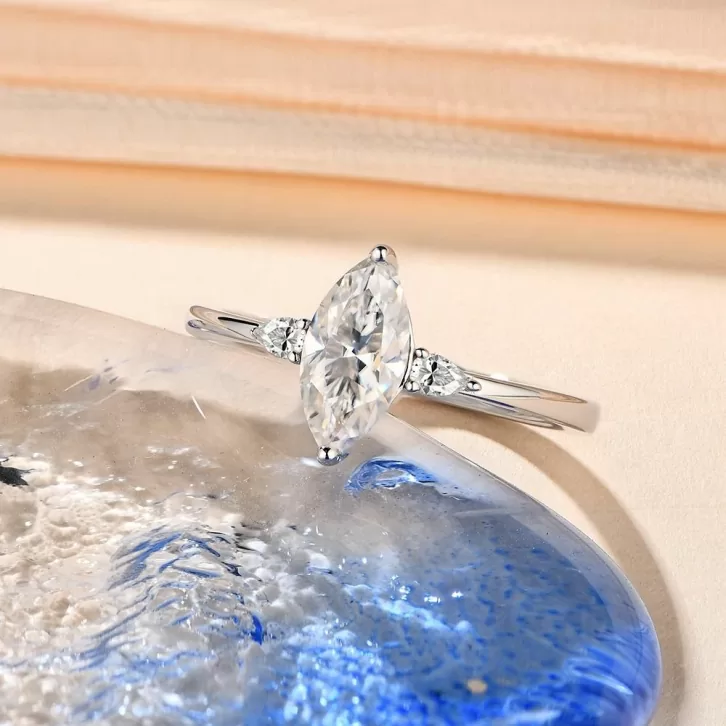
Walk into any jeweler and you will be offered two paths: pick a mounted ring off the shelf, or choose a loose diamond and a separate setting. Each route has loyal fans, and the right one depends on how much control you want versus how quickly you want to see the finished result. Neither is automatically better; the better choice depends on your priorities, your timeline and your budget.
The loose-diamond route
Buying a loose diamond means selecting a certified stone on its own, then choosing a mount to fit it. You compare color, clarity, cut and carat from the actual certificate, you see the stone unmounted under magnification, and you can choose exactly the setting style, metal and finish you want. The transparency is real: you are paying for a specific stone whose grade you can verify independently. This is also the route many people take when they buy online, following a clear online buying checklist.
The downsides are coordination and time. You are managing two vendors, the diamond supplier and the setter, plus a setting fee. The process takes longer, and a misjudged diamond-to-setting proportion can leave you reordering a mount. You also need to trust two businesses rather than one, so reputation matters on both sides. Budget planning matters here, so map out the stone, the setting and the labor using a practical budget guide.
The preset route
A preset ring already has the diamond mounted, halo details, side stones and finish in place. You can try it on, see the scale on a real hand, and walk away with a finished look that is cohesive. For a nervous first-time buyer, that reassurance is worth a lot, because the ring looks exactly as it will on the finger. Bundled pricing can also feel simpler, because one price covers everything and there are no surprise setting fees on top.
The trade-off is visibility. A mounted stone is harder to inspect in its basket, and flaws or proportions are chosen by the vendor rather than by you. Ask to see the grading report for the center stone, and examine it under a loupe where you can. If the seller cannot produce a certificate matching the stone, that is a warning sign, and you should not assume the side stones match the quality of the center.
Cost and markup
A preset ring can be competitively priced, especially for ready-made designs, but premium shops build their margin into the finished package. Buying a loose diamond lets you see the per-carat price clearly and chase better value in the 4Cs. You then add a setting cost on top, which can range from a simple solitaire fee to a substantial custom-design charge. Run the total both ways before deciding, because a cheap diamond in an expensive setting can match a marked-up preset, and the winner is not always the cheaper headline price.
Side stones and custom details
If you want side stones, a halo or engraved details, decide early whether the preset already includes them or whether a custom mount will be needed. A custom setting gives you the most control over the metal, the width and the finish, but it adds lead time and a design fee. A preset gets you those details already resolved. For many buyers, the middle path is a preset mount bought from the same trusted jeweler who also sells loose stones, giving you a finished look with a certified center.
How to decide
If exact specs, provenance and a personalized mount matter most, go loose. If you want to see the ring on, try the shape and finish, and move quickly, a preset ring may be the better emotional fit. Either way, choose a setting style that suits the wearer's lifestyle, confirm the return policy in writing, and the decision stops feeling like a gamble.
Timeline and return policy
The loose route takes longer, so build in a few extra weeks if you are working toward a proposal date. The preset route is faster, but check the return policy before you buy, because a mounted ring that cannot be returned locks you into a decision. Confirm whether sizing and any first resizing are included, and whether the center stone remains covered if something is wrong. These small clauses matter more on a preset, where you have had less chance to inspect the stone.
The middle path
Many buyers end up somewhere in between: a preset mount chosen for its look, paired with a center stone the jeweler swaps in from their loose stock. You get the finished appearance of a preset and the certified transparency of a loose diamond, without designing a whole custom mount. It is a practical compromise, and it works well when you want a specific halo or band design but also want to pick the exact stone in the middle.
Gemstone grading terminology used here follows the Gemological Institute of America’s gem encyclopedia.
Related Reading
- HPHT vs CVD Lab-Grown Diamonds: The Basics Buyers Ask
- When Your Ring Size Changes: Day to Day, Season to Season
- How Lab-Grown Diamonds Are Priced
Frequently Asked Questions
Is moissanite a good diamond alternative for retail buyers?
Yes for price-sensitive customers who want brilliance and hardness. Moissanite ranks 9.25 on the Mohs scale, holds up to daily wear and costs a fraction of a natural diamond of the same size, so it resells fast in bridal and fashion lines.
What is the minimum order for wholesale moissanite?
MOQ starts at 50 pieces per design for stock items. Custom cuts and private-label settings usually start at 100–300 pieces depending on the mold.
Do you provide certificates with moissanite stones?
Yes. Every parcel ships with GRA or IGI documentation listing carat weight, color grade and cut. We recommend passing the certificate to your end customer for trust.
How long does sample and bulk production take?
Samples ship in 3–5 days. Bulk runs take 15–20 days under 500 pieces, and 25–30 days for custom work.


