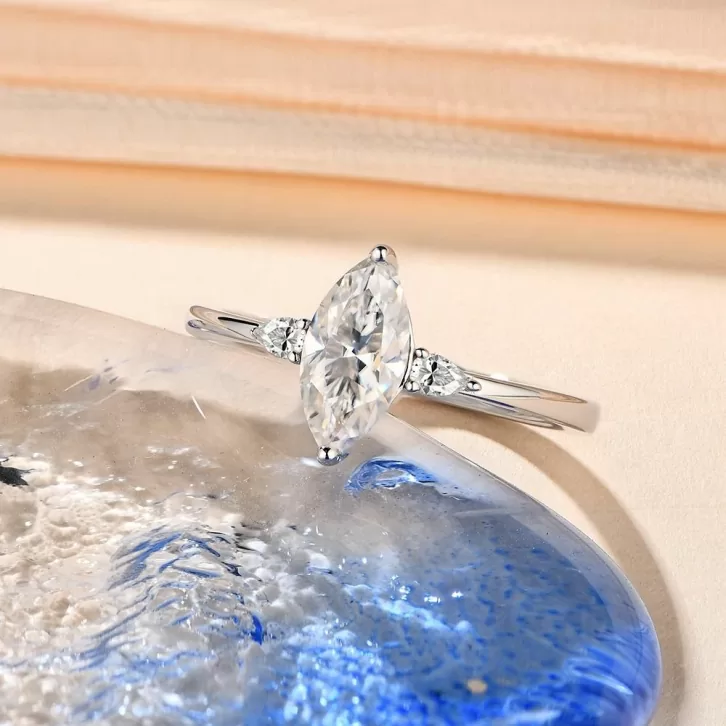
When people ask me what an engagement ring costs, the honest answer is that it costs whatever you choose to spend — but there are real floors and ceilings, and the gap between a sensible price and a marked-up one is often 40%. This guide separates the price bands so you can tell whether a quote is normal, generous or quietly expensive.
The three costs people forget
The sticker price is rarely the whole bill. There is the VAT that UK retailers already include (good), but also: the cost of sizing after the proposal, an annual jeweller's cleaning and claw check at roughly £30–£50, and specialist insurance, which runs about £40–£90 a year for a £3,000 ring. Add the first year of those and build it into your thinking.
What each budget band buys
| Total budget | Online direct | High street jeweller | What you get |
|---|---|---|---|
| £1,000–£1,500 | 0.25–0.40ct solitaire | 0.20ct or a cluster | Small but genuine; watch clarity |
| £2,000–£3,000 | 0.50–0.70ct VS | 0.40–0.50ct SI | The most-chosen band in the UK |
| £4,000–£6,000 | 0.90–1.10ct VS, G | 0.70–0.80ct VS | Clear presence, certificated |
| £10,000+ | 1.5ct+ excellent cut | 1.2ct, branded house | You are now paying for brand |
The same diamond, bought from an online cutter or a Hatton Garden workshop rather than a flagship store, commonly comes in 25–35% lower. That is not because one is fake and the other real; it is because prime retail rent and a glossy marketing budget have to be paid by someone.
Where the money actually goes
Of a £3,000 ring, the loose diamond might be £1,900, the gold setting £300, the making and fitting £300, and the rest margin, overhead and tax. Understanding that split helps you negotiate: if the jeweller charges £400 for a plain 18ct band that you know weighs 3g, you can ask where the premium sits.
Questions that protect your wallet
- Is the diamond natural and GIA/IGI/GIA-certified, and can I see the certificate number before I buy?
- What is the buy-back or upgrade policy if she prefers a different shape?
- Does the price include resizing within the first year?
- Is the band hallmarked? In the UK, 9ct, 18ct and platinum should carry a Sheffield, Birmingham, London or Edinburgh assay mark.
- What happens if a claw loosens in the first 24 months — is tightening free?
The branded-tax warning
Certain international names attach a 50–100% premium for the logo on the inside of the band. The diamond inside is graded by the same laboratories as anyone else's. If resale matters to you, branded houses hold value slightly better on the second-hand market, but you would need to keep the ring twenty-plus years just to claw back the initial premium. For most buyers, that math does not work.
The lab-grown shortcut
If your budget is the constraint rather than tradition, a lab-grown diamond is worth serious consideration. A 1ct lab-grown stone of comparable grade costs roughly a quarter of its mined equivalent in 2026, and to the naked eye it is the same material — same hardness, same sparkle, same optical identity. The trade-off is resale: lab-grown diamonds hold almost nothing of their purchase price on the second-hand market, because supply is effectively unlimited. If you are buying to wear, not to sell, that trade-off is often worth it.
The honest resale picture
Whatever you spend, a diamond ring is not an investment in the way gold bullion is. When people come to sell a ring, they typically recover 20–40% of what they paid, depending on the stone's documentation and the current market. That is fine if you went in knowing it; it is a shock if you did not. Spend on the ring because you want to wear it for decades, not because you expect it to hold its price.
Paying and protecting the purchase
Pay by credit card for anything over £100, where your card issuer carries joint liability under Section 75 of the Consumer Credit Act. That protection alone justifies the small convenience-fee surcharge some jewellers add. Get a written invoice that lists the diamond's certificate number, its carat, colour and clarity, and the metal hallmark. Photograph the ring on the day you buy it, and arrange specialist insurance within the week — not next quarter, when it may already be too late. Most home contents policies will not cover a £3,000 ring away from the home, and the ones that do usually apply a single-item limit that a solitaire blows straight past.
The timing discount
Prices move gently through the year rather than dramatically, but there are quieter windows. January and early February, after the Christmas rush, tend to be the most negotiable. The fortnight before Valentine's Day and the fortnight before a summer proposal season are the worst times to buy — every shop knows demand is high. There is no 'sale' on graded diamonds in the way there is on clothing; a genuine discount shows up as a lower price for the same certificate, not as a red sticker.
Moissanite sits in a different conversation entirely: a comparable-looking stone costs £300–£800, which is why we maintain a separate moissanite versus diamond cost comparison if you want to see the numbers side by side.
The Gemological Institute of America’s gem encyclopedia is an authoritative, widely cited reference on moissanite and diamond quality factors.
Related Reading
- HPHT vs CVD Lab-Grown Diamonds: The Basics Buyers Ask
- When Your Ring Size Changes: Day to Day, Season to Season
- How Lab-Grown Diamonds Are Priced
Frequently Asked Questions
What ring sizes can you supply in bulk?
US sizes 5–12 including half sizes. Send a size breakdown with your order and we cast to that curve; comfort-fit inner bands reduce resize requests.
Can I order a mixed size run instead of one size?
Yes. Mixed runs are standard for wholesale: specify quantity per size and we pack and label by size at no extra labor cost.
What is the MOQ for custom ring designs?
50 pieces per design for existing molds; 100–300 pieces when a new mold or CAD model is required.
How should I price rings for retail margin?
Most partners use a 3–4x markup on FOB cost for sterling and 2.5–3x for moissanite solos, which keeps landed cost under 30% of retail.


