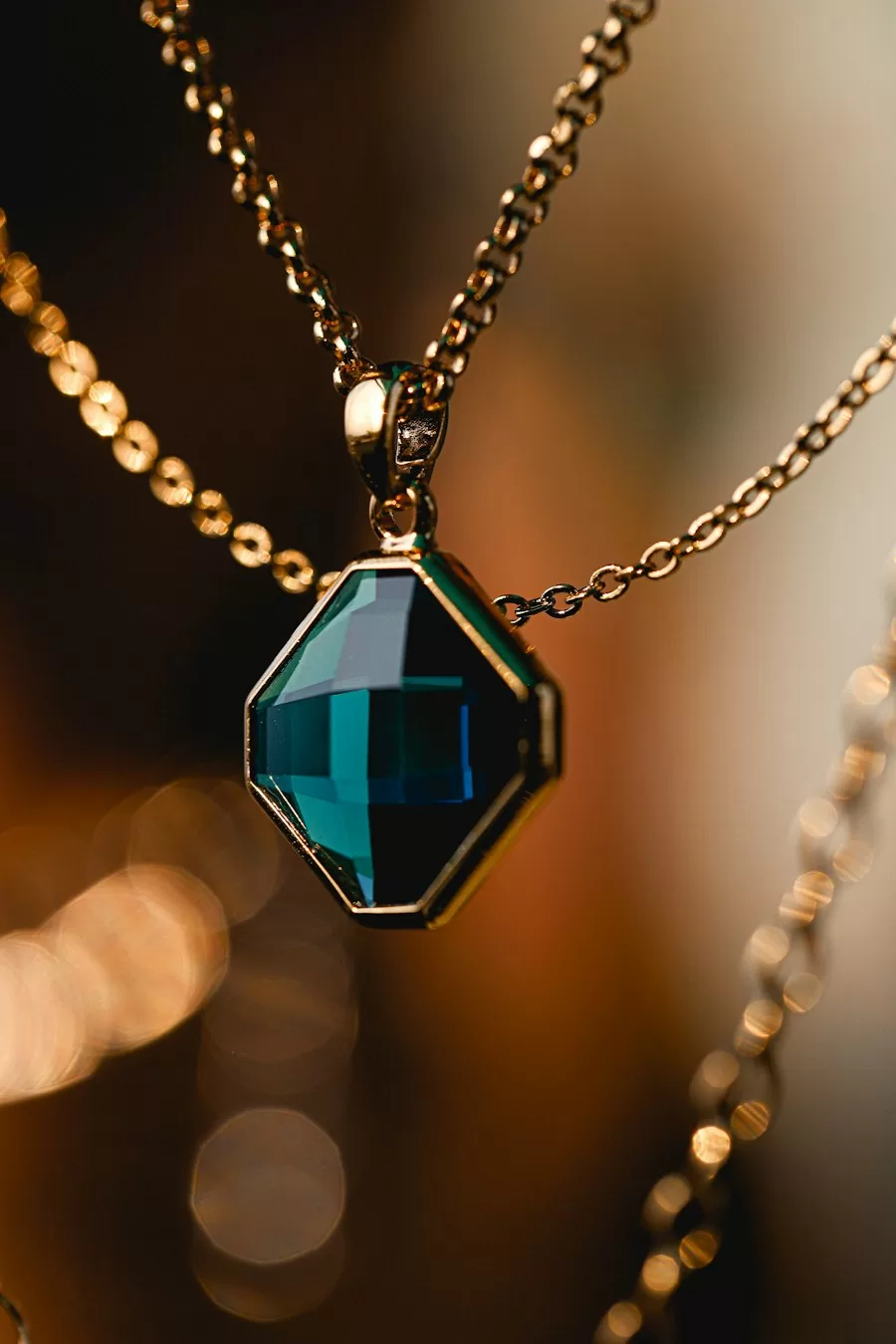
The diamond industry has spent a century convincing buyers that fewer inclusions mean a better stone. Salt and pepper diamonds deliberately throw that rule out. They are grey, cloudy, and speckled, and they have built a loyal following of couples who want a ring that does not look like anyone else's. They are not a discount diamond. They are a separate category, and they deserve a separate set of buying rules.
What they actually are
Salt and pepper diamonds are natural diamonds with a high density of inclusions, usually a mix of black carbon deposits and white feather clouds. The mix of dark and light inclusions gives the stone its name. They are real diamonds, with the same hardness (10 on the Mohs scale), the same thermal conductivity, and the same optical behaviour as a white diamond. They are not treated, not simulated, and not cubic zirconia. They are simply diamonds that fail the standard clarity scale on purpose.
Why they look the way they do
The cloudiness comes from clouds and feathers, which are groups of tiny crystals or fractures inside the stone. In a white diamond, these would be graded I1, I2, or I3 and would depress the price. In a salt and pepper diamond, they are the point. The black inclusions are usually carbon or graphite crystals trapped as the diamond formed. No two stones are alike, which is exactly why buyers choose them.
Pricing vs white diamonds
Salt and pepper diamonds are usually cheaper than a white diamond of the same carat and shape, but not dramatically. A 1.2-carat salt and pepper oval might cost a third to a half of what a comparable white oval would cost, because the clarity grade is effectively ignored. The price is driven instead by the aesthetic: how balanced the speckling is, whether the stone leans grey or brown, and how much light still passes through. The most desirable stones, with a balanced "galaxy" look, can approach the price of a lower white diamond. Our overview of clarity grades explains the scale these stones deliberately sit outside.
Cut and shape options
Salt and pepper diamonds are cut in every shape, but they look best in cuts that celebrate the internal texture. Rose cuts, old mine cuts, and irregular organic shapes are the most popular, because the flat or low crown lets the internal cloud read like a small landscape. Round brilliants can work but they tend to fight the stone's natural character. Ovals and pears stretch the cloud across a wider canvas. Avoid very small stones under 0.7 carats, where the inclusions look like dirt rather than design.
Choosing a setting
Because the stone is already visually busy, the setting should be quiet. A simple solitaire in yellow or rose gold, a bezel, or a slim pavé band lets the stone's texture do the work. Halos and double halos usually overwhelm a salt and pepper stone. Dark metals like black rhodium or oxidised silver can make the grey read as silver, while warm gold makes it read as brown. Look at the stone in the metal you plan to use before you commit. Our guide to setting styles walks through the options.
Durability and care
Salt and pepper diamonds are as hard as any diamond, but they can carry deep feathers that reach the surface. A stone with a surface-reaching feather is slightly more vulnerable to a sharp blow than a clean diamond. Bezel and halo settings protect the girdle better than prongs. Cleaning is the same as for any diamond: warm soapy water, a soft brush, and a soft cloth. Ask the seller before using an ultrasonic, because stones with deep feathers can open up in one.
How they compare to moissanite
Moissanite is bright, colourless, and very consistent. A salt and pepper diamond is grey, cloudy, and completely individual. If you want a ring that looks like no one else's, the salt and pepper diamond wins. If you want a ring that looks white and bright on the finger, a colourless moissanite wins. The two are not substitutes, and our head-to-head on moissanite vs diamond explains the measurable differences.
Common pitfalls
The biggest mistake is buying a stone that looks interesting in a photo but muddy in daylight. Salt and pepper stones can look brown, grey, or almost black depending on the light. Ask for a video in natural daylight, not just a studio shot. The second mistake is choosing a stone with a surface-reaching feather without asking the seller about it; a feather that reaches the pavilion can grow over years. The third mistake is under-buying the setting. A salt and pepper stone in a flimsy prong head looks like a cheap novelty, not a deliberate design. Spend on the setting, because the setting is what makes the ring feel like jewellery rather than a rock on a band.
The Wikipedia article on rhodium explains why rhodium plating is applied to white gold and silver jewellery.
Related Reading
- I1, I2, I3 Clarity: What Included Diamonds Actually Mean
- Diamond Table and Depth Percentages: What the Numbers Actually Mean
- VS1 vs VS2 Diamond Clarity: Which Grade to Buy
Frequently Asked Questions
Is moissanite a good diamond alternative for retail buyers?
Yes for price-sensitive customers who want brilliance and hardness. Moissanite ranks 9.25 on the Mohs scale, holds up to daily wear and costs a fraction of a natural diamond of the same size, so it resells fast in bridal and fashion lines.
What is the minimum order for wholesale moissanite?
MOQ starts at 50 pieces per design for stock items. Custom cuts and private-label settings usually start at 100–300 pieces depending on the mold.
Do you provide certificates with moissanite stones?
Yes. Every parcel ships with GRA or IGI documentation listing carat weight, color grade and cut. We recommend passing the certificate to your end customer for trust.
How long does sample and bulk production take?
Samples ship in 3–5 days. Bulk runs take 15–20 days under 500 pieces, and 25–30 days for custom work.


