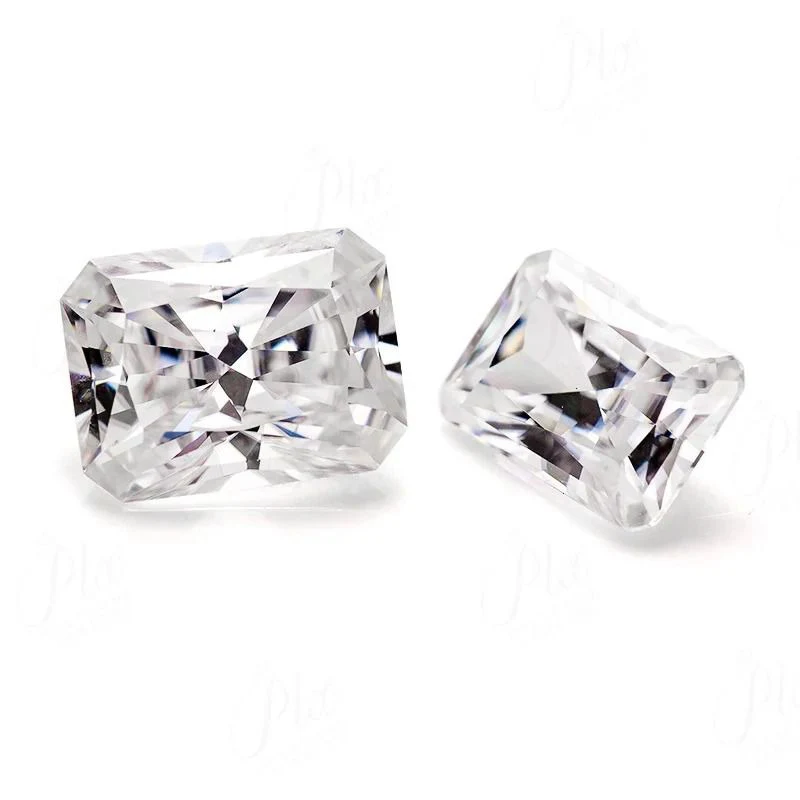
Long before the round brilliant existed, jewelers cut diamonds into the rose cut. Dating back to the 1500s and beloved in Georgian and Victorian jewelry, the rose cut is today's fastest-growing vintage-inspired look. It does not sparkle like a modern diamond. It glows. Here is what you are actually buying.
The anatomy of a rose cut
A modern brilliant diamond has a crown on top and a pointed pavilion below. A rose cut is built the opposite way: it has a domed, faceted top covered in triangular facets that radiate outward like petals, and a flat, un-faceted base underneath. There is no pointed bottom and often no central table facet in the classic form.
Because there is no deep pavilion bouncing light back, a rose cut cannot produce the fire and scintillation of a modern brilliant. Instead it gives a soft, watery, glassy reflection—light skates across the domed surface rather than exploding out in sparks. On the finger it reads romantic, old-world, and slightly bohemian rather than high-contrast and bridal.
Appearance and sizing
Rose cuts are shallow, which has two consequences. First, a rose cut of a given carat weight often looks larger face-up than a modern stone of the same weight, because the diamond is spread thin across the surface rather than stacked deep. Second, because they are flat-based, they sit low in settings and stack comfortably with wedding bands—a real practical advantage covered in our piece on stack height and fitted bands.
Color and clarity matter more
The open, domed facets act like step cuts: they show the body color and internal inclusions plainly. A rose cut with a yellow or brown tint will look tinted, and a prominent inclusion will be visible. Most rose cuts on the market are not D-F colorless; they are soft near-white or even faintly tinted stones chosen for their glow rather than their whiteness. That is a feature, not a flaw—just know you are buying the look, not chasing a top color grade. Pairing with a comparison of other shapes helps set expectations.
Setting considerations
Rose cuts look best in settings that let the dome breathe: bezel settings, rub-over settings, and prong baskets that hold the flat base securely. Because there is no pavilion culet gripping the stone, the setting has to hold the girdle and base well. On the flip side, the thin edges can be fragile if left unprotected, so a bezel or rim is often the safest choice for daily wear. Their low profile also makes them ideal for people who dislike high, snagging rings.
Natural vs rose-cut alternatives
One caution: because rose cuts are shallow and less brilliant, some buyers mistake them for low-quality stones. They are not—the cut style is deliberate. Also, moissanite and other simulants are sometimes cut in a rose-style dome, so if the price seems too good, check that you are buying a genuine diamond and that it has a proper report. Our hardness comparison is one quick way to understand the difference in daily wear.
Who should choose a rose cut
A rose cut is for you if you love antique and estate jewelry, want a low-profile, comfortable ring, prefer a soft romantic glow over loud sparkle, and are drawn to one-of-a-kind shapes—rose cuts frequently come in unusual rounded triangular, oval, or cushion outlines. It is not for you if you want maximum fire, a flawless colorless face-up, or a stone that reads "big modern diamond" from across a room. Know which look you want before you compare prices.
Buying considerations: clarity, culet and surface
Because the faceted dome is shallow, rose cuts tend to show surface scratches and abrasions more readily than a deep pavilion stone—the top is where the wear happens. Inspect the crown closely under a loupe before you buy, and remember that a vintage rose cut will naturally carry the wear of its age, which is part of the charm. Also look at the base: a flat base should sit evenly in the setting, and any closed-back setting should be checked so moisture does not get trapped underneath. The low profile means it stacks beautifully, but make sure the band you choose does not pull the stone out of alignment.
Pairing with a wedding band
One of the quiet advantages of a rose cut is how well it behaves at the altar. Because it sits low and flat, a standard straight wedding band often fits flush against it without needing a shaped or notched band—unlike many high-profile solitaires. That saves both money and stress on the day. If your engagement ring does sit slightly proud, ask your jeweller about comfort-fit and flush stacking when you order the band. Many rose-cut lovers end up stacking two thin bands rather than one wide one, which suits the delicate, antique scale of the stone.
A note on price and supply
Genuine antique rose cuts are one-of-a-kind and priced accordingly, while modern cutters now produce new rose-cut diamonds in matched shapes. The modern versions are more consistent in quality but less historically resonant. There is no right choice—it depends whether you want an heirloom or a fresh stone. Either way, buy from a dealer who describes the stone honestly rather than overpromising "brilliance" a rose cut was never designed to deliver.
The Gemological Institute of America’s gem encyclopedia is an authoritative, widely cited reference on moissanite and diamond quality factors.
Related Reading
- I1, I2, I3 Clarity: What Included Diamonds Actually Mean
- Diamond Table and Depth Percentages: What the Numbers Actually Mean
- VS1 vs VS2 Diamond Clarity: Which Grade to Buy
Frequently Asked Questions
Is moissanite a good diamond alternative for retail buyers?
Yes for price-sensitive customers who want brilliance and hardness. Moissanite ranks 9.25 on the Mohs scale, holds up to daily wear and costs a fraction of a natural diamond of the same size, so it resells fast in bridal and fashion lines.
What is the minimum order for wholesale moissanite?
MOQ starts at 50 pieces per design for stock items. Custom cuts and private-label settings usually start at 100–300 pieces depending on the mold.
Do you provide certificates with moissanite stones?
Yes. Every parcel ships with GRA or IGI documentation listing carat weight, color grade and cut. We recommend passing the certificate to your end customer for trust.
How long does sample and bulk production take?
Samples ship in 3–5 days. Bulk runs take 15–20 days under 500 pieces, and 25–30 days for custom work.


