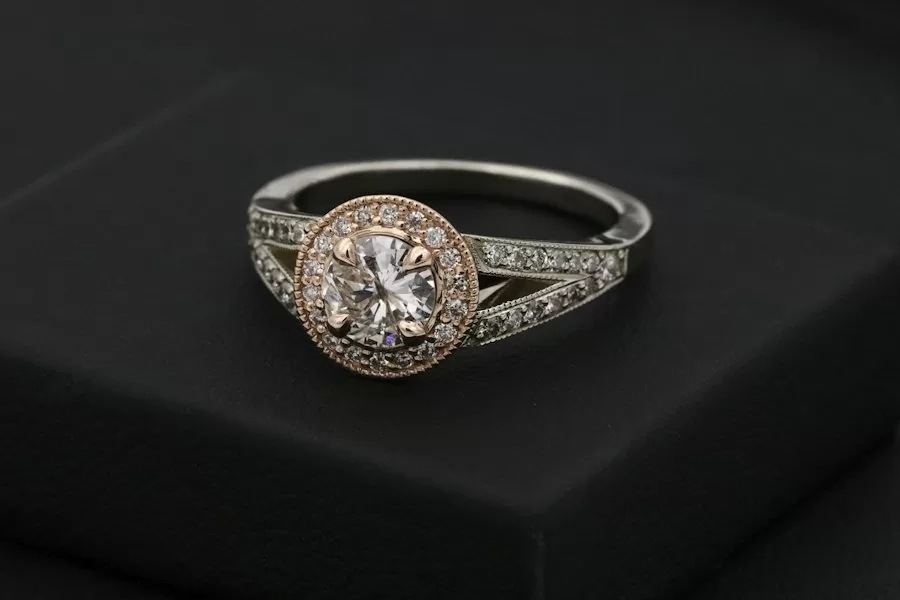
The stone you choose gets all the attention, but the thing actually holding it on your finger is the prong. Prong design changes security, comfort and how much light reaches the stone. If you pick the wrong style for a hands-on life, you will be back at the jeweller sooner than you expect. This is the part of the buying process where lifestyle should outweigh looks.
The classic claw prong
Claw (or cathedral when it rises from the band) prongs are the familiar thin tips that grip the stone's crown. Three, four and six prongs are the common counts. Six prongs hold the stone more securely and spread the visual weight, but cover slightly more of the stone. Four prongs let in more light and look cleaner, which is why solitaire buyers often favour them.
Claw prongs look delicate but can catch on clothing if left long. They also wear down over years of brushing against surfaces, which is why regular checks matter; our home prong check shows what to look for between services. A worn-down prong is the single most common reason a stone eventually falls out.
Ball and rounded-tip prongs
A ball prong ends in a small rounded bead rather than a sharp claw tip. The rounded tip is less likely to snag on knits and hair, and the bead spreads the gripping force over a slightly wider area. Many people find ball prongs more comfortable for active wear, which is why they are a popular choice alongside the broader discussion in engagement rings for active lifestyles. They also re-tip more cleanly when they do wear down.
Basket settings
A basket setting uses a grid of thinner wires beneath the stone to support it from below, usually combined with upper prongs. The basket lifts the stone off the band, lets light enter through the pavilion, and adds a second layer of security. Basket settings are common on halo rings and on rings meant to sit flush with a wedding band, because the open underside avoids clashing with the band's top edge. For how rings stack, our stack height and fitted bands guide shows the clearance a basket provides.
Bezel settings
A bezel uses a continuous rim of metal wrapped around the stone's outer edge instead of separate prongs. It is the most secure setting for daily wear, shielding the stone's girdle from knocks. The trade-off is slightly less sparkle and a more substantial look, which some buyers love and others find heavy. A partial bezel, covering only sections of the stone, splits the difference. For the wider world of settings, our setting styles explained guide covers halo, pavé and tension options.
Pavé and micro-pavé prongs
Small side stones in a pavé band are held by tiny beads rather than full prongs. These micro-settings are beautiful but fragile: a single knocked bead can release a side stone. If you choose a pavé band, expect to have the beads checked more often, and avoid wearing the ring while gardening or lifting. It is the trade-off for the continuous sparkle that pavé gives.
When prongs need re-tipping
Prongs wear down like any exposed metal. When a tip becomes thin, flat or sharp, a jeweller can build it back up with a small bead of solder, a process called re-tipping. It is inexpensive and far cheaper than replacing a lost stone. If you notice a rough catch on clothing, book a re-tip rather than waiting for the next service.
Tall prongs vs low settings
Prong height changes more than security. A tall, cathedral-style setting lifts the stone high off the band, lets light in from all sides, and reads as dramatic on the hand, but it catches on more surfaces and can feel delicate. A low-profile setting hugs the band, is far less likely to snag, and suits an active lifestyle, at the cost of a little brilliance. Many solitaire buyers land somewhere in the middle, and your jeweller can adjust the seat height as part of the design.
Which is right for you?
Choose six prongs or a bezel if you work with your hands, play sport, or simply want peace of mind. Choose four claw prongs if you prioritise maximum sparkle and a clean look. Add a basket if you want the stone elevated and light from underneath. Whatever you pick, book a prong check every six months, because even the best-designed setting loosens over a decade of wear.
Whatever prong style you settle on, the one habit worth building is a quick monthly glance at the tips under a bright light. A prong that catches on clothing or feels rough to the touch is telling you something before the stone is ever at risk, and an early re-tip takes minutes.
The Wikipedia entry on engagement rings gives an independent overview of engagement ring traditions and settings.
Related Reading
- HPHT vs CVD Lab-Grown Diamonds: The Basics Buyers Ask
- When Your Ring Size Changes: Day to Day, Season to Season
- How Lab-Grown Diamonds Are Priced
Frequently Asked Questions
What ring sizes can you supply in bulk?
US sizes 5–12 including half sizes. Send a size breakdown with your order and we cast to that curve; comfort-fit inner bands reduce resize requests.
Can I order a mixed size run instead of one size?
Yes. Mixed runs are standard for wholesale: specify quantity per size and we pack and label by size at no extra labor cost.
What is the MOQ for custom ring designs?
50 pieces per design for existing molds; 100–300 pieces when a new mold or CAD model is required.
How should I price rings for retail margin?
Most partners use a 3–4x markup on FOB cost for sterling and 2.5–3x for moissanite solos, which keeps landed cost under 30% of retail.


