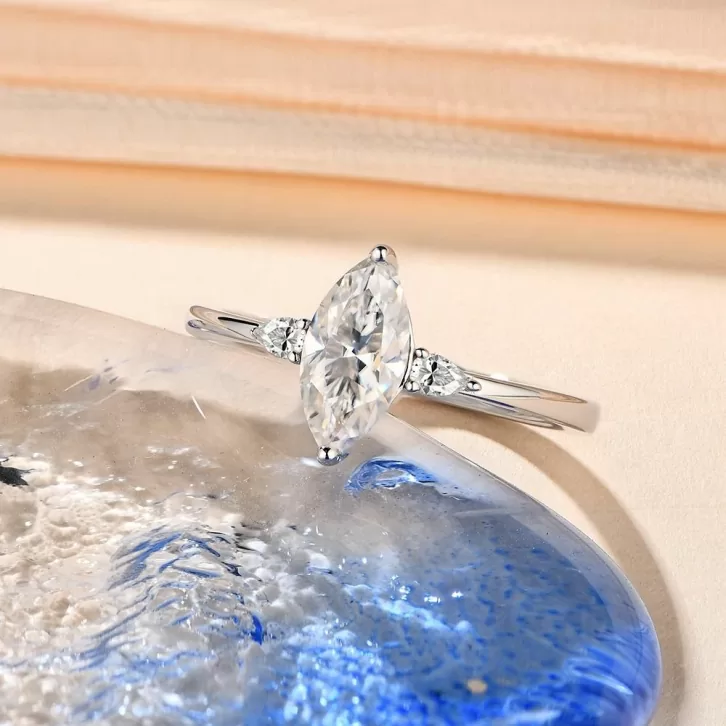
Walking into a jeweller and saying "what can you do on price" almost never works. Walking in with three comparable stones, printed certificates, and a clear budget does. Negotiating a diamond is not the same as haggling at a market; it is closer to buying a car. The stone itself has a market price, but the mounting, the warranty, the service plan, and the trade-in policy all have room. Here is how to ask without sounding cheap.
Know your reference price first
Before you step foot in a shop, pull up two or three online prices for a stone with the same shape, carat, cut, colour, and clarity. Use a known certified diamond source so you are comparing like with like. If the shop's stone is priced 10 to 15 percent above the online reference, you have room. If it is already at or below, you are not negotiating on price, you are negotiating on extras.
Where the wiggle actually is
- The mounting: Settings carry the highest margin. Asking for 10 percent off the mounting, or a free upgrade from 14k to 18k, is reasonable.
- The service plan: Free prong tightening, rhodium refreshes, and a lifetime clean are often included if you ask.
- The insurance bundle: Some jewellers partner with insurers and can waive the first year.
- The trade-in policy: Ask in writing: "If I upgrade in five years, what credit do I get on the stone?" A generous policy is worth real money later.
What does not move
A certified loose diamond with a clear market price has a thin margin. Do not expect 30 percent off the stone itself. If a jeweller offers that, ask why. The answer is usually a slightly off cut grade, a lower certificate, or a stone you have not been shown in real light. Compare two certificates side by side before you assume one deal is better than another.
The polite script
Say: "I love this stone, and I would like to buy it today. I have seen comparable GIA-certified stones online at roughly X. Can you meet me closer to that, or include the service plan and the first insurance year to close the gap?" That sentence does three things: it shows you have done homework, it names a real number, and it gives the jeweller an easy out that still closes the sale. Most owners will take that deal on the spot.
Walk away politely
If the answer is a flat no, thank the salesperson and leave. The price you save by walking is rarely the point; the point is that the next jeweller will notice you are a serious buyer and will sharpen their offer. A good dealer wants your business, your future wedding band, and your anniversary upgrades. Pricing you out of the first sale is poor math on their side.
Watch for the traps
Beware the "today only" discount that magically appears the moment you mention another offer. It is theatre. Beware the downgrade: "I can match that price, but we would need to move to an SI2." That is not a discount, that is a different stone. And beware the uncertified "overstock" diamond sold at half price; without a report, you cannot compare it fairly. Our loose versus preset guide covers why the certificate matters so much here.
The bigger win
The largest saving most couples make is not negotiating 5 percent off a ring they already chose. It is choosing a slightly smaller, better-cut stone than the one they walked in asking for. A well-cut 0.9-carat diamond that looks eye-clean will out-sparkle a mediocre 1.1-carat every time, and it costs less. Let the homework narrow the choice, then negotiate the extras. That is how you end up with a ring you love at a price you can actually defend.
The price-match question
If you have a written online quote for an equivalent stone, ask whether the jeweller will price-match it. Many will, especially if you are also buying the mounting from them. The catch is "equivalent": the online stone must match on shape, cut grade, colour, clarity, certificate, and measurements. A slightly smaller or slightly lower-grade online stone is not a price-match, it is a different product. Bring the printed report so the jeweller can compare on the spot.
Financing and discount interplay
Some shops offer 0 percent financing but refuse to discount the price. Others will take 5 percent off if you pay in full. Do the math before you sign: 5 percent off a three-thousand-pound ring is real money, while a 0 percent plan over twelve months is only worth taking if the cash stays in an account earning interest. Ask which option the shop prefers, and you will usually find they are happy to take the lower cash price rather than carry a financed sale.
Gemstone grading terminology used here follows the Gemological Institute of America’s gem encyclopedia.
Related Reading
- HPHT vs CVD Lab-Grown Diamonds: The Basics Buyers Ask
- When Your Ring Size Changes: Day to Day, Season to Season
- How Lab-Grown Diamonds Are Priced
Frequently Asked Questions
What ring sizes can you supply in bulk?
US sizes 5–12 including half sizes. Send a size breakdown with your order and we cast to that curve; comfort-fit inner bands reduce resize requests.
Can I order a mixed size run instead of one size?
Yes. Mixed runs are standard for wholesale: specify quantity per size and we pack and label by size at no extra labor cost.
What is the MOQ for custom ring designs?
50 pieces per design for existing molds; 100–300 pieces when a new mold or CAD model is required.
How should I price rings for retail margin?
Most partners use a 3–4x markup on FOB cost for sterling and 2.5–3x for moissanite solos, which keeps landed cost under 30% of retail.


