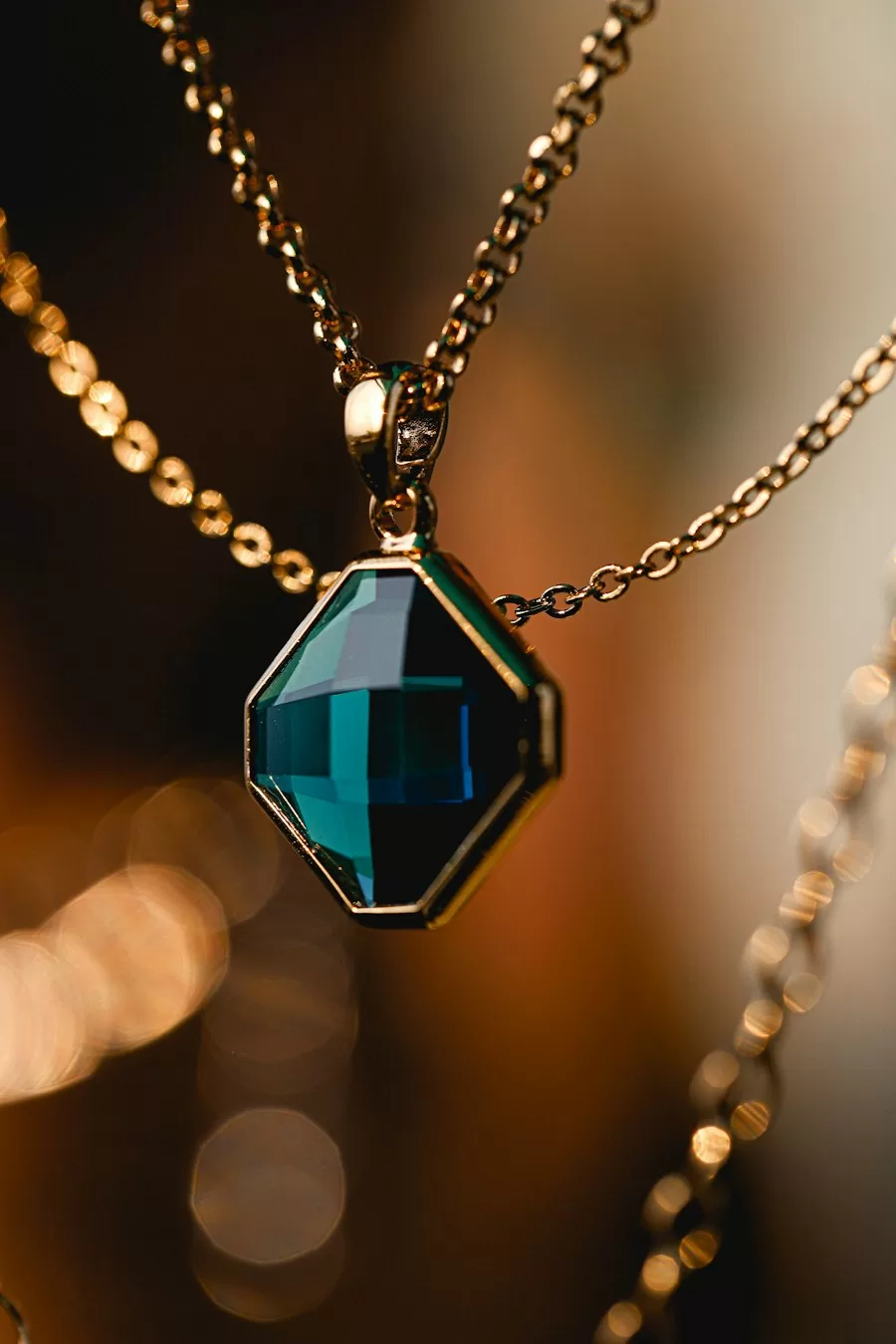
If you have only ever seen moissanite in a jewellery shop display, you have seen it under idealised conditions. Showroom spotlights are designed to flatter every stone on the tray, and they do not tell the whole story. Moissanite behaves very differently once you take it outside into daylight, sit under a warm dining-room bulb, or walk past a flickering candle. The good news is that most owners love how it looks in the real world, but the surprises are worth knowing about before you commit.
The single most important thing to understand is that moissanite produces more fire than a diamond of the same size. Fire is the coloured light that flashes through a stone as it moves, and moissanite's refractive index is roughly 2.65 compared with diamond's 2.42. That gap sounds small, but it means white light splits into rainbow colours more aggressively inside the stone. In bright, directional light this looks electric; in soft, diffuse light it can look a little busy.
Direct sunlight
Step outside on a bright day and a well-cut moissanite comes alive. Sunlight carries a full spectrum, and the stone splits it into sharp red, orange, green and violet flashes that move with every turn of your hand. This is the look that makes people double-take. On a diamond, that same sunlight produces quieter, whiter sparkle, because diamond disperses light more gently. If you have read that moissanite looks "too rainbow" in sunlight, that is usually the same phenomenon described from the other side. Some buyers adore it; others prefer the understated white flash of a diamond. Try it at midday if you can, because an overcast day hides most of the effect.
Indoor and office lighting
Inside, the story changes. Most homes and offices are lit by warm LEDs or halogen bulbs that are less directional than sunlight. Under these conditions, moissanite still sparkles, but the coloured flashes soften and the stone reads more like a bright, clean white gem. Fluorescent office lighting can be harder: it tends to be cool and flat, and it does a poor job of revealing fire in any stone. In these rooms, a moissanite will look luminous and clean rather than spectacular, which is exactly what most wearers want for everyday life.
Candlelight and evening events
Candlelight is where moissanite genuinely outperforms diamond. Flame is warm, flickering and low in blue wavelengths, which brings out the warm spectral flashes in a stone. A moissanite worn to a dinner, a wedding or a softly lit restaurant tends to glow, with warm golds and oranges dancing across the facets. Diamonds under candlelight look elegant but quieter, because their lower dispersion cannot mine as much colour from the limited light available. Many buyers who were nervous about the "rainbow" look decide they love their ring after the first evening out.
The double-refraction effect
Moissanite is doubly refractive, which means light passing through it splits into two rays. Under magnification this causes facet doubling, and it is also part of why the stone looks so lively. In practice, you will not notice facet doubling with the naked eye, but you may notice that internal reflections feel denser and more layered than they would in a diamond. Read more about this in our guide to moissanite double refraction if you want the technical detail.
Choosing a cut that suits your light
Because lighting matters, the cut you choose should match how you live. Round brilliant moissanite maximises white sparkle and is the safest choice if you work indoors most days. Oval, pear and cushion shapes emphasise fire and look stunning in sunlight but can show a darker central area, known as the bow-tie effect, under flat lighting. Our comparison of oval, pear and cushion cuts covers this trade-off in detail. Colour grade also plays a part: near-colourless moissanite holds up better in warm indoor light, while colourless grades pop in cool daylight.
Trying it in your own lighting
The most reliable test is to take the stone home. Reputable UK sellers offer a return window, and you should use it. Wear the ring to work, out to dinner, and outside on a sunny day. Photograph it in natural light and under your house bulbs. If the rainbow flashes feel too much under those conditions, you can switch to a cooler colour grade or a rounder shape. If you love it, you have a ring that will look different in every room you walk into, which is part of the charm.
Moissanite is not a diamond, and it should not be judged as one. Once you stop comparing and start watching how it moves through your own day, the differences become features rather than flaws. Pair this with our breakdown of moissanite fire and brilliance and you will know exactly what to expect when the box opens.
For third-party reference, the Wikipedia article on moissanite details moissanite’s discovery, optical properties and use in jewellery.
Related Reading
- What Is Moissanite Complete Guide to Quality - HOLYCOME
- Moissanite Hardness Durability and Care Guide - HOLYCOME
- What Is Moissanite Complete Guide to Properties Value and Care - HOLYCOME
Frequently Asked Questions
Is moissanite a good diamond alternative for retail buyers?
Yes for price-sensitive customers who want brilliance and hardness. Moissanite ranks 9.25 on the Mohs scale, holds up to daily wear and costs a fraction of a natural diamond of the same size, so it resells fast in bridal and fashion lines.
What is the minimum order for wholesale moissanite?
MOQ starts at 50 pieces per design for stock items. Custom cuts and private-label settings usually start at 100–300 pieces depending on the mold.
Do you provide certificates with moissanite stones?
Yes. Every parcel ships with GRA or IGI documentation listing carat weight, color grade and cut. We recommend passing the certificate to your end customer for trust.
How long does sample and bulk production take?
Samples ship in 3–5 days. Bulk runs take 15–20 days under 500 pieces, and 25–30 days for custom work.


