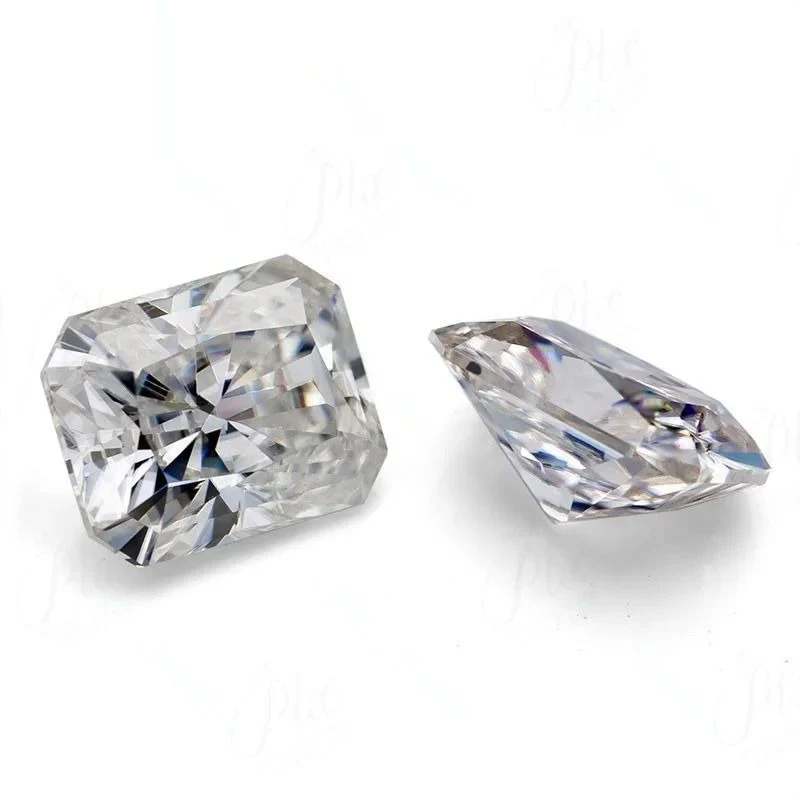
If you have ever held a thermal diamond tester to a moissanite stone and watched the needle swing into the "diamond" zone, you have seen one of the most confusing moments in gemology. People immediately wonder whether they were sold something fake, or whether the tester is broken. The truth is more interesting: the tester is doing its job, and moissanite is simply very good at the property the tester measures.
What a Thermal Diamond Tester Actually Measures
A handheld diamond tester does not look at light, colour or clarity. It measures thermal conductivity: how quickly heat moves through the material. Diamonds are the most thermally conductive natural gem on earth, which is why industrial diamonds are used as heat sinks in electronics. The tester heats a tiny tip and measures how fast that heat flows into the stone. Most simulants, including cubic zirconia, glass and white sapphire, conduct heat poorly, so the tester reads "not diamond".
Why Moissanite Reads as Diamond
Moissanite is crystalline silicon carbide. It is also an exceptional thermal conductor, close to diamond on the conductivity scale. When the tester touches a moissanite, the heat flows away from the tip almost as fast as it would in a real diamond. The machine concludes "diamond" and beeps. This is not a flaw in moissanite; it is a consequence of sharing one of diamond's most extreme physical traits. If you want the broader comparison, our guide to moissanite vs diamond hardness covers the other ways the two stones differ.
The Tell: Dual Testers and Electrical Conductivity
Professionals do not rely on thermal testers alone. Modern dual testers add an electrical conductivity test. Here the two stones separate cleanly: diamond is an electrical insulator, while moissanite is a semiconductor. A dual tester that beeps for heat but shows a low electrical reading is looking at moissanite. This is why serious jewellers own both functions in one wand.
Other Ways Experts Tell Them Apart
Even without a tester, gemologists use visual clues. Moissanite shows double refraction and facet doubling: through a 10x loupe, the back facets look slightly doubled because light bends twice as it passes through. Diamond is singly refractive, so its facets stay crisp. Moissanite also displays more rainbow fire than diamond under direct light, which is part of its appeal for buyers who want extra sparkle.
What This Means for Buyers
If you bought a moissanite ring and a friend's tester says "diamond", that is not evidence you were tricked. It is evidence the tester is a single-function thermal model. The right response is not to panic; it is to ask the seller for the moissanite certificate, which we cover in our moissanite certificate check guide. Reputable sellers grade and certify their moissanite just as diamond sellers certify diamonds.
What This Means for Sellers and Jewellers
If you repair, buy or sell stones, a thermal tester is a screening tool, not an authority. Always follow a "diamond" result with a visual loupe check for facet doubling, and where in doubt, a dual tester. Misidentifying moissanite as diamond can destroy trust far faster than any sparkle ever builds it.
A Short History
Thermal testers were designed in the 1970s when the main competitors to diamond were CZ, YAG, strontium titanate and glass. Silicon carbide moissanite was not commercially produced for jewellery until the late 1990s. The testers were tuned before moissanite existed as a mainstream simulant, which is exactly why they were caught out. Dual testers, combining thermal and electrical readings, were the industry's response.
What If Your Jeweller Can't Identify the Stone?
If a jeweller looks at a loose stone and is unsure, the right next step is not a guess. It is a referral to a gemological laboratory or a higher-level dual tester. Stones that sit in a setting should be assessed in the mounting where possible, because removing them risks damage. A reputable jeweller will happily say "I am not sure, let me send it out" rather than stamp a guess on a written valuation.
Why This Matters for Moissanite Buyers
None of this should put you off moissanite. The point is that a tester beep is not a verdict. Moissanite is a beautiful, durable, ethically produced alternative that happens to share one of diamond's most extreme physical traits. When you buy from a reputable seller with a certificate, you know exactly what you have, regardless of what a handheld wand decides to do.
Bottom Line
A moissanite that passes a thermal diamond tester is not a fake, and it is not a diamond in disguise. It is a lab-grown silicon carbide stone that happens to conduct heat remarkably well. Trust the certificate, the dual tester and your own loupe over a single beep. If you are still weighing whether moissanite is right for you, our main moissanite vs diamond comparison lays out the full picture.
For third-party reference, the Wikipedia article on moissanite details moissanite’s discovery, optical properties and use in jewellery.
Related Reading
- What Is Moissanite Complete Guide to Quality - HOLYCOME
- Moissanite Hardness Durability and Care Guide - HOLYCOME
- What Is Moissanite Complete Guide to Properties Value and Care - HOLYCOME
Frequently Asked Questions
Is moissanite a good diamond alternative for retail buyers?
Yes for price-sensitive customers who want brilliance and hardness. Moissanite ranks 9.25 on the Mohs scale, holds up to daily wear and costs a fraction of a natural diamond of the same size, so it resells fast in bridal and fashion lines.
What is the minimum order for wholesale moissanite?
MOQ starts at 50 pieces per design for stock items. Custom cuts and private-label settings usually start at 100–300 pieces depending on the mold.
Do you provide certificates with moissanite stones?
Yes. Every parcel ships with GRA or IGI documentation listing carat weight, color grade and cut. We recommend passing the certificate to your end customer for trust.
How long does sample and bulk production take?
Samples ship in 3–5 days. Bulk runs take 15–20 days under 500 pieces, and 25–30 days for custom work.


