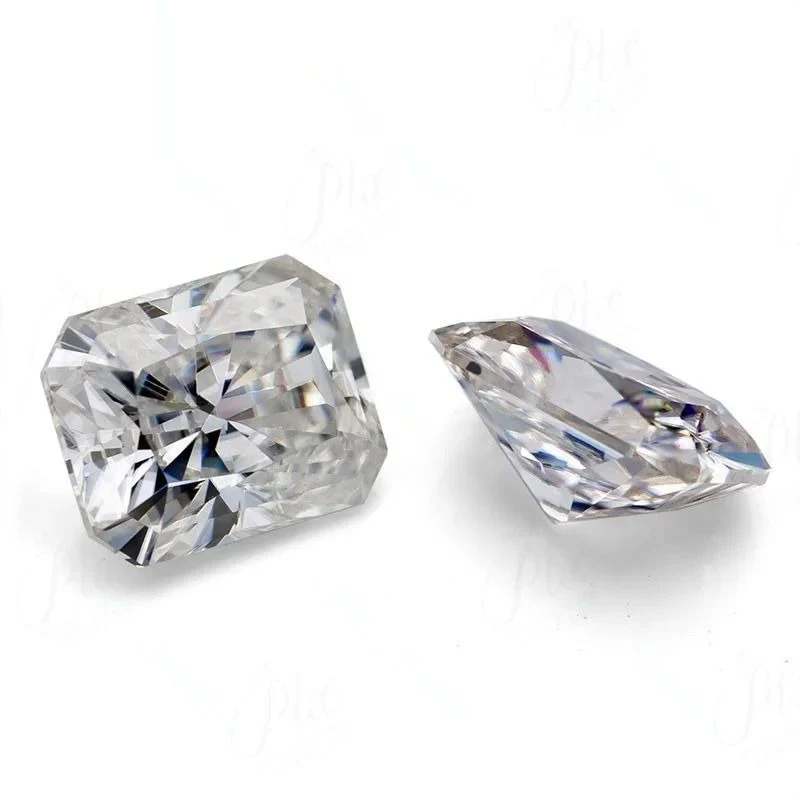
You have a loose stone, a handheld diamond tester, and a yes-or-no question. The beep says "diamond." Six months later a jeweller looks at it and says, "This is moissanite." What happened? The answer is that the cheapest diamond testers measure heat, not light, and moissanite happens to conduct heat almost as well as diamond. Here is why the machine lied, and how to settle the test properly.
Why basic testers fail
Most entry-level diamond testers are thermal testers. They warm a tip against the stone and measure how quickly the heat sinks in. Diamond is an exceptional heat conductor, which is what the machine is looking for. Moissanite, synthetic silicon carbide, is almost as good at conducting heat. The two sit close enough on the scale that a basic thermal tester routinely lights up "diamond" for both. Cubic zirconia, by contrast, conducts heat poorly, which is why old testers could separate CZ from diamond easily. They just cannot separate moissanite.
What works instead
Two approaches actually settle it. The first is a combination tester, which pairs a thermal sensor with an electrical-conductivity probe. Diamond is an electrical insulator; moissanite is a semiconductor. The second sensor picks that difference up instantly. If you are buying a tester for a small shop or a serious hobby, a combo unit is worth the extra cost.
The 10x loupe test: facet doubling
The optical test is free and very reliable once you know what to look for. Moissanite's refractive index is around 2.65, higher than diamond's 2.42, and it is doubly refractive. That means light entering a moissanite splits into two rays. Under a 10x loupe, looking through the table at the back facets, you see doubled facet edges. In a diamond, the same view shows single, crisp edges. This is the hallmark we describe in more detail in moissanite double refraction. It takes a little practice, but it does not lie.
Other quick checks
There are a few more tells. Moissanite often shows a slightly more "rainbow" flash than diamond, because its dispersion is higher. Under a UV lamp, natural diamond may show faint fluorescence, while most laboratory-grown moissanite does not. And because moissanite is a manufactured gem, it rarely carries the natural inclusions you would see in a mined diamond; it may instead show fine needle-like growth lines. None of these alone is definitive, but together they tell a consistent story.
Why this matters for buyers
If you are buying a moissanite ring, none of this is a reason to worry. Moissanite is an honest, durable, affordable gem rated 9.25 on the Mohs scale. The tester issue only matters if someone tries to sell you a "diamond" that turns out to be moissanite. Always ask for the moissanite certificate when buying the stone, and when buying a diamond, ask for a GIA or IGI report. The paper settles what the machine cannot.
What not to rely on
The "breath test," where you fog the stone and watch the fog clear, is unreliable. Both diamond and moissanite clear fog quickly because both are good heat conductors. The "newspaper test," where you try to read print through the table, is also inconclusive; the result depends more on the cut than the species. A handheld tester plus a loupe is the minimum honest setup.
Bottom line
A diamond tester that only measures heat will not reliably tell moissanite from diamond. Spend the extra on a combo tester, or learn the facet-doubling view under a loupe. Either way, the certificate on file is the real guarantee. Treat the tester as a fast first pass, never as a verdict.
What a jeweller actually does
A professional jewellery workshop has a few tools the average buyer does not. A preset combo tester sits on the bench and separates diamond, moissanite, and simulants in a few seconds. Behind it, a spectroscope or a microscope with a polarising filter confirms the optical behaviour. For a final answer, the jeweller will often refer the stone to a gem lab for a written report. None of this is mysterious; it is just that the handheld gadget most people buy online only covers the first step.
If you inherited a loose stone
If you have a family stone with no paperwork and a vague "this is a diamond" story, do not rely on a pocket tester to settle it. Take it to a jeweller for a proper look, and if the result matters, ask for a written appraisal. The cost of a proper examination is small compared with the risk of wearing a stone you have misidentified for years. Most inherited stones are exactly what the family said they were, but a surprising number turn out to be moissanite, white sapphire, or even colourless glass set in a period mounting. Either way, knowing the truth is better than finding out on a random Tuesday.
The Gemological Institute of America’s gem encyclopedia is an authoritative, widely cited reference on moissanite and diamond quality factors.
Related Reading
- What Is Moissanite Complete Guide to Quality - HOLYCOME
- Moissanite Hardness Durability and Care Guide - HOLYCOME
- What Is Moissanite Complete Guide to Properties Value and Care - HOLYCOME
Frequently Asked Questions
Is moissanite a good diamond alternative for retail buyers?
Yes for price-sensitive customers who want brilliance and hardness. Moissanite ranks 9.25 on the Mohs scale, holds up to daily wear and costs a fraction of a natural diamond of the same size, so it resells fast in bridal and fashion lines.
What is the minimum order for wholesale moissanite?
MOQ starts at 50 pieces per design for stock items. Custom cuts and private-label settings usually start at 100–300 pieces depending on the mold.
Do you provide certificates with moissanite stones?
Yes. Every parcel ships with GRA or IGI documentation listing carat weight, color grade and cut. We recommend passing the certificate to your end customer for trust.
How long does sample and bulk production take?
Samples ship in 3–5 days. Bulk runs take 15–20 days under 500 pieces, and 25–30 days for custom work.


