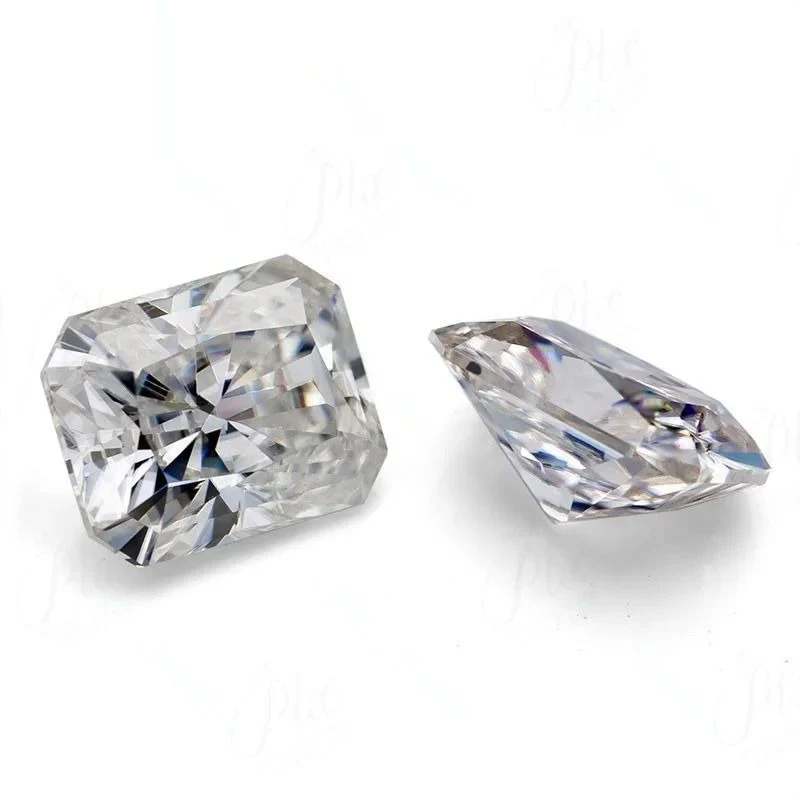
Moissanite comes with a promise that most gemstones cannot match: a written guarantee that the stone will keep its colour and clarity for life. That promise is worth very little, however, if you never register it or if you do not understand what it actually covers. The warranty is one of the underused advantages of buying a branded moissanite, and the paperwork that arrives with the ring deserves ten minutes of your attention.
Most consumer moissanite sold through reputable jewellers is produced by one of the major manufacturers, and the stone ships with a manufacturer's card or report rather than a generic certificate. The card lists the carat equivalent, colour grade, cut and clarity, and carries a registration number that links the stone to the maker's records. To compare how this differs from diamond documentation, see our overview of moissanite certificate checks.
What the warranty actually guarantees
Read the wording carefully. A typical moissanite warranty covers the stone against manufacturing defects and guarantees that the colour will remain white and the clarity will not degrade over time. This is a meaningful promise because early moissanite generations were known to pick up a faint grey or green tint under certain lighting. Modern colourless grades are stable, and the manufacturer stands behind that stability in writing.
What the warranty does not cover is just as important. It does not cover loss or theft, accidental damage, chips caused by a hard knock, or re-cutting. It usually excludes stones that have been repaired by an unapproved workshop, and it does not transfer automatically to a second owner unless the manufacturer is notified. If you buy a pre-owned moissanite, the warranty may still be valid but only if you can prove the chain of ownership and the original registration.
How to register your stone
Registration is usually an online process. Locate the registration number on the manufacturer's card, go to the maker's website, and enter the number along with your name, the jeweller's details and the purchase date. Some manufacturers ask for a photograph of the card and the receipt. The process takes about ten minutes and locks the warranty to you as the owner. Do it while the paperwork is still in the envelope; registering months later is usually possible but more hassle.
Once registered, save a digital copy of the card, the report and the confirmation email in the same folder as your ring insurance documents. If the stone is ever damaged or the colour comes into question, you will need the registration number and the purchase record to make a claim. This paperwork is also useful if you ever need to insure the ring, because insurers want proof of what the stone is and what it cost.
Keeping the warranty valid
A warranty can lapse through small mistakes. Avoid ultrasonic cleaning if the manufacturer's card advises against it, and never let a workshop that has not seen the stone try to re-polish it. When you need a resizing, ask the jeweller whether the stone can stay in the setting; removing and resetting a moissanite is safe when done well, but a sloppy reset is the kind of damage the warranty will not cover. Keep the original card even if the ring is repaired, because the registration number on it is the anchor for any future claim.
What happens if something goes wrong
In practice, claims are rare because moissanite is genuinely durable. When a stone is damaged beyond wear, the manufacturer's process is usually a like-for-like replacement of the stone itself, not the whole ring. The metal, the setting and the labour are yours to handle. This is why the warranty is best understood as a safety net under the stone, not an insurance policy for the ring. For broader protection, pair the manufacturer warranty with a separate jewellery insurance policy that covers loss, theft and accidental damage.
Moissanite's stability guarantee is one of the reasons it has become a mainstream engagement ring choice rather than a niche curiosity. Spend the time to register the stone, keep the card safe, and you carry that promise with the ring for as long as you own it. The paperwork is boring, but it is also the difference between a stone you trust and a stone you only hope will last.
Warranty versus insurance: do not confuse them
It is worth being clear about the boundary. A manufacturer warranty covers the stone itself against defect and colour change; it will never pay out if the ring slips off your finger at the beach. A jewellery insurance policy covers loss, theft and accidental damage, but it usually will not argue that the stone's colour has degraded over time. They are complementary, not interchangeable, and a fully protected ring needs both. Register the stone with the maker the week you buy it, then put the ring on a separate policy the same month. Keep both documents in one folder so a future claim is a single conversation rather than a scavenger hunt.
The Gemological Institute of America’s gem encyclopedia is an authoritative, widely cited reference on moissanite and diamond quality factors.
Related Reading
- What Is Moissanite Complete Guide to Quality - HOLYCOME
- Moissanite Hardness Durability and Care Guide - HOLYCOME
- What Is Moissanite Complete Guide to Properties Value and Care - HOLYCOME
Frequently Asked Questions
Is moissanite a good diamond alternative for retail buyers?
Yes for price-sensitive customers who want brilliance and hardness. Moissanite ranks 9.25 on the Mohs scale, holds up to daily wear and costs a fraction of a natural diamond of the same size, so it resells fast in bridal and fashion lines.
What is the minimum order for wholesale moissanite?
MOQ starts at 50 pieces per design for stock items. Custom cuts and private-label settings usually start at 100–300 pieces depending on the mold.
Do you provide certificates with moissanite stones?
Yes. Every parcel ships with GRA or IGI documentation listing carat weight, color grade and cut. We recommend passing the certificate to your end customer for trust.
How long does sample and bulk production take?
Samples ship in 3–5 days. Bulk runs take 15–20 days under 500 pieces, and 25–30 days for custom work.


