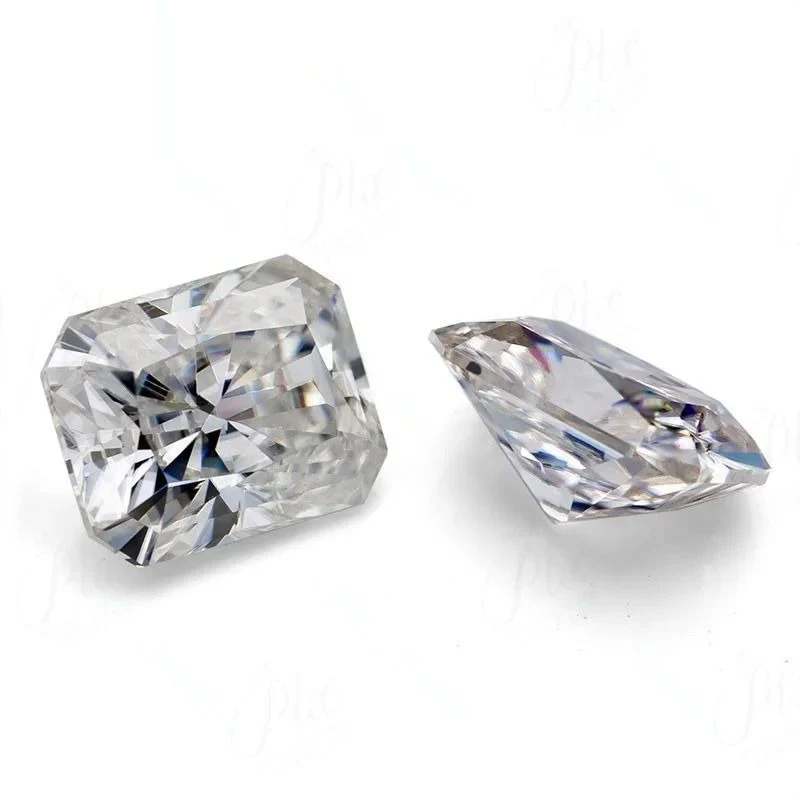
Here is a fact that surprises almost every new buyer: a cheap pocket "diamond tester" will often beep "diamond" when touched to a moissanite. That is not a manufacturing defect in the tester, and it is not a sign that the moissanite is somehow "secretly a diamond." It is a consequence of how these testers work. Understanding it saves you from a lot of confusion.
How a basic diamond tester works
Most handheld testers sold to the public are thermal conductivity testers. They heat the tip slightly and measure how quickly the stone draws that heat away. Diamond is famous for conducting heat faster than almost any other gem, so a fast heat transfer reads as "diamond." Cheaper simulants like cubic zirconia conduct heat slowly and read as "not diamond."
The problem? Moissanite conducts heat remarkably well too. Its thermal conductivity is close enough to diamond's that a single-function thermal tester cannot tell them apart and registers moissanite as diamond. That is the whole trick—not a conspiracy, just physics.
What a dual tester does differently
Genuine jewelers use dual (thermal + electrical) testers. Moissanite is electrically conductive in a way diamond usually is not (except for some fancy-color or treated diamonds). By combining the heat reading with an electrical-conductivity reading, a dual tester can separate the two: diamond conducts heat but not electricity, moissanite conducts both. That is why a professional can identify moissanite in seconds while your £20 pocket gadget cannot.
The optical giveaway: facet doubling
The most reliable identification needs no battery. Because moissanite is doubly refractive (RI around 2.65), light passing through it splits into two rays. Look through the top of a mounted moissanite at the back pavilion facets with a 10x loupe and you will see those back facets appear doubled or ghosted. A diamond is singly refractive, so its back facets look single and sharp. Our deep dive on facet doubling in moissanite walks through exactly what to look for.
Why home testing is the wrong path
Here is the bigger point. Even a correct dual test only tells you "this is moissanite" or "this might be diamond." It cannot tell you whether a diamond is natural or lab grown, whether it has been treated, what its color and clarity grades are, or whether it matches its certificate. A tester in your hand is not a substitute for buying from a reputable source with proper paperwork. Our moissanite certificate guide and the broader moissanite vs diamond comparison explain what documentation actually proves.
What this means for buyers
If someone tries to sell you a "diamond" and a cheap tester confirms it, do not relax—that test cannot rule out moissanite. Conversely, if you own moissanite, be aware that a basic tester will call it diamond, which is harmless but explains the confusion people post about online. The honest identification relies on the seller's disclosure, the accompanying certificate, and—for high-value stones—a gemologist's loupe work, not a gadget.
The takeaway is straightforward: choose your stone knowing exactly what material it is, buy it from a dealer who tells you plainly, and ignore the online "I tested my ring and it said diamond!" drama. That result was always expected, and it never was the test people thought they were taking.
Where CZ, white sapphire and other simulants fit
It helps to place moissanite in the wider family of diamond simulants. Cubic zirconia (CZ) is cheap and looks the part new, but it scratches and clouds within a year or two, and a thermal tester will easily separate it from diamond. White sapphire looks whiter and duller than diamond and does not double-refract. Moissanite is the only common simulant that both wears like a near-diamond and fools a thermal tester, which is exactly why it generates so much online confusion.
What a proper identification actually involves
For high-value stones, identification is done by a gemologist with a refractometer, a loupe, and sometimes a spectrometer—not a pocket gadget. The refractometer reads the refractive index directly, which for moissanite lands around 2.65 versus diamond's 2.42. The loupe reveals the facet doubling described above. If a jeweler says "our tester says it's diamond," that is not identification; it is a quick screen. A real identification comes with a written report, and for diamonds that report is your guarantee against synthetic or treated material. Treat any "it passed the tester!" claim as interesting but never conclusive.
A note for owners of moissanite
If you bought moissanite on purpose, none of this is a problem. It simply means that if you ever take your ring to a pawnbroker, an insurance valuation, or a curious friend with a gadget, the result will read "diamond" and then a trained eye will correct it. That is fine—just be ready to explain what you chose and why. The whole point of buying moissanite is the look, the price and the ethics, and a thermal tester's false positive changes none of those. Knowing the science behind it means you can answer confidently instead of being embarrassed by a result you did not expect.
Gemstone grading terminology used here follows the Gemological Institute of America’s gem encyclopedia.
Related Reading
- What Is Moissanite Complete Guide to Quality - HOLYCOME
- Moissanite Hardness Durability and Care Guide - HOLYCOME
- What Is Moissanite Complete Guide to Properties Value and Care - HOLYCOME
Frequently Asked Questions
Is moissanite a good diamond alternative for retail buyers?
Yes for price-sensitive customers who want brilliance and hardness. Moissanite ranks 9.25 on the Mohs scale, holds up to daily wear and costs a fraction of a natural diamond of the same size, so it resells fast in bridal and fashion lines.
What is the minimum order for wholesale moissanite?
MOQ starts at 50 pieces per design for stock items. Custom cuts and private-label settings usually start at 100–300 pieces depending on the mold.
Do you provide certificates with moissanite stones?
Yes. Every parcel ships with GRA or IGI documentation listing carat weight, color grade and cut. We recommend passing the certificate to your end customer for trust.
How long does sample and bulk production take?
Samples ship in 3–5 days. Bulk runs take 15–20 days under 500 pieces, and 25–30 days for custom work.


