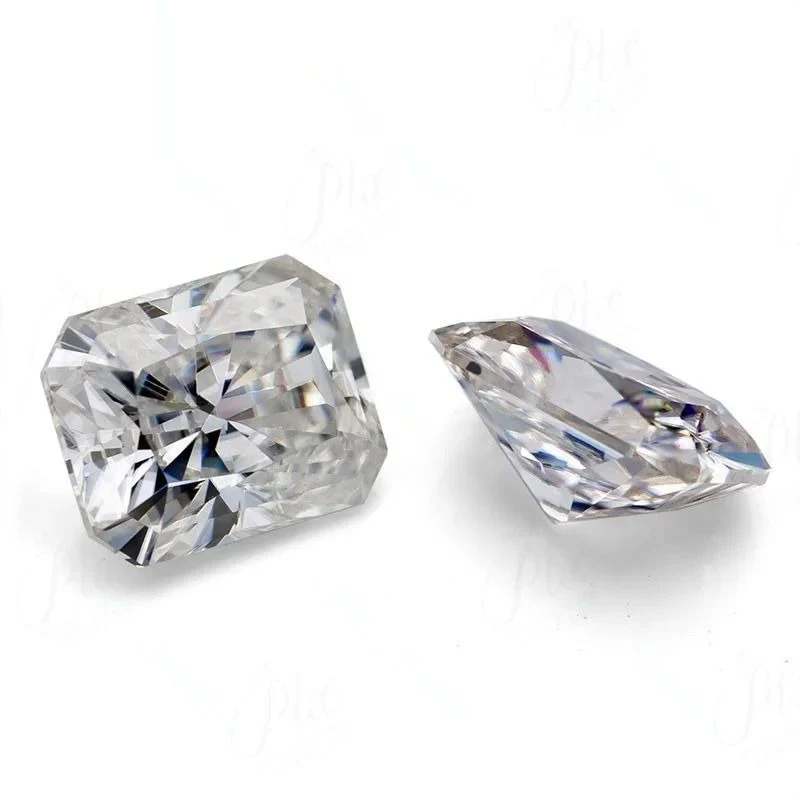
It is one of the most common emails sellers receive: "I bought a moissanite ring, I tested it with a diamond tester, and it said diamond. Did I get scammed?" The answer is no. A basic diamond tester is not lying. It is just measuring something that moissanite and diamonds happen to share, and that detail explains a lot about how these small tools actually work.
How a basic diamond tester works
A pocket diamond tester is a thermal probe. It heats a small tip, touches the stone, and measures how fast the heat flows into the gem. Diamonds conduct heat exceptionally well, far better than most simulants. Cubic zirconia, glass, white sapphire, and spinel hold onto heat, so the probe reads them as non-diamond. That was the whole idea behind the tool when it was designed in the middle of the last century.
The test is fast, cheap, and reliable for the simulants it was built against. It is not a full gemological examination. It is a one-variable measurement.
Why moissanite trips it
Moissanite is silicon carbide. Silicon carbide conducts heat almost as well as diamond, and in some lab measurements it conducts it better. When the probe touches a moissanite, the heat sinks in at a rate the tester was not designed to distinguish. The result is a "diamond" reading on a stone that is chemically nothing like a diamond. This is not a flaw in the tester, and it is not a marketing trick from moissanite sellers. It is a property of the material.
The dual testers
Modern gem testers are usually dual-mode. They combine thermal conductivity with an electrical conductivity reading. Diamonds are electrical insulators except for the rare blue Type IIb variety. Moissanite, by contrast, is a semiconductor. Run the two tests together and the separation is clear: thermal reads similar, electrical reads very different. A jeweller with a proper dual tester will tell moissanite and diamond apart in seconds. The cheap pocket unit on a market stall usually cannot.
Visual checks that do not need tools
There is a visual giveaway that costs nothing. Moissanite is doubly refractive. Look through the pavilion facets of a loose stone with a 10x loupe and the facet edges on the far side will appear doubled, like a slightly out-of-focus photocopy. Diamonds are singly refractive, so the edges stay sharp. This is the classic field test. Our guide to facet doubling in moissanite walks through exactly where to look.
What this means for buyers
If you are buying a moissanite ring, do not rely on a pocket diamond tester to confirm authenticity. It will almost certainly tell you it is a diamond, and that tells you nothing. Instead, look for a certificate, a clear disclosure from the seller, and the visual doubling check. If you are buying a diamond and the seller assures you it is real based on a thermal tester, ask for a second opinion. Thermal testers alone cannot separate diamond from moissanite, and they have been fooled for decades.
Why sellers should disclose
Responsible moissanite sellers tell customers up front that the stone will test as diamond on a basic thermal unit. Hiding that fact, or implying that passing a cheap tester is proof the stone is a diamond, is the kind of half-truth that gives the industry a bad name. Honest disclosure protects both sides: the buyer knows what they own, and the seller avoids an angry "I was scammed" email two years later.
The bottom line
A thermal diamond tester is a useful first filter, not a final verdict. If you need a definitive answer between diamond and moissanite, use a dual tester, look for facet doubling, or ask for a gem certificate. Our head-to-head on moissanite vs diamond covers the other visible and measurable differences in detail.
What about black diamonds and treated stones?
The tester confusion does not stop at moissanite. Black diamonds, which are heavily included or treated diamonds, can also behave oddly on thermal probes because light cannot enter the stone anyway. Treated and fracture-filled diamonds test as diamond because they are diamond, but their value and durability questions are a separate conversation. Our piece on fracture-filled diamonds explains those treatments. The lesson is the same: a cheap tester is a starting point, not an expert witness.
If you are reselling or insuring the ring
If you ever need to prove what the stone is for insurance, resale, or a probate valuation, a pocket tester reading will not be accepted. You will need an independent gem lab certificate, or a written report from a qualified gemologist with proper equipment. The cost of that report is small compared with the insurance claim or resale price it supports. Keep the original seller paperwork and the stone's certificate in the same folder; if the stone is ever questioned, you want the answer on paper, not in the memory of a market stall tester.
Independent background on moissanite — how its hardness and refractive index compare with diamond — is documented in the Wikipedia article on moissanite.
Related Reading
- What Is Moissanite Complete Guide to Quality - HOLYCOME
- Moissanite Hardness Durability and Care Guide - HOLYCOME
- What Is Moissanite Complete Guide to Properties Value and Care - HOLYCOME
Frequently Asked Questions
Is moissanite a good diamond alternative for retail buyers?
Yes for price-sensitive customers who want brilliance and hardness. Moissanite ranks 9.25 on the Mohs scale, holds up to daily wear and costs a fraction of a natural diamond of the same size, so it resells fast in bridal and fashion lines.
What is the minimum order for wholesale moissanite?
MOQ starts at 50 pieces per design for stock items. Custom cuts and private-label settings usually start at 100–300 pieces depending on the mold.
Do you provide certificates with moissanite stones?
Yes. Every parcel ships with GRA or IGI documentation listing carat weight, color grade and cut. We recommend passing the certificate to your end customer for trust.
How long does sample and bulk production take?
Samples ship in 3–5 days. Bulk runs take 15–20 days under 500 pieces, and 25–30 days for custom work.


