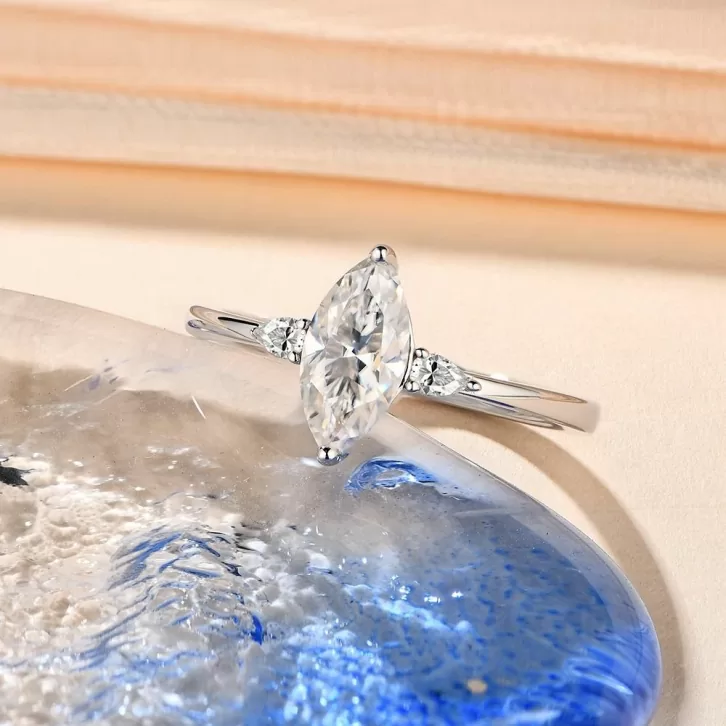
Walk into a jewellery shop and half of what you hear sounds like common sense. Much of it is actually a marketing line that has been repeated so often it has become folklore. Before you spend five figures on a ring, it is worth separating the ten most persistent engagement ring myths from the facts that actually protect your wallet.
Myth 1: You Must Spend Three Months' Salary
The three-months'-salary rule is not a tradition. It was a global advertising campaign launched by a diamond syndicate in the late 1930s, later expanded in the 1980s. There is no gemological, legal or relational reason to anchor your budget to it. The right amount is whatever leaves your household comfortable after the purchase. A far better framework is the budget allocation model we cover in our guide to engagement ring budget allocation, which splits money sensibly across stone, setting and insurance.
Myth 2: Bigger Is Always Better
A poorly cut 2-carat diamond looks dull and glassy next to a well-cut 1-carat. Cut quality influences brilliance more than carat weight, and a stone that is too deep will hide weight below the girdle where your eye cannot see it. Two shoppers can pay the same price for two diamonds of the same weight and get visibly different sparkle, purely because of cut proportions. Size matters, but it is not the only lever.
Myth 3: Diamonds Are a Safe Investment
Retail diamonds lose a substantial portion of their value the moment you walk out of the shop, because you paid a retail markup that rarely recovers on resale. GIA-graded, large, top-colour stones hold value better than average ones, but they are not stocks. If you want to understand why, read our explainer on lab-grown diamond resale value; the same resale gap applies to mined stones. Buy a diamond because you want to wear it, not because you expect to flip it.
Myth 4: You Need a Flawless Diamond
Flawless and internally flawless stones are collector-grade. To the naked eye, most SI1 and even low-SI2 diamonds are eye-clean, meaning no inclusions are visible without magnification. Buying up two clarity grades from VS1 to FL routinely doubles the price for a difference only a trained grader sees through a loupe. Our eye-clean diamond buying guide explains exactly where the visible threshold sits.
Myth 5: Colourless Is the Only Way to Go
D to F stones are colourless, but in warm yellow or rose gold settings, a G or H stone can look just as white. On platinum or white gold, the jump from I to G is more noticeable. Chasing a D grade in a yellow gold ring often buys you nothing you can see.
Myth 6: Moissanite Looks Fake
This is the myth we hear most often. Modern near-colourless moissanite is bright, durable and visually sophisticated; the historical "faint green" tint of early batches is largely gone. It does have more fire than diamond, which some people love and others notice. If you are curious, our comparison of moissanite, white sapphire and CZ shows how it stacks up against lookalikes.
Myth 7: You Must Buy Surprise and Alone
Proposing on bended knee with a ring hidden in a champagne glass is romantic in films, but the ring size, style and metal choice have to be guessed. Roughly one in three engagement rings is resized in the first year. Shopping together does not ruin the proposal; it protects you from resizing costs and a ring she never wanted to wear.
Myth 8: A Certificate Guarantees Quality
A grading report tells you what the stone is. It does not tell you how pretty it looks. Two diamonds with identical reports can face up differently. The report is a shield against fraud, not a beauty verdict. Always compare stones side by side, and read our guide on comparing two diamond certificates before trusting a grade at face value.
Myth 9: Online Rings Are Riskier Than Shop Rings
Reputable online retailers ship GIA/IGI-graded stones with inspectable reports, 360-degree video and return windows. The risk is buying from an anonymous seller without a report, not buying online per se. A disciplined diamond buying online checklist removes most of the danger.
Myth 10: The Ring Is the Whole Wedding Budget
The engagement ring is a single line item. Couples who over-commit on the ring often under-insure it, skip the wedding bands or leave no buffer for resizing and rhodium plating. Treat the ring as part of a five-year jewellery plan, not a one-time emotional sprint.
The Bottom Line
Most engagement ring myths survive because they are easier than thinking. The antidote is boring: set a budget you can afford, prioritise cut and eye-clean clarity, buy a certified stone you have inspected, and insure it the day it arrives. The ring will look better on her hand than it does in a sales pitch.
Gemstone grading terminology used here follows the Gemological Institute of America’s gem encyclopedia.
Related Reading
- HPHT vs CVD Lab-Grown Diamonds: The Basics Buyers Ask
- When Your Ring Size Changes: Day to Day, Season to Season
- How Lab-Grown Diamonds Are Priced
Frequently Asked Questions
What ring sizes can you supply in bulk?
US sizes 5–12 including half sizes. Send a size breakdown with your order and we cast to that curve; comfort-fit inner bands reduce resize requests.
Can I order a mixed size run instead of one size?
Yes. Mixed runs are standard for wholesale: specify quantity per size and we pack and label by size at no extra labor cost.
What is the MOQ for custom ring designs?
50 pieces per design for existing molds; 100–300 pieces when a new mold or CAD model is required.
How should I price rings for retail margin?
Most partners use a 3–4x markup on FOB cost for sterling and 2.5–3x for moissanite solos, which keeps landed cost under 30% of retail.


