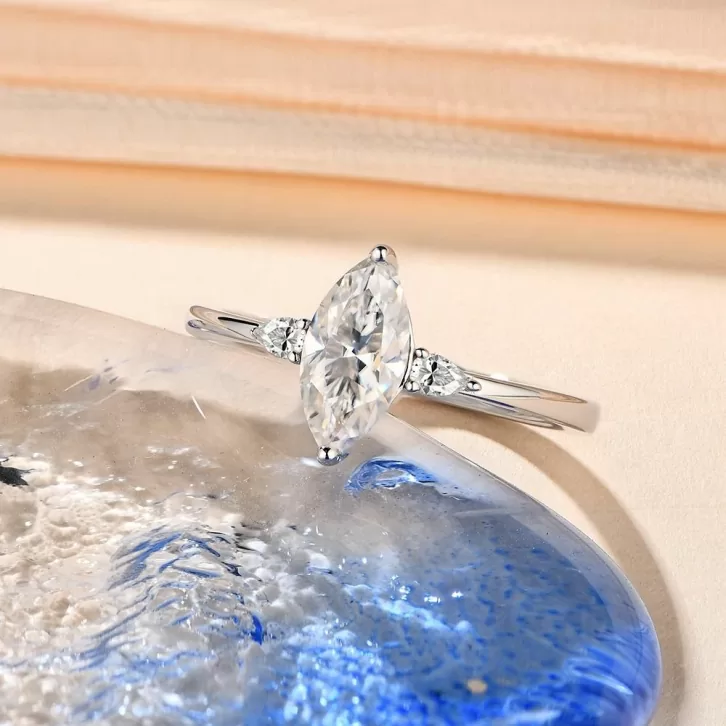
Two diamonds, both advertised as 1 carat, side by side on the same finger. One looks like a proper 1-carat stone; the other looks like it should be 0.8. Shoppers run into this constantly and assume they are being sold something. They are not — they are seeing the difference between carat weight and face-up size, and it is one of the most important, and most misunderstood, ideas in engagement-ring buying.
Carat is weight, not size
A carat is a unit of mass. One carat equals 0.2 grams, about the weight of a single raindrop. Two diamonds of equal carat weight can have very different physical dimensions, because diamonds are cut into three-dimensional shapes and some of the weight can be hidden in the depth of the pavilion rather than spread across the face-up surface.
Face-up size is the visual width of the stone as you look down at it on the finger, measured in millimetres across the girdle. That is the number your eye actually judges.
Why two equal weights look different
The single biggest reason is cut depth. A diamond that is cut too deep — with a steep pavilion — leaks light out the bottom and also tucks weight downwards rather than outwards. A 1-carat round that is cut too deep might measure only 6.2 mm across the girdle, when an ideal-cut 1-carat round measures about 6.5 mm. The weight is the same, but the face-up look is noticeably smaller. The flipside is a stone cut too shallow, which looks wider face-up but leaks light out the sides and looks washed out. Our guide to ideal cut proportions explains how this balance is struck.
Table percentage plays a role as well. A larger table on the top facet makes the stone look wider from above, which is why our table percentage explainer is a useful read when you are comparing stones that look off.
Shape changes the maths
Face-up size varies dramatically by shape. A 1-carat round brilliant is about 6.5 mm across. A 1-carat oval of the same weight can measure 8 mm by 6 mm, because the long axis makes the stone look larger to the eye. A 1-carat marquise can stretch to 10 mm. A 1-carat princess, by contrast, often looks smaller face-up than a round of the same weight, because its square outline sits tighter on the finger. Emerald and cushion cuts sit somewhere in between.
This is one reason oval and pear shapes have become so popular: they deliver more apparent size per carat. Our comparison of diamond shapes side by side walks through the visual differences in detail.
The setting changes the look too
The stone is only half of the visual equation. A halo setting, with a ring of small stones around the centre, can make a 1-carat centre look like a 1.5-carat stone from across the room. A pavé band adds visual weight to the whole ring. A slim, plain shank makes the centre stone look larger by contrast. A bezel setting, which wraps a metal rim around the stone, can make the same stone look slightly smaller by tucking the edge in.
If you are buying on a tight budget, a halo or a slim band is a legitimate way to get a larger visual presence without upgrading the carat. Our guide to setting styles explained walks through the trade-offs.
Finger size matters as well
The same 1-carat round looks larger on a size 5 finger than on a size 8, simply because there is less real estate around it. This is why browsing rings online is misleading — you are seeing the stone on a model's finger, not on hers. If you are shopping remotely, ask the jeweller for photos of the stone on a finger of a known size, and compare on her actual ring size.
How to shop for face-up size
Ignore carat weight as the headline number and look at the millimetre dimensions on the spec sheet. Two stones with the same face-up width will look the same size on the finger, regardless of whether one is 1.0 ct and the other is 0.95 ct. Spend your budget on a well-cut stone that hits the face-up width you want, rather than chasing a round number on the carat scale. Our carat size guide lists typical face-up dimensions by weight and shape, which is a useful reference when you are comparing listings. If a listing shows only carat weight and no millimetre size, ask the seller for the dimensions before you commit — reputable retailers always have them on file.
The bottom line
Carat weight is how much the stone weighs; face-up size is how big it looks on her hand. Two equal-weight stones can read as a full carat apart, depending on cut depth, shape and setting. Shop the millimetre dimensions, not the carat number, and you will get more visual size for the same budget.
The definition of carat weight and how it is measured are set out in the Wikipedia entry on carat weight.
Related Reading
- HPHT vs CVD Lab-Grown Diamonds: The Basics Buyers Ask
- When Your Ring Size Changes: Day to Day, Season to Season
- How Lab-Grown Diamonds Are Priced
Frequently Asked Questions
How do I verify a factory before placing a bulk order?
Request a production video, business license, export records and a paid sample run. A factory that accepts a 50-piece test order is usually a real manufacturer.
What payment terms do you offer?
30% T/T deposit with the balance against the bill of lading. This protects both sides on first orders and can move to net terms after a track record.
What is your normal reject rate?
3–5% under 10x loupe inspection for cast and set pieces. Defective units are replaced free in the next shipment.
Where is the factory located?
Wuzhou, Guangxi, China—the core lab-grown and moissanite manufacturing cluster. Shipments go via Guangzhou or Shenzhen ports.


