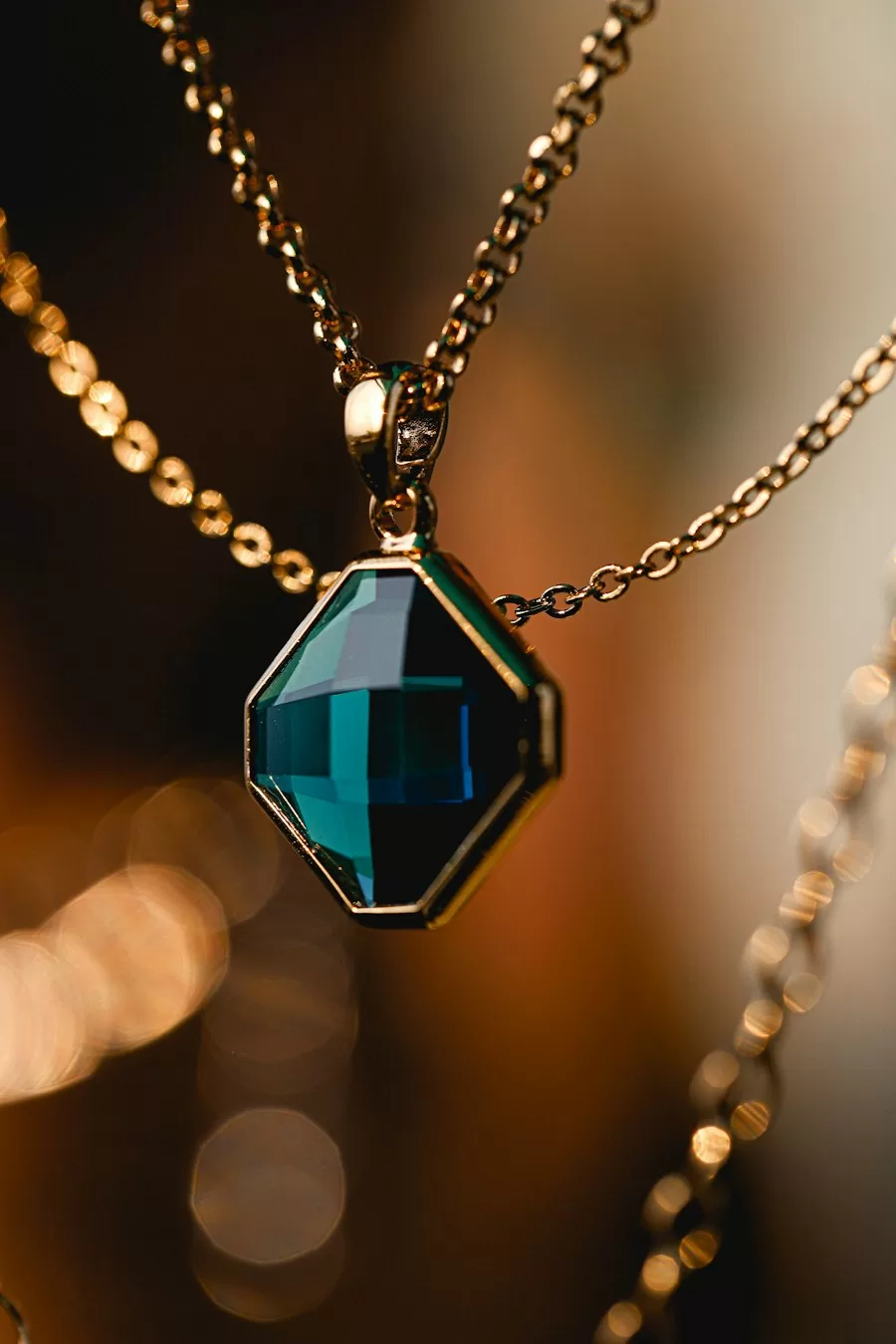
When shoppers compare diamonds, they usually start with shape: round, oval, cushion. But there is a deeper split that changes everything about how a stone looks on the finger. That split is cut style—specifically, whether the diamond is cut as a brilliant or a step cut. The facet arrangement decides how light enters, travels, and exits the stone, and it has a bigger effect on daily sparkle than most buyers expect.
What a brilliant cut does
The modern round brilliant uses around 57 or 58 facets arranged in triangles and kites. Those facets are angled so that light entering through the top bounces off the pavilion (the lower, pointed part) and comes back out the crown. This produces the effects buyers look for: brilliance (white flash), fire (rainbow flashes), and scintillation (the moving sparkle as the stone or your hand turns).
Because the facets are angled and interlocking, brilliant cuts hide small inclusions well and are forgiving about body color. A G- or H-color round diamond often looks near-white to the untrained eye, and a slight feather or crystal inside rarely jumps out at arm's length. That forgiving nature is one reason the round brilliant has dominated engagement rings for a century. Our guide to diamond cut grades explains how labs score this light performance.
What a step cut does
Step cuts—think emerald and Asscher shapes—use long, parallel facets that run like a staircase around the outline. There is no dense web of triangular facets. Instead you get large, flat planes that act like mirrors, creating the famous "hall of mirrors" effect: open, dark and light bands that move slowly across the stone as you tilt it.
The trade-off is immediate. Step cuts produce far less rainbow fire and far less flickering sparkle. What they give you instead is elegance: a calm, glassy, architectural look that reads sophisticated rather than flashy. They tend to look larger than their carat weight suggests because they are often shallower, and they photograph beautifully in square or rectangular settings.
Clarity and color: the big step-cut penalties
Here is where step cuts bite. Because the open, parallel facets act like windows, everything inside the stone is magnified. An inclusion that a round brilliant would disguise becomes obvious through an emerald cut. For that reason, step-cut buyers should generally trade up on clarity—aim for VS or better, and always demand an eye-clean result rather than a lab grade alone.
Color behaves the same way. The broad, flat table of an emerald or Asscher cut shows body color more readily than a faceted round. A J-color emerald cut can look noticeably tinted, whereas a J-color round often faces up white. If you want a colorless look in a step cut, budget for a higher D-to-Z color grade.
Who should choose which
Pick a brilliant cut if you want maximum sparkle, you are on a tighter budget, you wear your ring casually every day, or you prefer a lively, fiery look that hides small imperfections. Round, oval, pear, cushion and radiant cuts are all brilliant in style.
Pick a step cut if you love a sleek, quiet, modern-vintage aesthetic, you want a square or rectangular outline, you are prepared to pay for better clarity and color, and you appreciate a stone that looks expensive rather than noisy. Our emerald vs round cut comparison walks through this exact decision side by side.
Durability note
One practical point: step-cut corners are exposed. An emerald cut has four right-angle corners that can chip if knocked, so a setting with protective corner guards or V-tips is worth the extra spend. Round brilliants have no vulnerable corners at all. Factor that into your setting choice alongside the light style, and you will end up with a stone that suits both your taste and your daily life.
What it does to your budget
Cut style also moves the price around. For the same carat weight, a well-cut round brilliant usually costs more than a step cut because more rough is lost when shaping the dense facet pattern. That means a step cut can give you a larger-looking stone for the same money—part of the reason emerald and Asscher cuts feel like such good value. The catch, as covered above, is that you then spend on higher clarity and color to keep the step cut looking clean. It is a budget shift, not a budget saving: you trade carat efficiency for extra clarity spend.
A quick reality check
If you cannot decide, look at the same stone in both lights. Step cuts look calm and almost architectural under diffuse indoor light, while brilliant cuts flash more aggressively. Try the ring under the shop's spotlights and by the window in natural daylight, because the two surfaces flatter different cuts. Bring someone whose eye you trust and ask which one draws yours back. The cut style you keep glancing at in person is the one that will still please you in ten years, long after the spec sheets are forgotten.
Gemstone grading terminology used here follows the Gemological Institute of America’s gem encyclopedia.
Related Reading
- I1, I2, I3 Clarity: What Included Diamonds Actually Mean
- Diamond Table and Depth Percentages: What the Numbers Actually Mean
- VS1 vs VS2 Diamond Clarity: Which Grade to Buy
Frequently Asked Questions
Is moissanite a good diamond alternative for retail buyers?
Yes for price-sensitive customers who want brilliance and hardness. Moissanite ranks 9.25 on the Mohs scale, holds up to daily wear and costs a fraction of a natural diamond of the same size, so it resells fast in bridal and fashion lines.
What is the minimum order for wholesale moissanite?
MOQ starts at 50 pieces per design for stock items. Custom cuts and private-label settings usually start at 100–300 pieces depending on the mold.
Do you provide certificates with moissanite stones?
Yes. Every parcel ships with GRA or IGI documentation listing carat weight, color grade and cut. We recommend passing the certificate to your end customer for trust.
How long does sample and bulk production take?
Samples ship in 3–5 days. Bulk runs take 15–20 days under 500 pieces, and 25–30 days for custom work.


