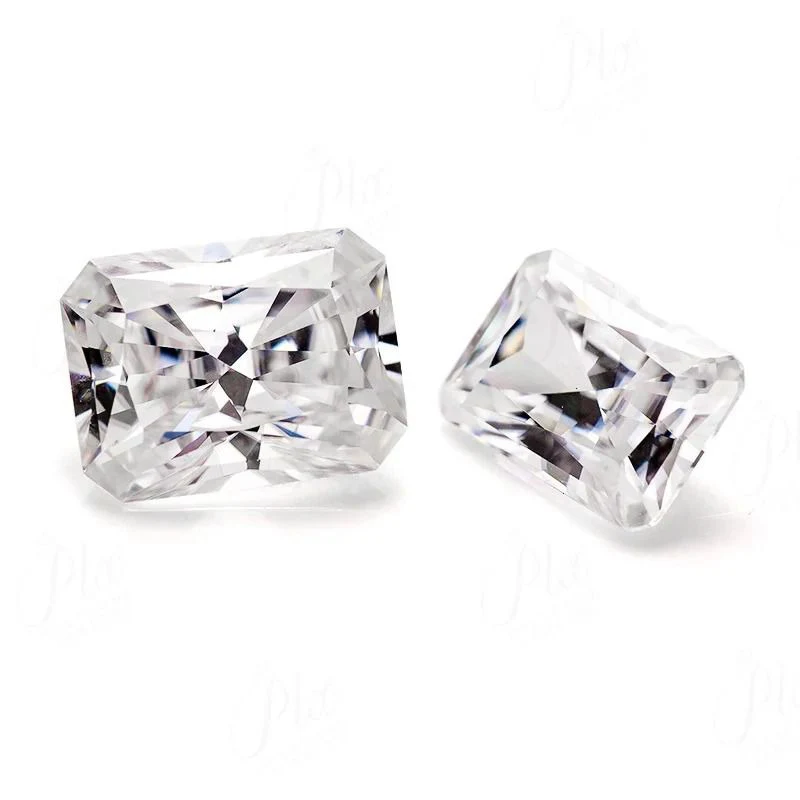
Diamond colour is one of those subjects where the marketing material and the physics point in different directions. The grading (per GIA's diamond grading standards) scale runs D to Z, and the jump from D to H costs a surprising amount of money — while the jump from H to J costs noticeably less. Understanding why that is, and how the metal you choose changes the picture, stops you paying for a difference you will not notice.
What 'colourless' actually means
White diamonds are not truly colourless; they are graded against a set of master stones under controlled light in a dark booth. D is the top of the scale, a stone with no trace of yellow or brown. As you move down the alphabet, the stone picks up a faint warm tint. By K, L and M, that tint is visible face-up in daylight. By P onwards, the stone is a distinctly yellow fancy-shade diamond, which is a different market altogether.
The metal decides your cut-off
A white metal band makes a warm diamond look warmer, because the surrounding metal is the reference point. A yellow or rose gold band, by contrast, masks the warmth completely. The practical translation:
- Platinum or white gold solitaire: aim for G or H. I is acceptable, but you will start to see creaminess if the stone is larger than 0.7ct.
- 18ct yellow or rose gold: H, I or even J reads perfectly white to most eyes. This is the place to save 10–15%.
- Yellow gold with side stones: stay at G to keep the centre stone looking brighter than the small diamonds, which will naturally be a touch warmer.
| Grade | Look in white metal | Look in yellow gold | Price index (D=100) |
|---|---|---|---|
| D | Ice white | Ice white | 100 |
| G | Almost colourless | Colourless | 78 |
| H | Barely warm | Colourless | 68 |
| I | Slightly warm at 30cm | Colourless | 58 |
| J | Warm-tinted | Colourless | 48 |
Fluorescence: the quiet wildcard
Roughly a third of diamonds show a weak to medium blue fluorescence under ultraviolet light. In daylight that is usually invisible, and in a J-colour stone it can actually make the diamond look whiter — a free benefit. Strong or very strong fluorescence on a D-colour stone, however, can give the face a slightly oily or cloudy look under bright sun. If a stone has medium fluorescence on a near-colourless grade, ask to see it outdoors before you commit.
Two mistakes to avoid
First, do not trust a single photo. Colour grading is about controlled comparison, and a phone camera will lie to you one way or the other. Second, do not chase D colour just because the certificate says it: the difference between D and G on a 1ct stone is around £600–£900, and at arm's length in a ring it is not something a stranger will spot. That money is better spent on cut quality.
How to judge colour without a grading booth
If you are comparing two stones at home, put them both on a sheet of plain white A4 paper under a north-facing window — indirect daylight, not direct sun. View them from the side, looking at the girdle edge, because that is where the warm tint is most visible. Put them next to a known reference if you can: a small D-colour melee that a jeweller will lend you. Warm white shop lighting, the kind most high-street chains use, is deliberately chosen to make every stone look whiter; never grade a purchase decision under those lights alone.
Side stones follow the centre, not the budget
If you choose a halo or a three-stone setting, the small diamonds around the centre stone should be graded at least as white as the centre, ideally a touch whiter. A centre stone graded H surrounded by I or J melee will look comparatively warm against the brighter sides, and the halo will read as a glowing white frame around a yellowish centre. This is a quiet error that costs nothing to avoid — just ask the jeweller what grade the side stones are, and insist on matching them.
The 'brownish' warning on lower grades
Once you move past J on the normal white scale, the tint is not always yellow — some stones read brownish or greyish, particularly under fluorescent office light. A K or L stone with a brownish modifier can look dull rather than warm, and that is hard to spot in a warm shop light. If you are looking at I, J or K colour, ask the seller for an unedited daylight video of the stone. A genuinely warm yellow tint is attractive; a muddy grey-brown one is not, and the printed colour grade alone will not tell them apart.
Once you have your colour and clarity sorted, the next decision is shape and setting — which we cover alongside our engagement ring buying guide.
Related Reading
- I1, I2, I3 Clarity: What Included Diamonds Actually Mean
- Diamond Table and Depth Percentages: What the Numbers Actually Mean
- VS1 vs VS2 Diamond Clarity: Which Grade to Buy
Frequently Asked Questions
Is moissanite a good diamond alternative for retail buyers?
Yes for price-sensitive customers who want brilliance and hardness. Moissanite ranks 9.25 on the Mohs scale, holds up to daily wear and costs a fraction of a natural diamond of the same size, so it resells fast in bridal and fashion lines.
What is the minimum order for wholesale moissanite?
MOQ starts at 50 pieces per design for stock items. Custom cuts and private-label settings usually start at 100–300 pieces depending on the mold.
Do you provide certificates with moissanite stones?
Yes. Every parcel ships with GRA or IGI documentation listing carat weight, color grade and cut. We recommend passing the certificate to your end customer for trust.
How long does sample and bulk production take?
Samples ship in 3–5 days. Bulk runs take 15–20 days under 500 pieces, and 25–30 days for custom work.


