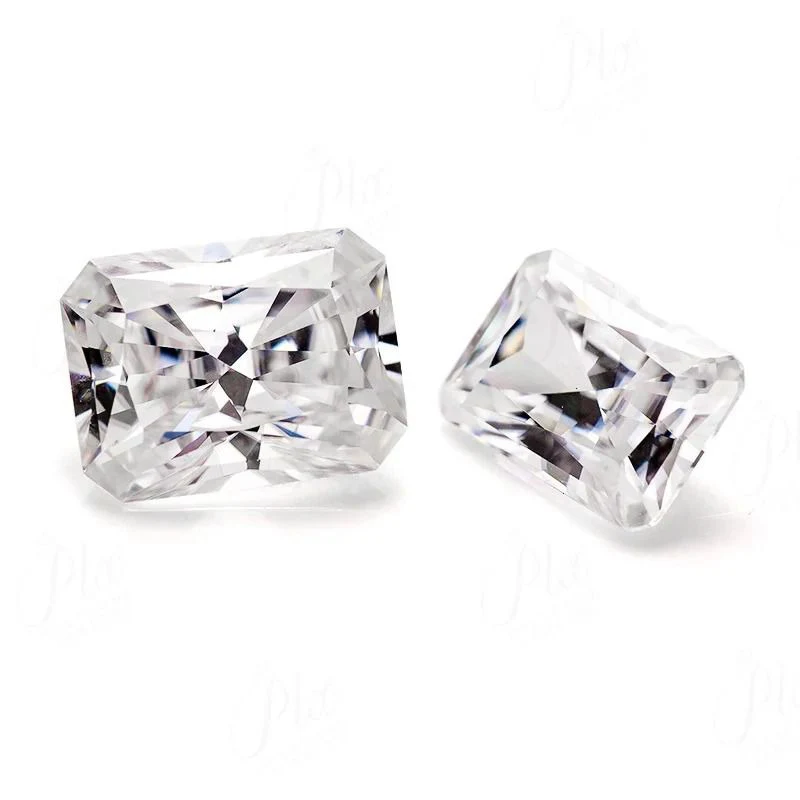
'VVS' sounds like the specification of a premium television. In diamonds it stands for very, very slightly included, and it is one of the most expensive labels you will never actually see. Clarity (per GIA's diamond grading standards) is the easiest of the 4Cs to over-pay on, because the difference between grades happens at 10x magnification — a lens almost nobody pulls out at a dinner party.
How clarity is actually graded
A grader looks at the loose diamond under 10x magnification in a dark room, using tweezers and a focused light. They count the inclusions — crystals, feathers, needles, clouds, knots — and judge how easy they are to find, where they sit, and whether they threaten the stone's durability. The resulting scale runs from Flawless (FL) down to Included (I1, I2, I3).
| Grade | What it means | Visible to naked eye set in a ring? |
|---|---|---|
| FL / IF | No inclusions under 10x | No, but you will pay for rarity |
| VVS1 / VVS2 | Tiny inclusions, hard even for a grader | No |
| VS1 / VS2 | Minor inclusions, found under loupe | Almost never |
| SI1 / SI2 | Noticeable under loupe | Usually not; SI2 sometimes borderline |
| I1 | Visible to naked eye | Yes, often as a dark dot |
| I2 / I3 | Obvious, may affect strength | Yes — avoid for a solitaire |
The honest sweet spot
For a solitaire that will be worn every day, VS2 is the grade that gets recommended most often by independent gemmologists. It is clean to the naked eye, leaves budget for a better cut or a larger carat, and — crucially — it is a grade resellers recognise without argument. SI1 is a reasonable step down, saving another 10–15%, as long as the inclusion is white and near the girdle rather than a black crystal in the table.
The inclusion types that matter
- Feathers: internal cracks. Tiny ones are harmless; long, surface-reaching ones can chip.
- Black crystals: the most visually obvious inclusion. Avoid if it sits in the centre of the table.
- Clouds: groupings of tiny dots. A light cloud softens sparkle; a heavy cloud mutes the whole stone.
- Needles and twinning wisps: rarely visible and rarely a problem.
- Chips and nicks on the girdle: repairable in a re-cut, but ask about it.
What to ask the jeweller
When you are shown a VS2 or SI1, ask: 'Where is the inclusion, and what does it look like on the plot?' A GIA certificate includes a plotting diagram. A stone with an inclusion tucked under a claw or near the girdle is a better buy than one with a central black dot, even if the printed grade is identical. If a seller will not show you the actual plot for the exact stone you are buying, that is a warning sign.
How to read the plot on a certificate
A GIA certificate includes a diagram of the stone with small symbols marking where the inclusions sit. Crystals are drawn as dots, feathers as lines, clouds as shaded patches, and lasering marks as tiny asterisks near the girdle. The position matters as much as the count: an inclusion tucked under a claw will be hidden once the stone is set, whereas an identical inclusion dead-centre in the table will catch every eye. When comparing two stones of the same printed grade, the one with fewer, edge-positioned inclusions is almost always the better-looking ring. Ask the jeweller to walk you through the plot — they will, and it takes two minutes.
When SI2 crosses the line
An SI2 stone can be an absolute steal or a visible mistake, and the grade alone will not tell you which. The deciding factor is whether the inclusion is white, feathery and placed near the girdle, or black, crystalline and sitting in the table. The first kind looks clean once set; the second kind reads as a dark dot that no amount of wearing will make you stop noticing. If a seller cannot show you the exact stone's plot or a high-resolution video of it face-up, the SI2 discount is not worth the risk — step up to SI1.
Treated stones: what to ask about
Some lower-clarity stones are improved after mining by laser drilling (to reach dark inclusions) or by fracture filling (to mask feathers). Both treatments are disclosed on a proper certificate, and both affect value and repair options — heat from a jeweller's torch can destroy fracture filling. A natural, untreated VS2 is a better long-term buy than a treated SI1. If the price on a clarity stone looks too good, ask directly: 'Is this diamond treated, and how is it noted on the certificate?' The answer tells you a lot about the seller.
Clarity rarely lives on an island: it interacts with colour and cut, which is why we keep a broader 4Cs explainer open alongside this one when you are comparing two stones side by side.
Related Reading
- I1, I2, I3 Clarity: What Included Diamonds Actually Mean
- Diamond Table and Depth Percentages: What the Numbers Actually Mean
- VS1 vs VS2 Diamond Clarity: Which Grade to Buy
Frequently Asked Questions
Is moissanite a good diamond alternative for retail buyers?
Yes for price-sensitive customers who want brilliance and hardness. Moissanite ranks 9.25 on the Mohs scale, holds up to daily wear and costs a fraction of a natural diamond of the same size, so it resells fast in bridal and fashion lines.
What is the minimum order for wholesale moissanite?
MOQ starts at 50 pieces per design for stock items. Custom cuts and private-label settings usually start at 100–300 pieces depending on the mold.
Do you provide certificates with moissanite stones?
Yes. Every parcel ships with GRA or IGI documentation listing carat weight, color grade and cut. We recommend passing the certificate to your end customer for trust.
How long does sample and bulk production take?
Samples ship in 3–5 days. Bulk runs take 15–20 days under 500 pieces, and 25–30 days for custom work.


