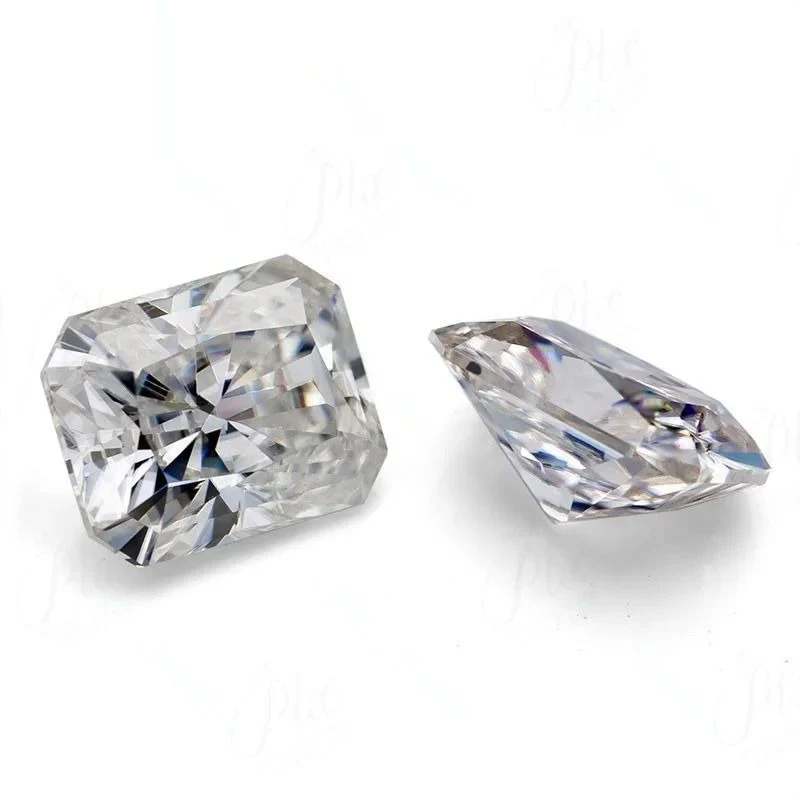
A common question from first-time moissanite buyers is whether the stone can be damaged when the ring is resized. The short answer is no, the moissanite itself is not the limiting factor. The metal band and the setting design are. Moissanite is one of the hardest gemstones commonly used in jewellery, second only to diamond on the Mohs scale, and it is perfectly comfortable sitting on a jeweller's bench while the band is adjusted. What you actually need to think about is how much the band can move before something bends or cracks.
How ring resizing works
A traditional resize means cutting the band open at the bottom, removing or adding a small section of metal, and soldering it back together. This works beautifully on a plain, solid band in gold, platinum or palladium. It does not touch the stone at all. The jeweller may even leave the stone in place, because moissanite can handle the brief warmth of a soldering job as long as the bench worker uses reasonable care and avoids directing flame straight at the stone. Our broader ring resizing guide walks through the general process.
Why some moissanite rings are tricky
The trouble starts when the band is not plain. Full eternity rings, where stones run all the way around the band, are almost impossible to resize cleanly because cutting the band would pass through a setting. Tungsten and carbon-fibre bands cannot be resized at all because the metal is too brittle to cut and solder. Many moissanite engagement rings are sold in 14k or 18k gold, which resize easily, but cheaper fashion bands sometimes use tungsten or stainless steel, which do not.
How much can you resize?
As a rule of thumb, a plain gold or platinum band can be sized up or down by about one to two full sizes without stress. Going more than two sizes requires adding or removing a lot of metal and can distort the shank, especially if the ring has stones set into the shoulders. If you are between sizes or your weight fluctuates, it is worth ordering the closest size now and planning a small adjust later rather than trying to force a big change in one go. Our ring sizing guide explains how to get an accurate first measurement.
Heat: what moissanite can handle
Moissanite is thermally stable, but it is not invincible. It has a known heat sensitivity above roughly 600 degrees Celsius, where prolonged high heat can cause surface clouding or colour change. A jeweller doing a normal resize uses a small flame on the bottom of the band, well away from the stone, and works quickly. This is well below the danger zone. Problems only arise if someone overheats the stone during setting, repairs or a clumsy repair job. When you hand over your ring, remind the jeweller it is moissanite and ask them to keep the flame off the stone and use a heat shield if needed.
What to ask the jeweller before resizing
Tell them the band metal, whether the band has stones, and how much you need to change. Ask whether the resizing will affect the finish on a rhodium-plated white gold ring, because white gold bands often need a fresh coat of rhodium after any heating. See rhodium plating after repair for why. Ask for a quote that includes checking the prongs while the ring is on the bench, since a resize visit is a cheap chance to tighten anything loose.
Get the size right the first time
The easiest way to avoid resizing is to measure carefully before ordering. Use a professional jeweller sizer, measure at the end of the day when fingers are slightly warmer, and remember that fingers swell in summer and shrink in winter. If you are buying online, order a plastic ring sizer or borrow a similar-width band from the wearer's collection. A well-sized ring from the start means the moissanite sits exactly where it should, straight and true, for years.
One more practical point: if your ring has a moissanite centre with side stones or pavé shoulders, ask the jeweller whether the resize will disturb those settings. Sometimes a resize visit is the perfect moment to tighten a wobbly side stone or refresh a worn prong, because the ring is already on the bench. Get in the habit of mentioning this every time you book a repair, and you will catch small problems before they become lost stones.
The bottom line
Most moissanite engagement rings on plain gold or platinum bands resize just as easily as diamond rings. Moissanite itself is not the obstacle. The design of the band, the metal it is made from, and the jeweller's care with heat are what decide whether the job goes smoothly. Ask the right questions, size carefully, and a resize is a routine repair rather than a risky procedure.
Rhodium plating, which gives white gold jewellery its bright finish, is covered in the Wikipedia article on rhodium.
Related Reading
- What Is Moissanite Complete Guide to Quality - HOLYCOME
- Moissanite Hardness Durability and Care Guide - HOLYCOME
- What Is Moissanite Complete Guide to Properties Value and Care - HOLYCOME
Frequently Asked Questions
Is moissanite a good diamond alternative for retail buyers?
Yes for price-sensitive customers who want brilliance and hardness. Moissanite ranks 9.25 on the Mohs scale, holds up to daily wear and costs a fraction of a natural diamond of the same size, so it resells fast in bridal and fashion lines.
What is the minimum order for wholesale moissanite?
MOQ starts at 50 pieces per design for stock items. Custom cuts and private-label settings usually start at 100–300 pieces depending on the mold.
Do you provide certificates with moissanite stones?
Yes. Every parcel ships with GRA or IGI documentation listing carat weight, color grade and cut. We recommend passing the certificate to your end customer for trust.
How long does sample and bulk production take?
Samples ship in 3–5 days. Bulk runs take 15–20 days under 500 pieces, and 25–30 days for custom work.


