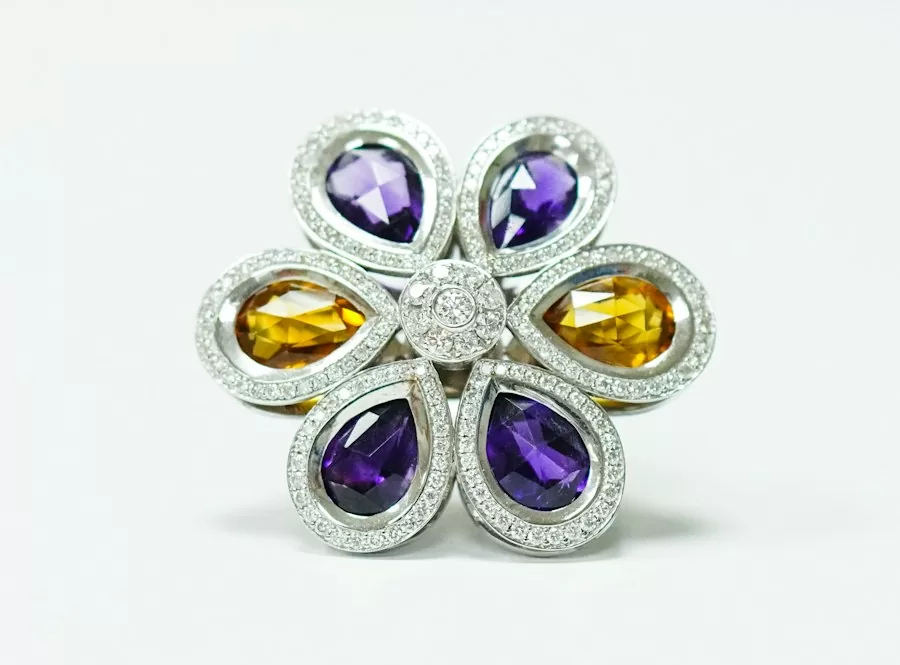
A bespoke engagement ring sounds like it belongs to a different budget bracket, but in reality a growing number of buyers land on custom work because the case stock does not match what they want. The process is not mysterious. It follows the same sequence in nearly every workshop, and knowing the steps ahead removes most of the stress.
Step 1: The brief and the budget
The first conversation is not about stones. It is about lifestyle, style references, hand size, and budget. Bring screenshots of rings you like, note the metal, the setting, the band width, and anything you want to avoid. Be honest about budget; a good designer will work inside it rather than push past it. This is also where you decide whether to use a ready stone, a loose stone you already own, or pick one together.
Step 2: Sketches and concept
A designer will turn the brief into rough pencil sketches. Expect two or three directions, not one perfect idea. This stage is cheap to change. It is normal to flip the setting from prong to bezel, to widen the band, or to swap the halo for accents. Decisions made on paper cost nothing; decisions made after casting cost real money.
Step 3: CAD and the 3D model
Once the sketch is approved, the design moves into CAD software. You will receive a rendered image, sometimes a 3D print of the ring in resin or wax. This is the moment to check proportions on your own hand, hold the model next to a similar ring you already wear, and flag anything that looks off. Most workshops allow two or three CAD revisions before charging extra.
Step 4: Choosing the stone
If the stone has not been picked yet, this is the point. You will be shown loose stones with certificates, photographed next to the head, and asked to choose. Buying a loose stone separately and having it set into a custom head often saves money compared with a preset ring; our guide on loose stone vs preset explains the trade-off.
Step 5: Casting and setting
The wax or resin print is invested and cast in your chosen metal. The caster sprue is removed, the ring is filed, soldered, and polished. Then the stone is set: prongs are shaped over the girdle, tightened, and the tips are polished. This is the stage where the invisible skill lives. A poorly set stone will shift, chip, or fall out years early.
Step 6: Finishing and inspection
Before the handover, the ring goes through a final polish, a prong check, and a ultrasonic and steam clean. You should be invited in to try it on, check the fit, and inspect the setting under magnification. If anything catches on fabric or feels sharp, this is the moment to flag it.
Timeline and cost
A straightforward bespoke ring usually takes four to eight weeks from approved CAD to handover. More complex pieces, vintage rebuilds, or pieces that require stone sourcing can run ten to twelve weeks. Plan backwards from the proposal date; our timeline guide on wedding ring ordering walks through the calendar. Cost is usually comparable to a high-end off-the-shelf ring once the design fee is absorbed; the real premium is the time and the conversation.
Questions to ask before you start
Ask how many CAD revisions are included, what the turnaround is, who sets the stone, whether the setting comes with a warranty, and what happens if the stone needs re-tipping later. A workshop that answers clearly is a workshop you can trust with the next six weeks of your life.
When bespoke is not the right call
Custom work is not always the best answer. If you are on a tight deadline, under eight weeks from the proposal date, a preset ring with a short lead time is safer. If you have not decided on the stone yet and the workshop pushes you to lock a design before the stone is chosen, walk away; the head proportions depend on the actual stone, not a guess. If your budget is very small, a custom piece usually costs more than a comparable preset because the design fee has to be absorbed. In those cases, a semi-mount from a maker whose style you already like is a sensible middle ground.
Protecting the relationship with the workshop
Treat the process like a small project. Get the quote in writing, ask for a timeline in writing, and keep the email thread where the CAD approvals happen. When you say "yes" to a render, confirm in email that the wording, the metal, the stone, and the band width are all locked. This is not distrust; it is how bespoke work avoids the classic argument where the customer remembers one design and the jeweller built another. A good workshop welcomes the paper trail, because it protects them too.
The Wikipedia entry on engagement rings gives an independent overview of engagement ring traditions and settings.
Related Reading
- HPHT vs CVD Lab-Grown Diamonds: The Basics Buyers Ask
- When Your Ring Size Changes: Day to Day, Season to Season
- How Lab-Grown Diamonds Are Priced
Frequently Asked Questions
What ring sizes can you supply in bulk?
US sizes 5–12 including half sizes. Send a size breakdown with your order and we cast to that curve; comfort-fit inner bands reduce resize requests.
Can I order a mixed size run instead of one size?
Yes. Mixed runs are standard for wholesale: specify quantity per size and we pack and label by size at no extra labor cost.
What is the MOQ for custom ring designs?
50 pieces per design for existing molds; 100–300 pieces when a new mold or CAD model is required.
How should I price rings for retail margin?
Most partners use a 3–4x markup on FOB cost for sterling and 2.5–3x for moissanite solos, which keeps landed cost under 30% of retail.


