Two ovals, both 1.5 carats, both F colour, both VS2. One looks elegant and slender on the finger. The other looks squat and almost round. The price difference is real, but the stone specifications are nearly identical. The hidden variable is the length-to-width ratio, and it is the single most under-discussed number in fancy shape buying.
What length-to-width ratio means
The ratio is the longest measurement of the stone divided by the shortest. A perfect square has a ratio of 1.0. A perfect circle also has a ratio of 1.0. An oval that is twice as long as it is wide has a ratio of 2.0. The number is reported on most modern diamond certificates, usually under the measurements line. It is geometry, not quality, but it is geometry that completely changes how the stone looks.
Round diamonds are the exception
A round diamond is, by definition, close to a ratio of 1.0. Slight off-roundness is normal and usually not worth chasing. All of the ratio conversation applies to fancy shapes: ovals, pears, marquises, cushions, princesses, emeralds, and asschers. For these shapes, the ratio is where personal taste starts.
Oval sweet spot
The classic oval ratio is between 1.30 and 1.50. Below 1.30, the stone reads almost round. Above 1.55, the stone reads as a long cigar and can look thin on the finger. Most buyers land on 1.40 to 1.45 as the sweet spot: long enough to elongate the finger, but not so long that the stone looks stretched. A longer oval (1.50 to 1.60) is fashionable and reads more modern, but it also shows more bowtie effect. Our piece on the bowtie effect explains why longer ovals pay a light trade-off.
Pear and marquise
Pears usually look best between 1.45 and 1.75. Below 1.45 they look squat; above 1.75 they look droopy. Marquises are the most elongated of the common shapes, with a traditional range of 1.75 to 2.10. Both shapes are extremely sensitive to ratio because the pointed ends are the most visible feature. A pear that is too wide looks like a teardrop blob; a marquise that is too narrow looks like a shard. When in doubt, go shorter rather than longer; the mistake buyers usually regret is over-stretching the stone.
Cushion and princess
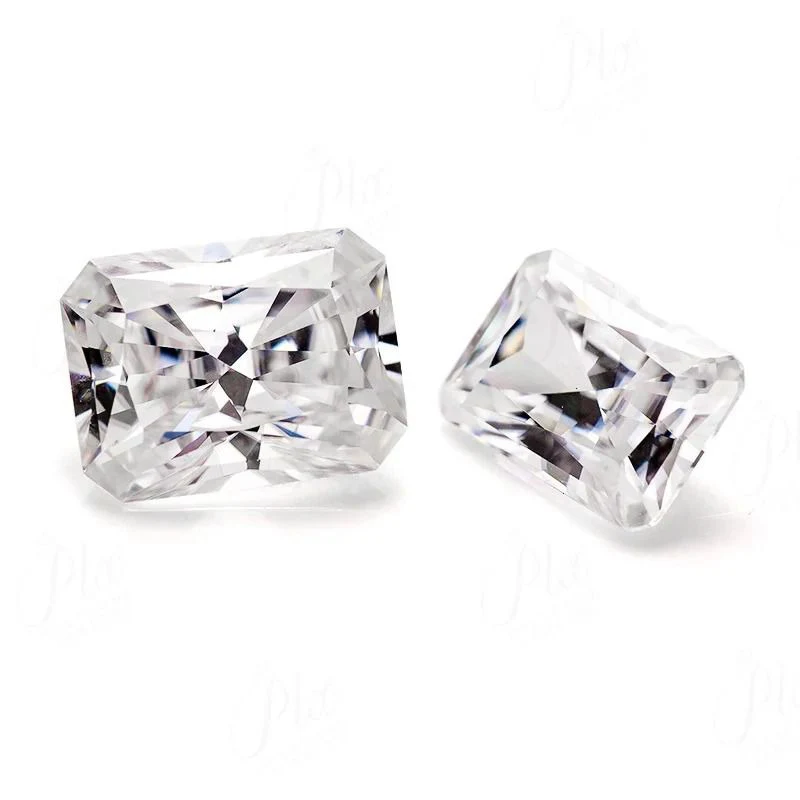
Cushions come in square (1.00 to 1.05) and elongated (1.10 to 1.25). Square cushions feel vintage and cosy; elongated cushions feel modern and stretch the finger. Both are popular, and the choice is almost entirely aesthetic. Princess cuts are usually square, between 1.00 and 1.05; an elongated princess (over 1.10) starts to read as a rectangle and loses the crisp look the shape is known for. Our comparison of fancy shapes side by side walks through the other differences.
Emerald and Asscher
Emerald cuts are traditionally rectangular, with a ratio between 1.30 and 1.60. Below 1.30 the step facets look cramped; above 1.60 the stone looks like a narrow brick. Asschers are square, almost always between 1.00 and 1.05, because the open step-facet look relies on symmetry. Because these shapes show inclusions more openly, buying eye-clean matters more than on a round brilliant.
How ratio interacts with finger shape
Ratio is not just about the stone. It is about the stone on your hand. Long, slender ratios (1.5+ on an oval, 1.8+ on a marquise) elongate the finger and look elegant on longer, slimmer hands. Squarer ratios (1.1 to 1.2) look balanced on shorter, wider fingers and on hands with shorter nails. If you are buying online, the easiest test is to hold a ruler against a ring you already wear and compare the millimetre measurements on the certificate. The ratio number on its own is abstract; on your finger it is not.
Why ratios vary between sellers
Cutters choose the ratio that gives the best yield from the rough. A piece of rough that wants to be a 1.4 oval will not cut cleanly as a 1.2 oval without losing a lot of weight. That is why two stones of the same carat can have very different ratios: the cutter followed the shape the rough wanted. There is no "wrong" ratio, but there are ratios that suit your hand and ratios that do not. Choose the ratio first, then narrow by carat, colour, and clarity. Most buyers do it the other way around and end up compromising on the look that matters most.
A quick reference before you order
If you want a starting point, bookmark these: oval 1.40 to 1.50, pear 1.50 to 1.65, marquise 1.80 to 2.00, square cushion 1.00 to 1.05, elongated cushion 1.15 to 1.25, emerald 1.40 to 1.55, asscher 1.00 to 1.05. Treat these as a starting point, not a rule. The right ratio for you is the one that looks right when you hold a ruler up to your hand. Our overview of diamond shapes compared pairs naturally with this list.
Gemstone grading terminology used here follows the Gemological Institute of America’s gem encyclopedia.
Related Reading
- I1, I2, I3 Clarity: What Included Diamonds Actually Mean
- Diamond Table and Depth Percentages: What the Numbers Actually Mean
- VS1 vs VS2 Diamond Clarity: Which Grade to Buy
Frequently Asked Questions
Is moissanite a good diamond alternative for retail buyers?
Yes for price-sensitive customers who want brilliance and hardness. Moissanite ranks 9.25 on the Mohs scale, holds up to daily wear and costs a fraction of a natural diamond of the same size, so it resells fast in bridal and fashion lines.
What is the minimum order for wholesale moissanite?
MOQ starts at 50 pieces per design for stock items. Custom cuts and private-label settings usually start at 100–300 pieces depending on the mold.
Do you provide certificates with moissanite stones?
Yes. Every parcel ships with GRA or IGI documentation listing carat weight, color grade and cut. We recommend passing the certificate to your end customer for trust.
How long does sample and bulk production take?
Samples ship in 3–5 days. Bulk runs take 15–20 days under 500 pieces, and 25–30 days for custom work.


