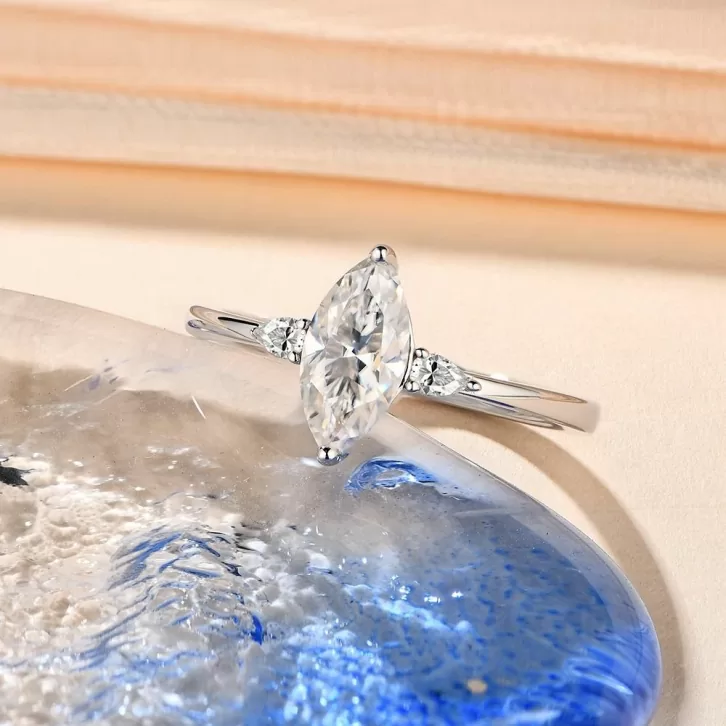
A proposal on bended knee is hard to redo, but a ring that slips off when she washes her hands is a very public kind of disappointment. Getting the size right the first time is worth a quiet evening of detective work. This is the UK sizing system in plain terms, plus the tricks people use when the ring has to be a surprise.
How UK ring sizes work
British sizes run alphabetically from roughly F to Z, with half sizes in between. The inside circumference is measured in millimetres, which is why international charts cross-reference so badly. A woman's most common engagement ring size in the UK is between a J and an M, with L being a useful default guess if you know almost nothing. Men's wedding bands typically sit between Q and T.
| UK size | Inside diameter (mm) | Inside circumference (mm) | US / Canada |
|---|---|---|---|
| J | 15.4 | 48.3 | 5 |
| L | 16.1 | 50.5 | 6 |
| N | 16.9 | 52.7 | 6.5 |
| P | 17.7 | 55.0 | 7.5 |
| R | 18.5 | 57.4 | 8.5 |
| T | 19.3 | 59.8 | 9.5 |
The honest ways to measure in secret
- Borrow a ring she actually wears on the right hand's ring finger, not a slim fashion ring she wears on her index finger. Take it to a jeweller and ask them to measure the internal diameter.
- Trace the inside edge on a piece of paper. It is rough, but a jeweller can usually read it to within half a size.
- Ask her sister or best friend. People in her life often know, and a discreet shopping trip for a 'birthday present' works wonders.
- Print a free ring sizer chart and leave it lying around under the pretext of measuring your own finger. It is cheeky but effective.
Do not try to guess from her shoe size or glove size. Those correlations are folklore and will lose you the bet.
Width changes everything
A 2mm band feels half a size looser than a 5mm comfort-fit band on the same finger. Wide bands — 4mm and up — often need half to a full size larger to slip past the knuckle comfortably. If you are choosing a substantial platinum band, size up a touch rather than down. When in doubt, err on the larger side: sizing down is almost always easier than sizing up.
What resizing can and cannot fix
A plain solitaire band can usually go up or down by two sizes without issue, for £25–£60. A full-eternity band with stones set all the way around almost never resizes, because cutting it would break the setting. Three-quarter eternity bands stretch in one direction only. Tension-set rings often cannot be resized at all. If you are unsure about size, ask for a semi-eternity or plain band and upgrade later.
Two practical caveats
If you got it wrong, you have options
Most jewellers will tighten, re-size or exchange a ring within the first 30–90 days at little or no cost, provided the ring is unworn and in its original condition. Ask about this before you buy, not after the proposal. If the ring has been worn and is half a size too loose, a sizing bead — a tiny solder ball hidden inside the band — will stop it spinning around the finger for under £20, and it removes the need to cut the band at all. If it is too tight, do not wait until it becomes painful; a stuck ring is solved with a cutter, and that means a ruined band.
The borrowed-ring finger trap
Not every ring she wears lives on the ring finger, and fingers differ in size by a half to a full size between neighbours. An index finger ring is roughly two sizes larger than the ring finger on the same hand; a middle finger ring is bigger again. If you borrow a ring, check which finger she actually wears it on and adjust the measurement accordingly. When in doubt, err on the smaller side of the estimate — a ring that needs a half-size down is a five-minute job, and a ring that is too small for the proposal moment is a genuinely awkward start to the evening.
The printable-sizer option
If surprise is off the table and you are buying together, most UK jewellers will post a free plastic ring sizer in the post or let you come in and be measured in five minutes. That measured result is worth more than any estimate, and it also tells you whether a comfort-fit wide band will need a half-size larger. When a proposal is still planned, though, the borrowed-ring method remains the most reliable route — it is what most independent jewellers suggest when asked.
Fingers swell in the heat, after salty meals, and in the late afternoon. Measure when the finger feels normal, not on a summer evening after a pub lunch. If she plans to wear the engagement ring stacked against a wedding band, the two bands should be made to fit together, which is why many couples choose a shaped wedding band later — a point worth remembering when you read our guides on wedding ring shapes and fits.
The history and conventions of engagement rings are outlined in the Wikipedia entry on engagement rings.
Related Reading
- HPHT vs CVD Lab-Grown Diamonds: The Basics Buyers Ask
- When Your Ring Size Changes: Day to Day, Season to Season
- How Lab-Grown Diamonds Are Priced
Frequently Asked Questions
What ring sizes can you supply in bulk?
US sizes 5–12 including half sizes. Send a size breakdown with your order and we cast to that curve; comfort-fit inner bands reduce resize requests.
Can I order a mixed size run instead of one size?
Yes. Mixed runs are standard for wholesale: specify quantity per size and we pack and label by size at no extra labor cost.
What is the MOQ for custom ring designs?
50 pieces per design for existing molds; 100–300 pieces when a new mold or CAD model is required.
How should I price rings for retail margin?
Most partners use a 3–4x markup on FOB cost for sterling and 2.5–3x for moissanite solos, which keeps landed cost under 30% of retail.


