A buyer asked us to quote 400 pendants after a single sample arrived looking perfect. The production lot came back with four visible problems: prongs at different heights, a rhodium bath that left one side dull, clasps that opened under 2 kg of pull, and a chain length that drifted by 3 mm across the run. The sample had been hand-picked. The lot had not.
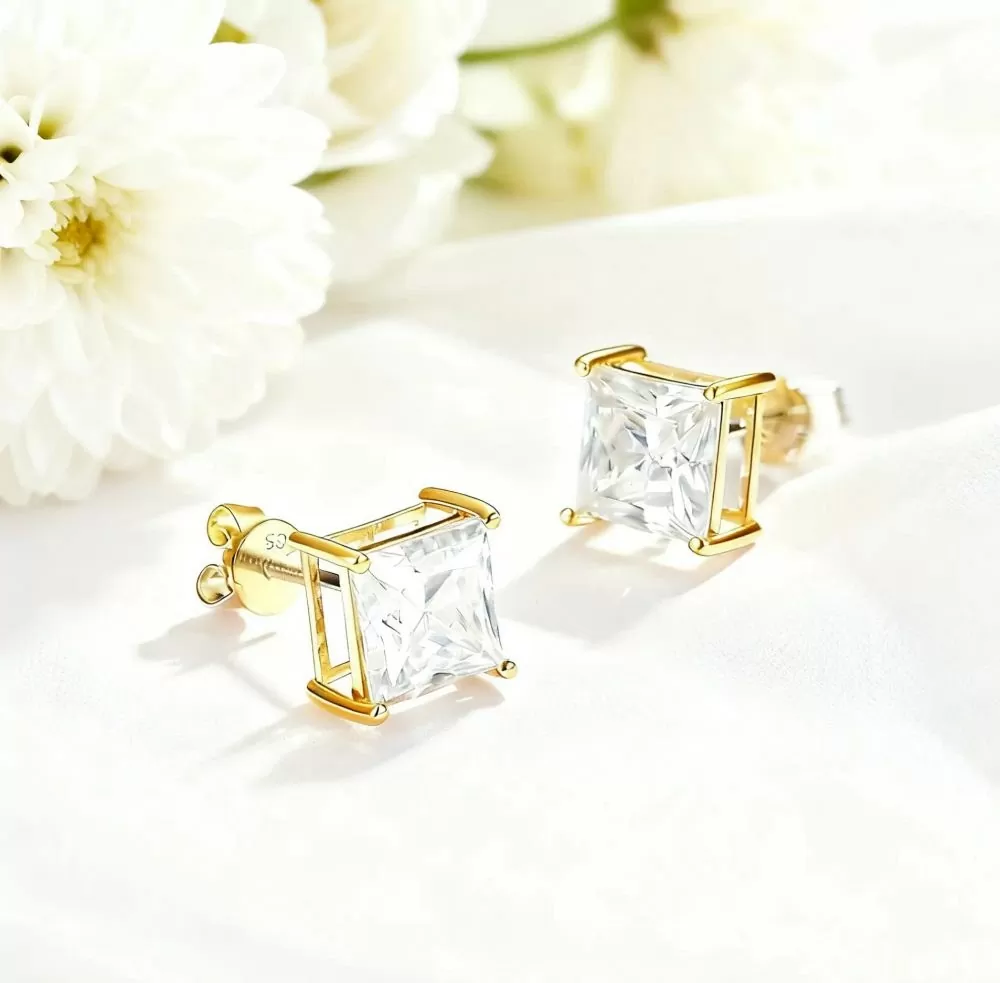
That is the whole argument for treating a sample run as an audit rather than a preview. A ten-piece order costs a fraction of a production lot and exposes almost every process a factory runs. What it does not expose is consistency, so the sample has to be designed to test consistency on purpose.
What a sample run is actually testing
A sample order sits between a stock photo and a production contract. It should confirm four things at once: whether the factory can hit your specification, whether its stated lead times are real, whether its quality language matches yours, and whether communication survives a problem.
Most buyers only test the first item. They send a reference image, receive something close, and move to a bulk order. The other three questions are left for the production run, where the cost of a wrong answer is measured in air freight and missed launch dates.
Specification fidelity
This is the metal weight, stone size, stone grade, setting type, finish and dimensions you asked for. Check each against a written spec sheet, not against memory. A 0.15 g metal shortfall per piece is invisible in the hand and adds up to 75 g across 500 pieces.
Lead-time honesty
Record the date you approved the CAD, the date the deposit cleared, and the date the parcel shipped. Compare the gap with what the factory promised. A factory that misses a ten-piece sample by five days will usually miss a 500-piece lot by three weeks.
Quality vocabulary alignment
Words like "clean", "sharp" and "polished" mean different things in different workshops. The sample run is where you convert them into measurable statements: prong tip radius, surface roughness, plating thickness in microns, stone tilt in degrees.
Problem behaviour
Introduce one deliberate complication, such as a stone size that is not in stock or a finish the factory has not run recently. How it reports the constraint, and whether it offers an alternative before the deadline, tells you more about a long-term relationship than a flawless easy order.
What to put in the sample order
A useful sample basket covers process breadth. Five identical rings prove nothing about a factory's ability to run a mixed catalogue. The table below is the structure we recommend to buyers planning a first order.
| Slot | What to order | Process it tests | Quantity |
|---|---|---|---|
| 1 | Your core bestseller style | Casting, setting, polishing | 3 pcs |
| 2 | A style with a small stone count | Melee setting, alignment | 2 pcs |
| 3 | A style with a large centre stone | Prong work, seat depth | 2 pcs |
| 4 | A plated or two-tone piece | Plating bath control, masking | 2 pcs |
| 5 | A chain or clasp item | Assembly, pull strength | 3 pcs |
Twelve pieces across five slots gives you enough repetition to spot drift. Three pieces of the same style let you compare prong heights side by side, which a single piece cannot do.
Ask for the production route in writing
Request the casting method, the plating specification, the stone grade name and the QC checklist the factory will use for the bulk order. A factory that cannot describe its own route in writing is unlikely to control it.
Include one specification you care about more than the rest
Pick the single attribute that decides whether the product sells, and state a numeric tolerance for it. If stone colour is your risk, ask for a colour range against a master stone. If plating durability is the risk, ask for a micron figure and a wear test result.
The inspection routine: seven checks on the bench
You do not need a laboratory to catch most sample failures. A loupe, a scale, a caliper, a magnet, a pull test and a light box cover the majority of defects that reach retail customers.
- Weigh each piece. Compare against the quoted metal weight. Deviation above 5 percent on a light piece usually means a thinner section somewhere.
- Measure the dimensions. Band width, inner diameter, chain length, pendant drop. Drift across the batch is the signal, not the absolute number.
- Inspect the setting under 10x. Prong tips should be rounded and even, seats should be cut to depth, and no stone should sit above its neighbours.
- Check the finish in raking light. Polishing marks should run in one direction. A patchy rhodium layer shows as a colour break along an edge.
- Test the clasp and joints. Pull gently at the rated load and confirm the closure does not creep. A clasp that opens at half the rated load will fail in transit.
- Verify the stone. Confirm the grade visually against your master set, and check that the certificate number matches the stone if one is supplied.
- Look for handling damage. Scratch density on the underside, dented gallery wires and bent posts all indicate how pieces are moved between stations.
Photograph each defect with the piece number visible. A supplier dispute is settled far faster with a numbered photo than with a description.
Pass-fail rules to agree before the run
Agree the rules in the purchase order, not after the parcel arrives. The following thresholds are the ones we use internally and the ones we accept from buyers.
- Metal weight within plus or minus 5 percent of the quoted figure
- Stone colour within the agreed master range under daylight-equivalent light
- No stone sitting proud of its seat by more than 0.2 mm
- Plating thickness at or above the stated micron value on a tested sample
- Clasp holding the rated pull without deformation
- Zero visible porosity or pits on a polished surface at 10x
Two failures on a twelve-piece run is a warning. Three is a stop. Reordering the same specification and hoping for a different result costs more than changing supplier.
What the sample run costs and how the numbers work
Sample pricing is usually 15 to 30 percent above bulk unit price, because setup, CAD and single-piece handling are not amortised. On a 12-piece basket that premium is small compared with the cost of a wrong bulk decision.
Our own terms for a first run are a 10-piece minimum at sample pricing, three to five days for stock-supported styles and fifteen to twenty days for a first full production lot under 500 pieces. Payment on samples is settled in full, and bulk orders run on a 30 percent deposit with the balance before shipment, through T/T, PayPal or Western Union.
Treat the premium as an information purchase. The output is not twelve pieces of inventory; it is a decision about whether to place a 500-piece order.
Reading the result: three profiles
Most sample runs fall into one of three patterns, and each calls for a different response.
Clean run, clear communication
Move to a pilot lot of 100 to 200 pieces with the same specification and the same QC checklist. Keep the sample pieces as the reference standard and photograph them under fixed lighting.
Clean product, poor communication
The pieces are fine but answers arrive late or vague. This is a relationship risk, not a quality risk. Ask for a named account contact and a written escalation path before scaling. If neither appears, keep the volume small.
Mixed product, honest reporting
Two defects appear but the factory names them before you do and proposes a fix. This is often the better long-term signal. A supplier that self-reports defects has a QC process; one that ships silently does not.
Turning a sample run into a production standard
The sample should become a document, not a drawer item. Build a one-page standard that carries the approved photo, the metal weight, the stone grade, the plating figure, the tolerance list and the QC checklist. Send it with every purchase order.
When a later lot drifts, the conversation stops being about opinion and starts being about a number. That is the difference between a supplier you manage and a supplier that manages you.
If you are still comparing categories before you commit to a sample, our buying guide index covers stone, metal and setting decisions in the same level of detail, and the FAQ page answers the commercial questions buyers ask most often.
Frequently Asked Questions
Is a sample run worth it for a small first order?
Yes, and especially for a small first order. The smaller your opening volume, the less room you have to absorb a defect run, so the sample is proportionally more valuable as a filter.
Can I skip the sample if the factory sends a stock photo of my style?
A stock photo shows a style, not a production capability. Ask for a photo of a piece from the current production line with the piece number visible, and treat that as a weaker substitute rather than an equivalent.
What if the factory refuses a paid sample run?
Treat that as a declined audit. A factory that will not sell ten pieces to a prospective buyer is unlikely to accept an inspection later, and the refusal itself is useful information.
How do I compare two factories fairly?
Send both the same specification, the same reference image and the same tolerance list on the same day, then score both against the seven bench checks and the pass-fail table above.
Next step
Send us your specification and a reference image, and we will quote a twelve-piece validation run with the metal weight, stone grade and plating figure stated line by line. You will have a written standard before you have a production commitment. Contact our sourcing team to start.


