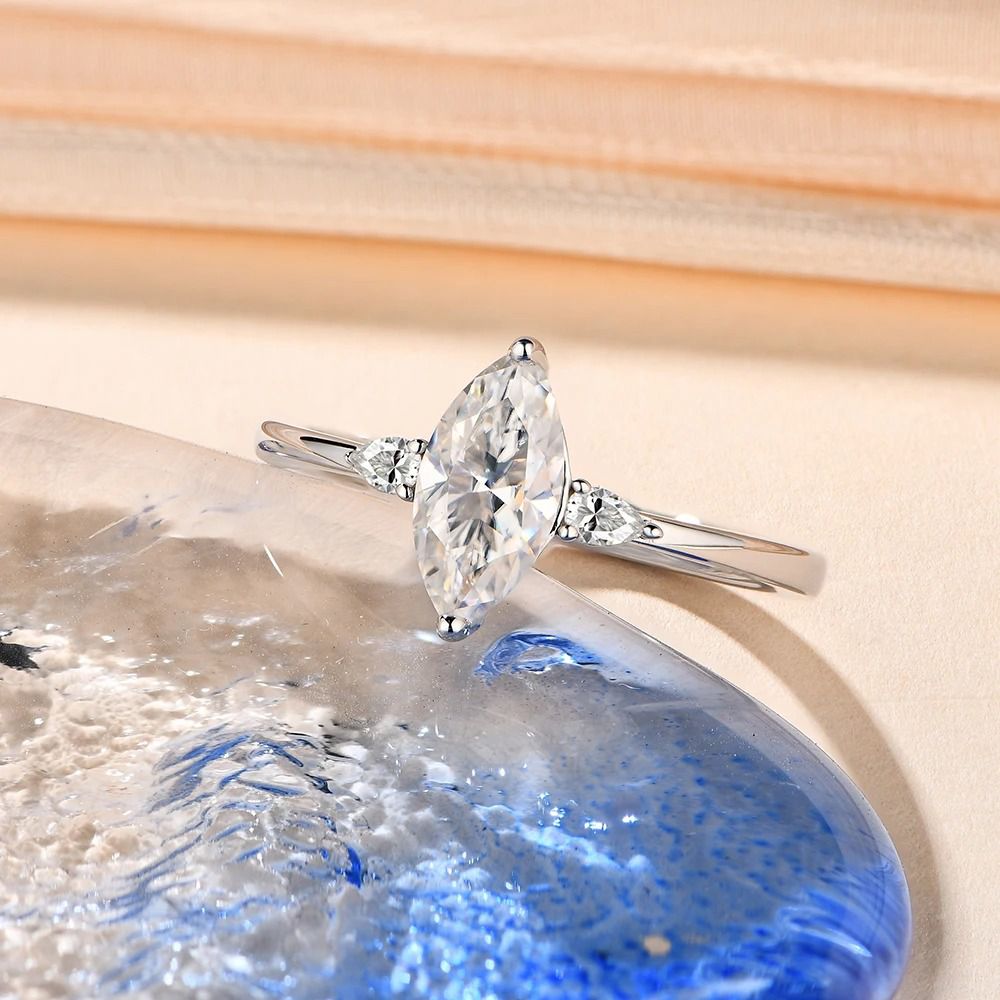
Nobody wakes up on the correct morning and hears a bell. People get engaged because two things line up at once: you can imagine the same future, and your practical life is steady enough that planning a wedding does not feel like standing on ice. There is no calendar date that makes a proposal right, yet almost everyone who hesitates is secretly waiting for one. They think if they wait until the relationship is exactly perfect, the decision will become obvious. It never does. What actually helps is a short list of honest signals you can check against, rather than a rule passed down from your grandparents.
This guide is written for people in the UK who are trying to work out whether now is the moment. It ignores the advice about dating for a set number of years, ignores the pressure from parents, and ignores the seasonal theatre of Christmas and Valentine's Day. Instead it looks at the parts of a relationship that genuinely predict a good decision: how you handle money, how you fight, whether you have lived through something hard together, and whether you both actually want marriage in the first place.
The myth of the perfect time
If you have been waiting for certainty, stop. Certainty is not available before a proposal. Marriage is a decision you make with incomplete information, and anyone who tells you they were 100% sure is either lying or romanticising later. What you can have instead is good enough: a person you respect, a relationship that recovers from arguments, and a shared sense of what the next five years should look like. When those three things are present, waiting another twelve months rarely improves the odds. It just delays a life you both say you want.
What does change over time is the practical stuff. A ring paid off before the wedding is better than a ring financed for three years. A flat you can both afford is better than a flat you hope to afford. A job you have been in for a year gives a cleaner picture of your income than a job you started last month. So the question is not "are we ready emotionally?" but "is life steady enough that proposing will not add stress we cannot absorb?"
How long should you date before proposing?
The internet has firm answers for this. Two years. Three years. At least a year. They are all approximations dressed up as science. The real variable is not the number of months, it is whether you have seen each other in ordinary conditions and in pressure. Four months of dating in summer, when the weather is good and you are on holiday every other weekend, tells you less than four months of winter when one of you is ill, the boiler broke, and neither of you slept.
A useful rough benchmark for British couples is this: by the time you propose, you should have lived together, or at least spent extended stretches of ordinary life under the same roof. You should have had a real argument and repaired it. You should have talked about money, about where you want to live, about whether you want children and roughly when. If those conversations have not happened, you are not late - you are simply not ready, and that has nothing to do with the calendar.
The 30-date rule is a starting line, not a finish
Some advisers suggest you should have lived together for a year before deciding to marry. That is a reasonable starting line for many couples, especially young ones who have never shared a household with a partner. Living together exposes habits you will never see on a Saturday night. It shows how someone loads the dishwasher, how they behave after a bad day, whether they text when they are running late. If you have not lived together, a proposal can still work, but you are choosing to learn those habits at the same moment you are promising forever.
The signals that say now is right
When people describe why they proposed, the reasons are almost never dramatic. They are small accumulations. You know the person is the one when you would rather tell them your bad news than tell anyone else. When a boring Tuesday night with them is better than a big night out without them. When you automatically include them in plans that are five years away and it does not feel like an assumption, it feels obvious.
Practically, the signals most people recognise are these:
- You have both said, in ordinary conversation, that you want to get married one day. Not necessarily to each other first, but that marriage is something you want at all.
- You have survived something hard together - bereavement, redundancy, a move, illness, a family crisis - and you came out closer rather than apart.
- You can disagree about something important - money, religion, where to live - and neither of you treats the disagreement as a threat to the relationship.
- Your life is financially steady enough that a ring and a wedding will not leave you carrying debt through the first year of marriage.
- You are not proposing to fix the relationship, to stop a wanderer leaving, or to mark an anniversary that is coming up too fast.
That last point deserves a paragraph of its own. If you are considering a proposal because things feel rocky, because you are afraid they will leave, or because a big birthday is coming, do not propose. A ring does not repair a shaky foundation. It only locks you both onto it.
The signals that say wait
Equally useful is knowing when to pause. A lot of people propose at exactly the wrong moment because they are emotionally flooded. You have been together three years, you are on holiday in Portugal, the sun is setting, and the moment feels cinematic. That is not a signal. That is a postcard.
Genuine wait signals include the following:
- You have never talked openly about children. Not "do you want them" - that is easy - but "how many, when, who raises them, what if it is hard".
- One of you is being pressured by family, and the other one is quieter than they should be. If your mother keeps asking when, and you feel you ought to have an answer soon, that is not a reason.
- You have not lived together and neither of you has ever shared a long-term household with anyone. The adjustment is real.
- The relationship is mostly good at the weekends and mostly tense during the week. You are choosing the weekend version.
- You are proposing because leaving feels harder than staying. That is comfort, not commitment.
Money, the quietest reason of all
British couples rarely list money as their reason for waiting, but it quietly shapes most decisions. You do not need to be wealthy to get engaged, and the old rule about spending three months' salary on a ring is marketing invented by a diamond cartel a century ago. What you do need is enough stability that the engagement period is not a year of panic about paying for the wedding.
A sensible approach is to decide, before the proposal, roughly what the ring will cost and roughly what the wedding will cost. You do not need a venue booked. You need a ballpark. If the ballpark is frightening, you have two options: wait until savings grow, or decide on a smaller wedding. What you should not do is propose, hand over a deposit on a credit card, and work it out later. That first year of marriage is hard enough without a finance agreement hanging over it.
If you are buying a ring on finance, read the finance guide in this section before you commit. Interest-free credit is fine when it is interest-free and actually paid off in time. Interest-bearing debt, or a buy-now-pay-later plan you cannot comfortably clear, is a bad way to start.
Seasonal timing in the UK
Season matters in Britain for practical reasons rather than romantic ones. Christmas and Valentine's Day are busy in jewellers, which means less attention, slower custom work, and rings that cost the same with less choice. Summer proposals outnumber winter ones because people are outdoors and the light is better. But the best time to propose is whenever you have the ring in hand and the right moment appears - not the other way round.
A practical note: if you want a custom ring or a specific stone, allow six to eight weeks in the UK for commission work, and more around Christmas. Ordering a ring in mid-December for a Christmas Eve proposal is a classic way to end up with the shop's off-the-shelf rush job. Plan backwards from the date you have in mind, not forwards from today.
Should you tell anyone before you propose?
Asking a father's permission used to be the expected step, and some families still value it. In modern Britain it is more often a courtesy conversation with both sets of parents, or with a close friend who can help. What matters is that the person helping you - if you ask anyone at all - is discreet. There is nothing worse than a proposal spoiled because three people already knew and one of them mentioned it over dinner.
If you are buying a ring as a surprise, involve exactly one person. Maybe a sister, a best friend, or a jeweller you trust. Tell them clearly: do not mention it. People often overestimate their ability to keep a secret when they are excited. Choose someone who has a track record.
What if you are not on the same timetable?
One of the most honest conversations you can have before proposing is whether both of you actually want to be engaged now. It is surprisingly common for one person to be ready and the other to need another year, and the way that surfaces is usually indirect: one of you starts dropping hints about venues, rings, or next summer, while the other changes the subject. That mismatch is not a dealbreaker, but it is information. If you propose before the other person is ready, you put them in the position of accepting a surprise they did not ask for, which is a strange way to start.
A useful move is to have an unromantic conversation before any ring is bought. Not a proposal, just a frank chat. Ask where they see the relationship in two years. Ask what would make them feel ready. Listen more than you talk. If their answer lines up with yours, the proposal later will land on ground that is already prepared. If it does not, you have saved yourself a very awkward evening and gained a clear picture of what to wait for. People change their minds about marriage all the time, and the people who do best are the ones who talked it through rather than guessed.
Why the engagement length matters
Once the timing is right, how long you stay engaged before the wedding is a separate decision. In the UK the average engagement runs around a year to eighteen months, and that length works for most couples because it gives enough time to book a venue, save a bit more, and plan without panic. Shorter engagements - three months - suit people who are organised, have small budgets, or want to get on with it. Longer engagements - two years or more - suit people who need to save heavily, or who are waiting for life circumstances such as a visa, a house purchase, or a career move.
The trap with a long engagement is drift. A two-year engagement is fine if you are deliberately using the time, but it can also become a way of avoiding the decision. If you have been engaged for three years and the wedding still feels abstract, ask yourselves why. The ring was never meant to be the finish line. It was meant to start the next chapter.
The proposal itself, briefly
Once timing is settled, the proposal should match the two of you. If you are a private person, a packed restaurant is not romantic, it is torture. If she loves a crowd, a quiet night in may feel small. There is no correct way to propose. There is only the way that feels like you. And the ring should be the ring she will wear every day for the next fifty years, not the ring that photographs best on one knee.
A short checklist before you ask
Run through this on a quiet evening before you buy anything. If most of these are true, the timing is probably as good as it will ever be.
- You both want marriage, not just a wedding day.
- You have lived through something hard together and stayed close.
- You have talked about money, children and where you will live.
- The ring and wedding are affordable without stressful debt.
- You are not proposing to fix, hurry, impress or escape.
- You are choosing this person on a normal Tuesday, not only on a perfect holiday.
If that list mostly checks out, the delay you are feeling is not timing. It is nerves. Nerves before a proposal are normal. They are not information about whether the decision is right. They are just your body taking the decision seriously. Buy the ring, plan the moment that fits you both, and ask. The right time is not a month on the calendar. It is two people, steady in each other, deciding to stop waiting for permission.