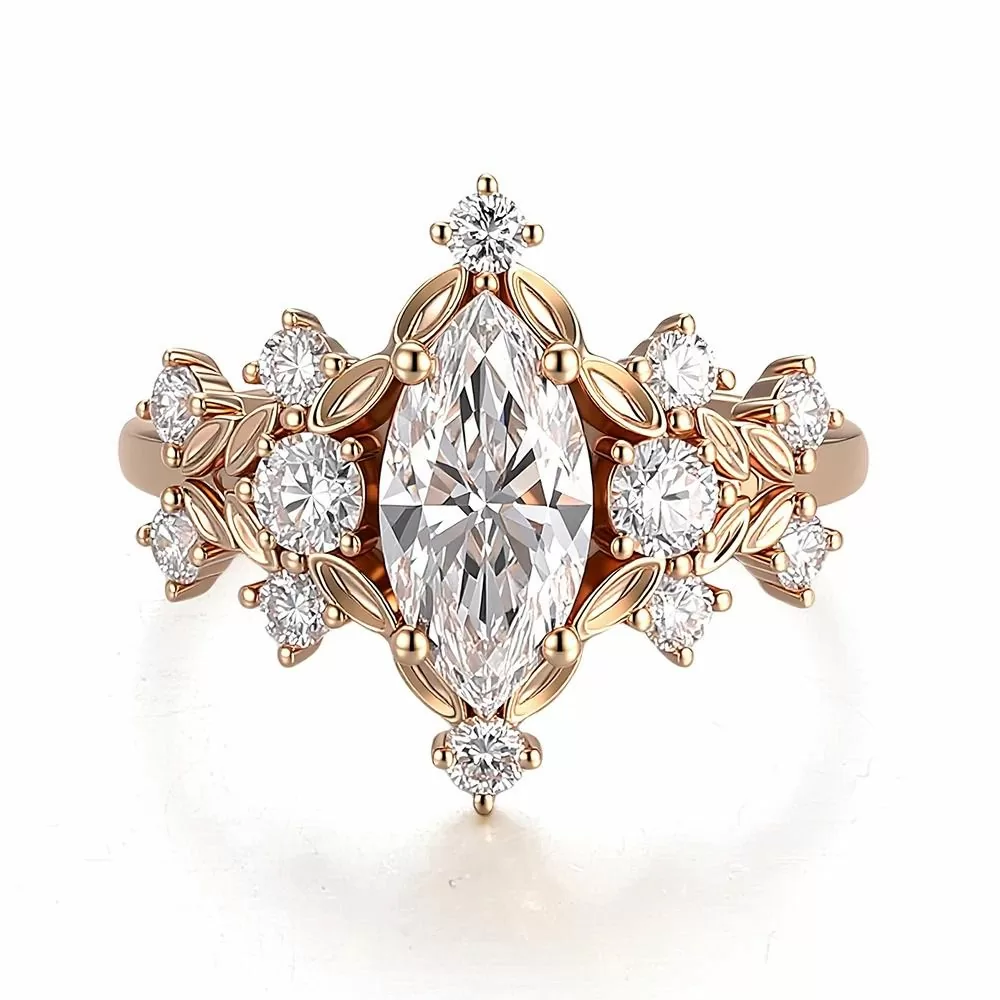
A plain gold or platinum band is the default because it is almost indestructible. But a growing number of couples choose a wedding band set with small coloured gemstones — sapphires, rubies, emeralds, sometimes garnets, aquamarines or morganite. The look is personal, often tied to a birthstone or a favourite colour, and it can be stunning next to a plain engagement ring. The catch is that not every coloured gem is as suitable for daily wear as a diamond. The choice comes down to two numbers: hardness and toughness.
Hardness vs toughness
Hardness is a gem's resistance to scratching, measured on the Mohs scale. Diamond is 10, corundum (sapphire and ruby) is 9, topaz and aquamarine are 7.5 to 8, emerald is 7.5 to 8, and morganite is 7.5. Anything below 7 will slowly develop a scratched surface against everyday dust, which itself contains quartz at 7 on the Mohs scale.
Toughness is a different thing. It is the gem's resistance to breaking or chipping. Emerald is famously tough on hardness but fragile in toughness: it contains natural fissures and can crack if knocked. Sapphire and ruby are both hard and tough, which is why they are the safest coloured-gem choice for a wedding band. Our article on moissanite vs white sapphire touches on corundum's durability in more detail.
Sapphire bands
Sapphires are the most popular coloured gemstone for wedding bands, and with good reason. At 9 on the Mohs scale and excellent toughness, they survive decades of hand washing, typing and knocking against desks. Blue sapphire is the classic, but sapphires come in pink, yellow, padparadscha orange and even white. A half-eternity band set with small channel-set blue sapphires looks elegant next to almost any engagement ring. For context on how eternity bands are built, see the eternity band guide.
Ruby bands
Ruby is the red variety of corundum, with the same hardness and toughness as sapphire. Rubies tend to be more expensive per carat than sapphires, and small rubies in a band are usually included or slightly purplish. They make a bold, romantic band and pair beautifully with rose gold. Because rubies are often heat-treated, ask about treatment and get it in writing; untreated rubies are rare and command a premium.
Emerald bands
Emeralds are beautiful but are the high-risk choice for a wedding band. Their natural fissures mean they can chip or crack on impact, and they are more sensitive to sudden temperature changes. An emerald band is fine if you work at a desk and take the ring off for exercise, but it is not the right choice for a tradesperson, a gardener, or a parent of small children. If you love green, consider an emerald-cut sapphire as a much tougher alternative.
Other gemstones to consider
Aquamarine, morganite and pink tourmaline sit at 7.5 to 8 on the Mohs scale. They will scratch slowly over years of wear and are best chosen for a band that is worn occasionally rather than every day. Garnet at 6.5 to 7.5 is closer to the line; it works for a right-hand stack ring more than a daily wedding band. Opal, at 5.5 to 6.5, is beautiful but too soft and too sensitive to temperature for a wedding band.
Setting matters
The setting for a coloured-gem band is even more important than for a diamond band. Bezel settings, where a rim of metal wraps around the gem, are the most protective and are the default for coloured stones in vintage-style bands. Channel settings, where stones sit between two rails, work well for sapphires and rubies. Prong settings look pretty but leave the corners of the stone exposed, and a corner chip on an emerald or sapphire is hard to repair. Our setting styles guide compares the options in more detail.
Care for a coloured-gem band
Warm soapy water and a soft brush is the safe cleaning method for almost all coloured gems. Skip ultrasonic cleaners for emeralds, opals and any treated stone, because the vibrations can open fissures. Take the ring off before swimming in chlorinated water — see our piece on chlorine and hot tubs. And have the stones checked every year, because coloured gems are sometimes set with slightly thinner prongs than diamonds and can loosen over time.
The bottom line
A coloured-gem wedding band is a lovely way to add personal colour, but pick the gem to match your lifestyle. Sapphires and rubies are the safe, daily-wear choices. Emeralds are beautiful but fragile. Aquamarine and morganite scratch more easily. Whichever you choose, choose a bezel or channel setting, and plan on an annual prong check. Done right, a coloured band is a piece you will love for decades, and one that quietly tells your own story every time you look at your hand.
The International Gem Society moissanite guide explains how moissanite performs in daily wear compared with diamond.
Authoritative References
For buyers who need to verify the technical and regulatory basis of this guide, the following independent institutions publish authoritative reference data:
- GIA Gem Encyclopedia - independent grading and identification reference for natural and lab-grown gems.
- Wikipedia: Moissanite - peer-reviewed background on moissanite chemistry, optics and history.
Related Reading
- Gold vs Platinum Weight: The Density Numbers Buyers Ask About
- Everyday Rings: Which Metal Lasts the Longest
- Platinum vs Sterling Silver Wears
Frequently Asked Questions
What ring sizes can you supply in bulk?
US sizes 5–12 including half sizes. Send a size breakdown with your order and we cast to that curve; comfort-fit inner bands reduce resize requests.
Can I order a mixed size run instead of one size?
Yes. Mixed runs are standard for wholesale: specify quantity per size and we pack and label by size at no extra labor cost.
What is the MOQ for custom ring designs?
50 pieces per design for existing molds; 100–300 pieces when a new mold or CAD model is required.
How should I price rings for retail margin?
Most partners use a 3–4x markup on FOB cost for sterling and 2.5–3x for moissanite solos, which keeps landed cost under 30% of retail.


