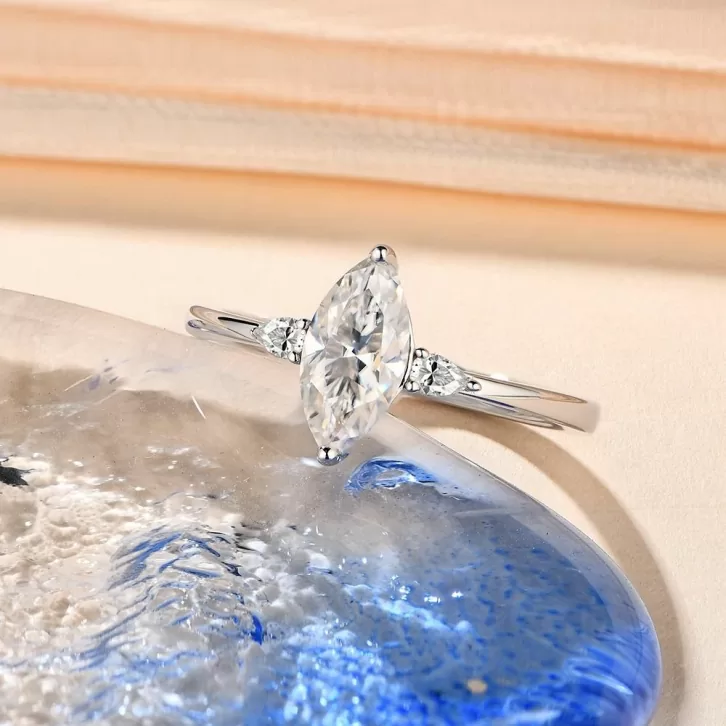
The solitaire is the setting everyone pictures when they hear "engagement ring": one center stone, a band, and nothing else competing for attention. That simplicity is exactly why it has stayed popular for a century—it lets the stone speak. But "solitaire" is a broader category than it looks. Once you start designing or shopping, small choices about how the stone is held completely change the ring's silhouette, security, and even how large the center appears.
What actually defines a solitaire
A solitaire has a single center stone with no side diamonds, halo, or accent stones. That is the whole definition. Everything else—the number of prongs, the shape of the head, the way the band meets the setting—is where the style is decided. Because there are no accents to hide behind, the quality of the cut and the craftsmanship of the setting matter even more. Our setting styles guide gives the wider map; here we focus on the solo look.
Four prongs or six?
The most visible choice is prong count. A four-prong head shows more of the stone, lets in more light, and makes a round or oval center look larger. The trade-off is slightly less coverage, so the tips catch on things and each prong carries more of the stone's security. A six-prong head covers a little more of the stone but holds it more securely and spreads wear across more points. Six prongs are often preferred for taller, sharper shapes like pear or marquise, and for anyone worried about a loose stone. Two prongs are purely decorative and rare on serious rings.
The head and basket shapes
Beyond prong count, the head design changes the profile. A cathedral setting lifts the center stone on arched shoulders, adding height and drama and letting light under the stone. A trellis uses crossed supports for an open, airy look. A basket setting cages the pavilion with a grid of metal, which protects the girdle and sits lower. A bezel solitaire wraps the stone in a rim of metal rather than prongs—the most secure and the most modern, but it covers more of the stone's edge and can mute brilliance slightly.
How the band meets the setting
A plain solitaire band can be thin and delicate, which emphasizes the stone, or thicker and comfort-fit for durability. Tapered bands narrow toward the center to draw the eye inward. Shoulders can be straight, split, or slightly curved. These details sound minor, but they determine how the ring pairs with a wedding band—see comfort-fit band matching—and how the whole ring feels on the finger day to day.
Why the solitaire endures
How metal and color shift the look
The solitaire's simplicity makes every other choice louder. In yellow gold, a solitaire reads warm and vintage, and a slightly lower color grade can blend in gracefully. In platinum or white gold, the same setting pushes the stone to look cooler and whiter, which is why many buyers pair a white-metal solitaire with a higher color grade. In rose gold, a solitaire feels soft and modern. Because there are no side stones to distract, the metal choice is doing real styling work, not just framing the gem. See wedding ring metal options for how each metal ages.
Upgrading and restyling later
One quiet advantage of the solitaire is how easy it is to change later. If you want a halo or side stones in ten years, a jeweler can build around the existing center rather than replacing the whole ring. The band can be re-proportioned, the stone can be re-set into a new head, and the original center stays put. That flexibility is why solitaire rings are often described as "forever" settings—they are a base you can build on, not a finished statement you are locked into. For someone who likes the idea of a ring that evolves with the marriage, the solitaire is the most practical starting point on the market: it costs less to buy, less to maintain, and less to restyle, while keeping the single most important element front and center.
A solitaire is easy to clean, easy to resize, and easy to upgrade later without redesigning a complicated setting. It photographs beautifully, works with every metal from platinum to white gold, and never reads as dated. The trade-off is that it is less forgiving of a mediocre center stone: with no accents to distract, the cut and color of the solo gem carry the whole ring. Choose the best-cut stone your budget allows, pick a head style that matches your lifestyle, and the "simple" solitaire will quietly outlast trendier settings. Once you narrow it to a head style and a band width, the "simple" solitaire is surprisingly personal, and the variations are what make one solitaire look modern and another look classic on the same finger. That longevity, more than any single design choice, is why the solitaire never really goes out of style.
The Wikipedia entry on engagement rings gives an independent overview of engagement ring traditions and settings.
Related Reading
- HPHT vs CVD Lab-Grown Diamonds: The Basics Buyers Ask
- When Your Ring Size Changes: Day to Day, Season to Season
- How Lab-Grown Diamonds Are Priced
Frequently Asked Questions
What ring sizes can you supply in bulk?
US sizes 5–12 including half sizes. Send a size breakdown with your order and we cast to that curve; comfort-fit inner bands reduce resize requests.
Can I order a mixed size run instead of one size?
Yes. Mixed runs are standard for wholesale: specify quantity per size and we pack and label by size at no extra labor cost.
What is the MOQ for custom ring designs?
50 pieces per design for existing molds; 100–300 pieces when a new mold or CAD model is required.
How should I price rings for retail margin?
Most partners use a 3–4x markup on FOB cost for sterling and 2.5–3x for moissanite solos, which keeps landed cost under 30% of retail.


