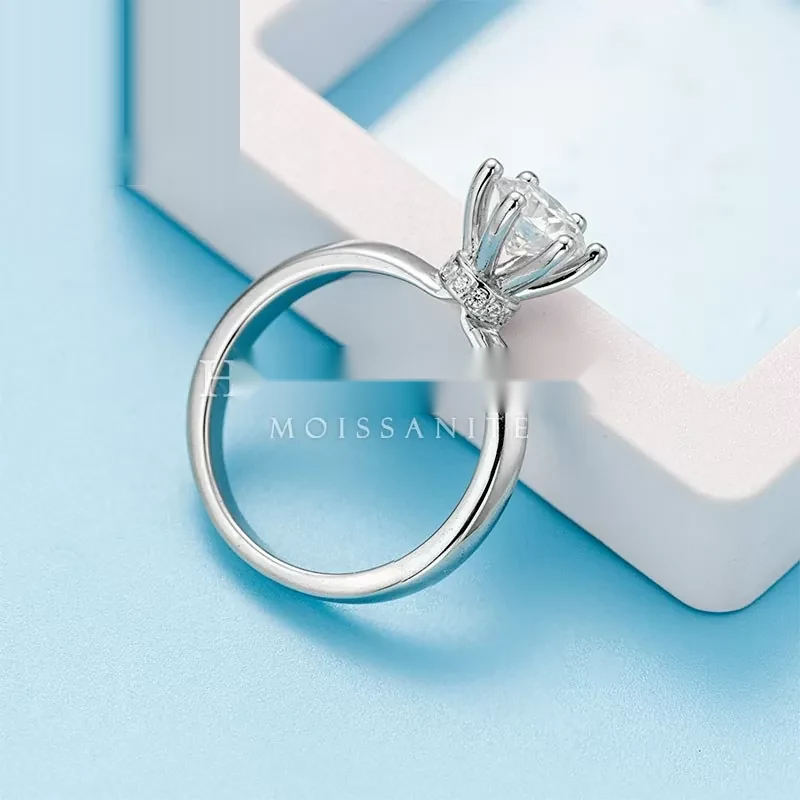
A quote arrived at 18.40 USD per ring. The approved budget was 14.00. Nothing on the sheet was obviously wrong, because the sheet only had one line: "moissanite ring, 925 silver, 1 ct, 18 pcs". Six weeks later the invoice closed at 19.10 after plating, polishing and a stone upgrade were added as separate items.
The problem was not dishonesty. It was a quote that had been compressed until the cost drivers disappeared. A comparable quote exposes six cost blocks, and each block needs a number, a unit and a tolerance before two suppliers can be judged against each other.
The six blocks on every ring quote
Every piece of jewelry carries the same six cost families. What changes between factories is which blocks are shown and which are folded into a single blended figure.
| Block | What it covers | Unit | Typical share |
|---|---|---|---|
| Metal | Silver or gold weight plus loss allowance | per gram | 25-40% |
| Stone | Centre and melee at a named grade | per carat or per piece | 20-45% |
| Labour | Casting clean-up, setting, assembly | per piece by tier | 15-25% |
| Finish | Polishing, plating, antiquing | per piece or per batch | 5-12% |
| QC and packing | Inspection, tagging, pouches, boxes | per piece | 3-8% |
| Tooling | CAD, mould, master model | one-time | varies |
A quote with all six blocks can be compared line by line. A quote with one line can only be compared on the total, which is exactly where buyers get caught.
Block one: metal weight is the quiet variable
Silver at 925 is quoted by weight, and weight is a design decision as much as a cost decision. A 2 mm band and a 2.6 mm band can differ by 1.8 g on the same ring size, which at a silver price of roughly 0.9 to 1.1 USD per gram in factory terms becomes a visible line.
Ask for the target weight per size, not one figure for the style. Fingers from size 5 to size 9 change the shank length and therefore the metal consumed. A supplier quoting a single weight is either averaging, which hides the real cost at larger sizes, or guessing.
The loss allowance
Casting, filing and polishing remove metal. A normal allowance is 8 to 12 percent on silver and slightly higher on intricate galleries. It should appear as a stated percentage, not as a mysterious extra gram count on the invoice.
Hollow versus solid
Hollow shanks cut metal weight by 25 to 35 percent but change the feel and the repair profile. If the quote is unusually low for the design, check whether the construction is hollow before celebrating the price.
Block two: the stone grade name matters more than the carat
Moissanite is priced by size, colour grade, clarity and cut quality. Two stones both described as "1 ct D colour VVS" can differ by a factor of two if one is a precision cut with an ideal proportion set and the other is a commercial cut.
Require the quote to name the grade in the same vocabulary your certificate uses, and to state the tolerance. "D to F colour, VVS to VS clarity, excellent cut" is a specification. "Top quality" is not.
Melee stones are priced separately
Small stones under 2 mm are usually bought in parcels by sieve size and are priced per carat with a sorting loss built in. A halo with 40 melee stones can carry more stone cost than the centre stone on a low-carat piece, and buyers routinely miss this because the melee line is folded into labour.
Certificate cost
A GRA card is a few tenths of a dollar. A full IGI report on a lab-grown diamond is a different order of magnitude. Decide which stones need a report, because certifying every melee stone is a cost with no retail return.
Block three: labour priced by complexity tier
Setting time is the hardest block to price honestly, so most factories publish tiers. A practical tier structure looks like this.
- Tier 1: single stone, four to six prongs, plain shank
- Tier 2: three-stone or side-stone accents, channel or bezel work
- Tier 3: halo or double halo, 30 or more melee stones
- Tier 4: invisible set, fancy shapes, articulated components
Ask which tier your design falls into and what the per-piece labour figure is. A quote that blends labour into the total hides whether you are paying tier 2 rates for tier 1 work.
Assembly and chain work
Pendants, bracelets and necklaces add clasp, jump ring and soldering labour that rings do not carry. Price those as their own line, because a clasp upgrade can add more cost than the pendant casting.
Block four: finish and plating
Polishing is usually included and should be stated as included. Plating is where quotes diverge most sharply, because rhodium, palladium and gold plating are priced by thickness and by bath chemistry.
A 0.1 micron rhodium layer and a 0.5 micron layer look identical on the day of dispatch and behave completely differently after three months of wear. Ask for the micron figure and the test method. If the supplier cannot give a number, the claim is decorative.
Two-tone and masking
Two-tone pieces require masking labour, which is manual and therefore expensive per piece. Expect a 15 to 25 percent labour uplift on two-tone designs and confirm that the masking is done before, not after, the final polish.
Block five: QC, tagging and packaging
This block is small per piece and large per order. A poly bag, a jewellery pouch, a branded box, a barcode tag and a certificate card can add 0.30 to 1.50 USD per piece depending on specification.
Define the packaging in the purchase order. Suppliers that choose packaging on your behalf usually choose the cheapest option that survives shipping, which is rarely the option a retail brand wants.
Block six: tooling and the one-time costs
CAD modelling, master model printing, mould cutting and sample photography are one-time costs tied to a design, not to a unit. They should be quoted once, with a clear statement about who owns the files and whether the mould is reused for repeat orders.
On a 50-piece order a 120 USD tooling charge adds 2.40 USD per piece. On a 500-piece order it adds 0.24 USD. This is why unit price falls with volume even when nothing about the process changes.
How to compare two quotes properly
Put both quotes into the same six-block table, then normalise the units. The comparison usually reveals that the cheaper total is cheaper for a reason that matters, or that the expensive quote includes work the cheap one will bill later.
| Check | What to confirm |
|---|---|
| Metal basis | Weight per size, loss percentage, metal price date |
| Stone basis | Named grade, tolerance range, certificate type |
| Labour | Complexity tier, per-piece figure, assembly included |
| Finish | Polishing included, plating micron, masking cost |
| Packing | Itemised per piece, barcode and tag included |
| Terms | MOQ, lead time, deposit, balance, Incoterm |
Any quote that cannot fill these six rows is not yet a quote. It is an estimate waiting to become an invoice.
What our own figures look like
For context, the terms we publish for first-time buyers: a 50-piece minimum per design, negotiable on mixed-style orders; three to five days for stock samples and fifteen to twenty days for bulk under 500 pieces; tiered pricing where the per-piece rate drops at 200 and again at 500 pieces; and a 30 percent deposit with the balance before shipment, settled by T/T, PayPal or Western Union.
Those numbers are not the lowest on the market. They are the numbers we can hold when a lot runs long or a stone grade needs replacing, which is the part that does not appear on a one-line quote.
Frequently Asked Questions
Is moissanite cheaper than lab-grown diamond at the same size?
Yes at almost every size, and the gap widens above 1 ct. The stone block is where the difference appears, while metal and labour remain broadly similar for the same design.
Can I get a fixed unit price for a year?
Only with a metal price mechanism. Silver and gold move, so a fixed price either carries a buffer or gets renegotiated. A quote that fixes the labour and stone blocks and floats metal against a published index is usually more honest.
Why does my 500-piece price differ from the 50-piece price by more than the tooling?
Because material buying, casting batch size and QC sampling all improve with volume. The tooling amortisation is the visible part; the purchasing and setup gains are the larger part.
Do you charge for CAD?
A first CAD revision is included with a design brief. Additional concept directions or major revisions after approval carry a small modelling fee, stated before the work starts.
Next step
Send a reference image, a target metal weight and a stone grade. You will receive a quote with the six blocks separated, a tolerance on each, and the tier your design falls into. Start with our quotation desk, or read the buying guide index for the specification side of the same decision.


