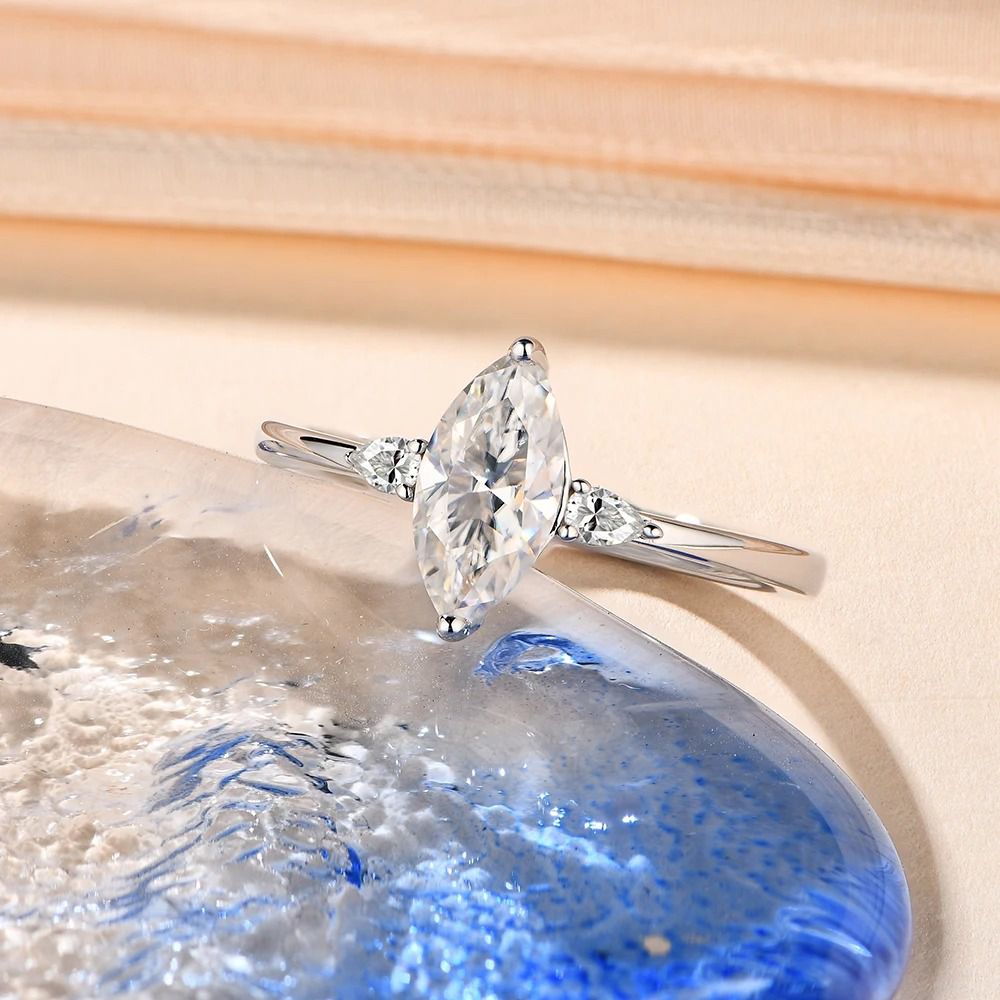
Buying a diamond online feels like a leap, and it is — but it is the leap that, done properly, saves most people 25–35% on the same graded stone. The savings are real. The risks are also real, and they cluster around a few predictable mistakes. This is the process that independent gemmologists use when they buy stones for themselves.
Verify the certificate before you pay
A GIA or AGS certificate number is public. Before you buy, look up the number on the laboratory's own website and confirm the carat, colour, clarity and measurements match the listing. If the seller cannot give you a certificate number, or the number does not come up on the lab's site, stop. This single step filters out the majority of online problems in under five minutes.
What to ask for in writing
- A high-resolution daylight video of the exact stone you are buying, not a generic stock shot.
- The certificate number, verifiable on the lab's website.
- A stated returns window of at least 14 days, no restocking fee.
- Confirmation that VAT is included and UK delivery is insured in transit.
- The option to see the stone loose, or to have it independently appraised before setting.
The price sanity check
Open two or three online sellers and search for stones with the same four grades. The prices should cluster within about 10–15%. If one listing is 40% cheaper than everyone else for an 'identical' stone, something is off — a looser certificate (IGI graded more generously than GIA), a treated stone, or a poor cut that the grades do not capture. Cheap rough diamonds are cheap for a reason.
| Online seller type | Typical saving vs high street | Best for |
|---|---|---|
| Established UK online cutter | 20–30% | Most buyers, good service |
| US lab-grown vendor, shipped to UK | 30–45% | Lab-grown, check import/VAT |
| Marketplace listing, no certificate | 50%+ | Avoid unless you are expert |
| Branded house online store | 5–10% | You already want the brand |
The returns window is your safety net
Paying safely and the VAT question
Pay by credit card for anything over £100, where Section 75 gives you joint liability with the card issuer. That protection is worth more than any loyalty discount. On imported stones — particularly from US lab-grown vendors — check whether the price includes UK VAT and customs handling. A stone that looks 30% cheaper from a US site can arrive with a 20% VAT bill and a handling charge, which narrows the gap fast. Ask, in writing, whether delivery to the UK is DDP — delivered duty paid, with everything included — before you order.
The sensible hybrid
You do not have to choose between fully online and fully in person. A workable middle path is to choose the setting and sizing at a local independent jeweller — where you can try metals and widths — and buy the loose diamond from an online cutter, then have the local jeweller set it for a £100–£200 making fee. You get the online price on the stone and the in-person service on the setting. Most independents are happy to do this, because they are paid for the making they actually do.
The first month after delivery
Once the ring arrives, wear it around the house for a week before the proposal. You are checking that the size is right, that the setting is comfortable, and that no claw catches on clothing. This is also the moment to photograph the ring in good light for the insurance schedule. If anything feels wrong — a loose stone, a sharp edge, a size that spins — you are still inside the returns window and can act. People who hide the ring in a drawer until the big day lose the chance to catch these problems before they become a proposal-day worry.
The online route is not for everyone. If you would rather see and feel the ring before you pay, that is a reasonable preference — it just costs the 25% premium. Buy online only when the seller can show you the exact stone, verifies the certificate, and offers a written returns window. Without those three, the 'online saving' is not a saving at all — it is a discount you cannot verify. Done properly, though, buying online in the UK is safe, legal and genuinely cheaper, and thousands of engagement rings are bought that way every year.
When the ring arrives, take it to an independent jeweller for five minutes with a loupe. Ask them to confirm the stone matches the certificate. If it does not, return it within the window. Reputable online sellers build this step into their process and will not object; sellers who pressure you to decide fast before the window closes are telling you what you need to know. For the broader picture before you compare prices, read our engagement ring buying guide.
The Gemological Institute of America’s gem encyclopedia is an authoritative, widely cited reference on moissanite and diamond quality factors.
Related Reading
- HPHT vs CVD Lab-Grown Diamonds: The Basics Buyers Ask
- When Your Ring Size Changes: Day to Day, Season to Season
- How Lab-Grown Diamonds Are Priced
Frequently Asked Questions
Is moissanite a good diamond alternative for retail buyers?
Yes for price-sensitive customers who want brilliance and hardness. Moissanite ranks 9.25 on the Mohs scale, holds up to daily wear and costs a fraction of a natural diamond of the same size, so it resells fast in bridal and fashion lines.
What is the minimum order for wholesale moissanite?
MOQ starts at 50 pieces per design for stock items. Custom cuts and private-label settings usually start at 100–300 pieces depending on the mold.
Do you provide certificates with moissanite stones?
Yes. Every parcel ships with GRA or IGI documentation listing carat weight, color grade and cut. We recommend passing the certificate to your end customer for trust.
How long does sample and bulk production take?
Samples ship in 3–5 days. Bulk runs take 15–20 days under 500 pieces, and 25–30 days for custom work.


