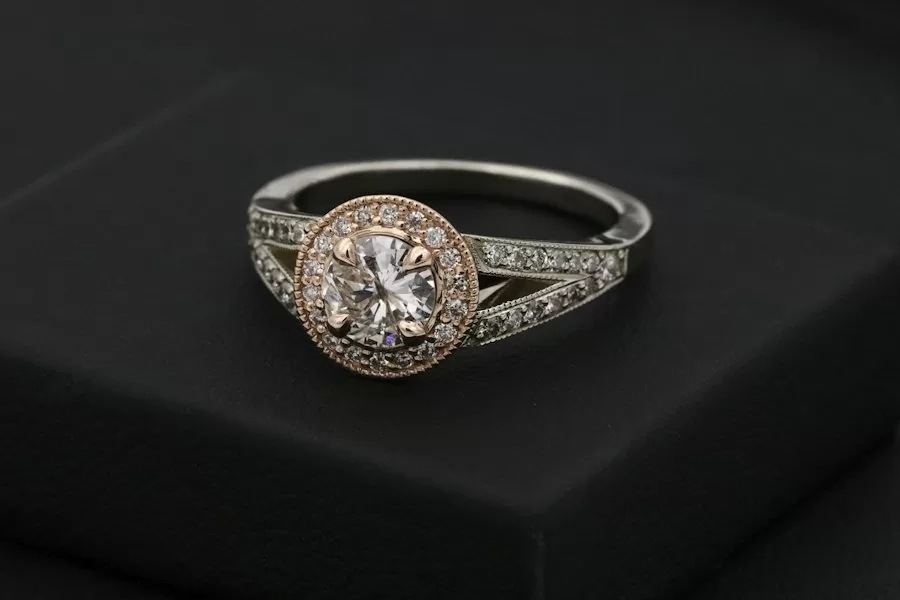
When you choose an engagement ring, the diamond usually gets ninety percent of the attention. The prongs that hold it get maybe ten seconds. That is a mistake. The number and shape of the prongs change how much light enters the stone, how much of the stone you actually see, and how likely you are to outlive the setting without a re-tip. Four prongs and six prongs are the two defaults, and they are not interchangeable.
What prongs actually do
Prongs are the metal claws that grip the girdle of the stone. They have three jobs: hold the diamond securely, let light in through the crown, and keep the stone from rubbing against the band. Every extra prong covers a little more of the girdle and blocks a little light. Every missing prong leans more on the remaining metal. There is no free lunch.
Four prongs: the bright, open look
A four-prong head leaves gaps between the claws, so light enters the pavilion from more angles and more of the stone's edge is visible. On a well-cut round or princess diamond, that translates to a slightly brighter, more open face-up look. The stone also reads a touch larger because less metal covers the outline. Four prongs are the classic choice for solitaire rings, especially on slimmer bands where a bulkier head would look top-heavy.
The trade-off is security. Each prong carries more of the load. If one bends or snaps, the stone is depending on three claws instead of five, and the maths does not stay friendly for long. Four-prong settings also tend to show the diamond's shape more clearly, which is wonderful for ovals, pears, and marquises but unforgiving if the stone is slightly off-round.
Six prongs: the safe, classic look
Six prongs spread the grip around the girdle. The stone feels more locked in, and losing one prong does not immediately threaten the diamond. Six-prong heads are the traditional choice for round brilliants in North America, partly because they echo the symmetry of the stone and partly because jewellers trust them for daily wear. They are also a better pick for people with active hands, nurses, builders, gardeners, and anyone who uses their work tools at the bench.
The cost is visibility. Six claws cover more of the outline, so the stone reads slightly smaller from across the room, and a poorly executed six-prong head can make a round diamond look almost hexagonal. The extra metal also catches hair and lint a little more often.
Which diamond shape suits which
Shape matters more than most buyers expect. Round brilliants take either four or six prongs well. Ovals, pears, and marquises look best in four prongs, because the extra claws on a six-prong head can cover the pointed ends that give those shapes their character. Princess and cushion cuts often benefit from six prongs, since the corners are the chipping weak points and a claw on each corner protects them. Emerald and Asscher cuts, with their open step facets, tend to look cleanest in four or sometimes eight prongs along the rails.
Upkeep and prong wear
Prongs wear down on a timetable, not a date. Years of handwashing, typing, and knocking the ring against counters soften the tips. Six-prong heads spread that wear, so each prong lasts longer. Four-prong heads need to be checked more often, usually every six months. Our guide on checking ring prongs at home walks through the simple wipe-and-tap test you can do in front of a mirror.
Heads you can swap later
A useful detail most buyers miss: the prong head is a separate piece soldered onto the shank. A good jeweller can swap a four-prong head for a six-prong head later, usually for less than the cost of a re-size. If you are torn, buy the head that matches the stone and the way you live, and know the decision is not permanent.
Which should you choose?
If you want maximum sparkle, a clean outline, and you are buying a round or a long fancy shape, lean four prongs. If you want maximum security, you work with your hands, or the stone has soft corners that need guarding, lean six. Either way, ask the jeweller to show you the head up close. The claws should be smooth, tapered, and evenly shaped, never flat or blunt. A setting style overview, like our piece on engagement ring setting styles, helps you compare prong, bezel, and halo options side by side.
A quick checklist before you order
Ask three questions when you buy. First, what shape are the prongs? Round claws are gentle on the girdle; flat or knife-edge claws can chip a stone over years. Second, are the tips rounded and polished? Sharp tips catch on knitwear and wear faster. Third, will the jeweller re-tip the prongs for free or at a fixed price if they wear down in the first few years? A workshop that answers all three without hesitation is a workshop you can trust with the stone.
The history and conventions of engagement rings are outlined in the Wikipedia entry on engagement rings.
Related Reading
- HPHT vs CVD Lab-Grown Diamonds: The Basics Buyers Ask
- When Your Ring Size Changes: Day to Day, Season to Season
- How Lab-Grown Diamonds Are Priced
Frequently Asked Questions
What ring sizes can you supply in bulk?
US sizes 5–12 including half sizes. Send a size breakdown with your order and we cast to that curve; comfort-fit inner bands reduce resize requests.
Can I order a mixed size run instead of one size?
Yes. Mixed runs are standard for wholesale: specify quantity per size and we pack and label by size at no extra labor cost.
What is the MOQ for custom ring designs?
50 pieces per design for existing molds; 100–300 pieces when a new mold or CAD model is required.
How should I price rings for retail margin?
Most partners use a 3–4x markup on FOB cost for sterling and 2.5–3x for moissanite solos, which keeps landed cost under 30% of retail.


