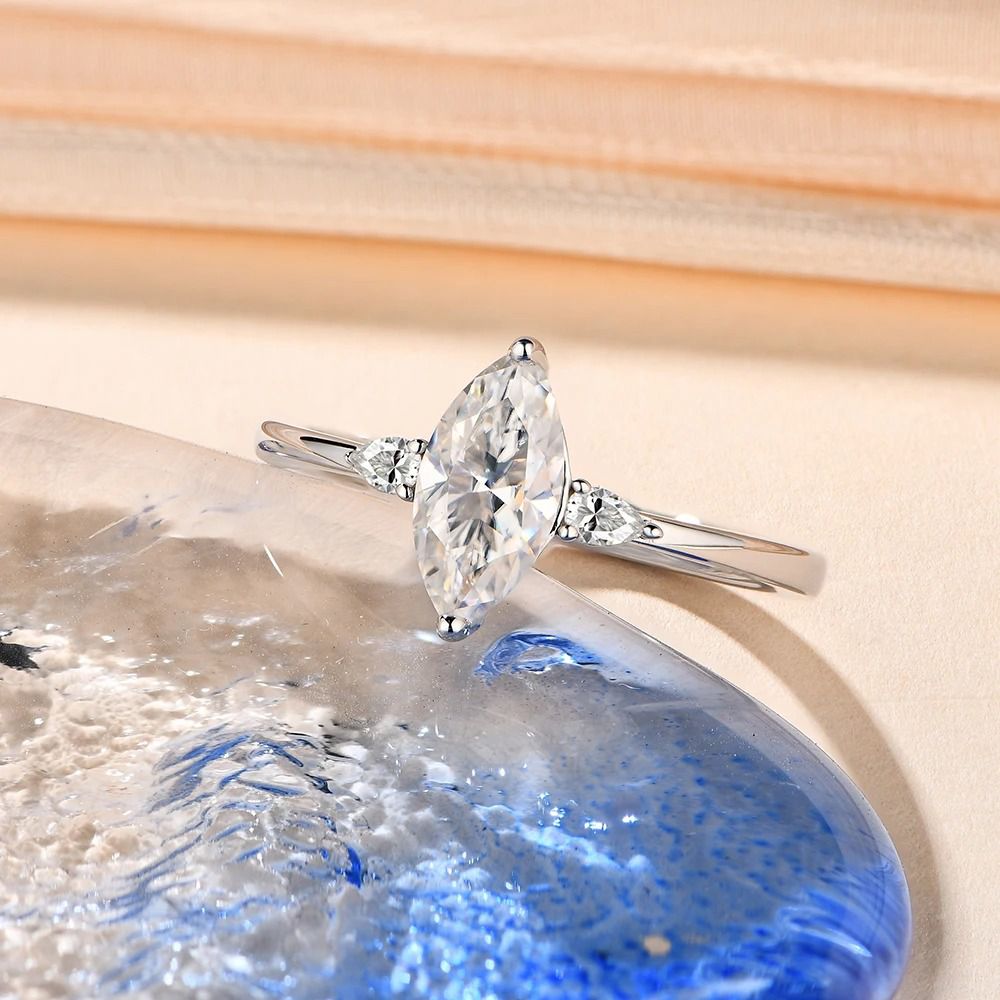
Buying an engagement ring online has gone from a gamble to the default route for most UK and European shoppers, but it only works if you treat the listing page like a spec sheet rather than a mood board. The ring that arrives in the post is decided by the details you check before you pay, not by the product photos. A beautiful render tells you almost nothing about how the ring will sit on a finger three years from now.
This checklist walks through the ten things to confirm on screen: the certificate, the size, the returns window, the setting, the metal, the real size of the stone, honest photos, the warranty, the shipping, and the true total price. Work through them in order before you hand over a deposit.
1. Confirm the stone comes with a recognised certificate
A diamond or moissanite sold online should arrive with a grading report from a lab you can look up independently. For mined or lab-grown diamonds, GIA and IGI are the names to expect; for moissanite, a GRA certificate is the standard on this kind of piece. The report number should match the listing, and you should be able to read the report's actual measurements rather than just a marketing grade. Without a certificate, you are trusting the seller's word on colour and clarity, and that is exactly where online purchases quietly go wrong. If you want to understand what the report actually says, our guide on reading a diamond certificate walks through each field.
2. Know your partner's ring size before you order
The single most common online-ring problem is the size. Ordering the wrong size means a resizing delay after what should be a surprise. Borrow a ring she already wears on the correct finger and measure its inner diameter, or use one of the string-and-ruler tricks in our ring size guide for UK and EU. Most online jewellers offer one free resize, but you do not want to rely on it — the ring should fit on the night you plan it for.
3. Read the returns window, not just the return promise
"Free returns" is not a policy; it is a slogan. Find the actual number of days, check who pays return postage, and confirm whether a personalised, engraved or resized ring is returnable. A 30-day window from delivery that excludes engraved rings is a very different promise from a 60-day window that includes them. If the returns policy is buried in a footer or written vaguely, treat that as a warning rather than a detail.
4. Check the setting actually protects the stone
Product photos show the ring at its absolute best. Look at the close-up shots of the setting: are the prongs rounded and well finished, or thin and sharp? A high, prong-only setting on a stone that will be worn daily will catch on jumpers, handbags and door handles. Our guide to setting styles explains which settings protect the stone and which are purely decorative. For a ring worn every day, six prongs or a bezel hold up far better than four thin claws.

5. Confirm the metal and its hallmarks
"White gold" and "platinum" are not interchangeable, and 9ct gold is not 18ct gold. The listing should state the alloy, the karat and whether the ring is rhodium-plated. White gold yellows over years and needs re-plating; platinum wears down slowly and never needs plating. If you are unsure which metal suits daily wear, start with our wedding rings category, which compares the metals side by side on cost and ageing.
6. Judge the stone's size in millimetres, not carats
A 1-carat round diamond is about 6.5mm across, but a 1-carat oval looks larger because of its cut shape. Moissanite is sold by the millimetre precisely because carat weight misleads the eye. Ask for the actual mm measurements and compare them against a hand photo, not against the carat number. Our moissanite carat versus millimetre guide covers this in detail if you are comparing lab-grown stones across shapes.
7. Look for real hand photos, not just studio renders
Perfectly lit white-background shots hide proportion problems. Real hand photos — even customer-submitted ones — show how big the ring actually looks on a finger, and how it reads in daylight. If the listing only has CGI renders, ask the seller for a video call or a shot of the ring on a real hand. You are buying a ring to be worn, not a 3D model to be admired on a screen.
8. Check the warranty and aftercare in writing
Find out what is covered: a loose prong, a chipped stone, a failed rhodium finish, a worn shank. A seller that offers free prong tightening and a check-up after six months is taking the long view. A seller with no aftercare at all is selling you a box and a promise. Get the warranty terms in an email rather than relying on a chat reply that disappears.
9. Confirm shipping, insurance and signature on delivery
The ring should ship tracked, signed-for and insured to its full retail value. Check the dispatch time too: "ready to ship" versus "made to order in four weeks" changes the proposal timeline completely. For UK and EU buyers, watch for customs and import VAT on orders shipped from outside the customs union — surprise duties turn a headline bargain into a standard-price ring by the time it clears the border.
10. Compare the true total, not the sticker price
The price you see is rarely the price you actually pay. Add VAT, any import duty, return postage if you need it, and the cost of a future resize. A ring that is £20 cheaper but ships from overseas and charges for returns may be the more expensive choice by the time it reaches your finger. Our engagement ring budget guide walks through how to split the budget across the stone, the setting and the metal so you do not overspend on one part at the expense of another.
A quick final check before you click buy
Before you pay, sum up: certificate in hand, size measured, returns in writing, setting inspected, metal confirmed, size in millimetres, real hand photos, warranty understood, shipping insured, total price compared. If all ten are boxed, buying online is not risky — it is just efficient. If three or more are still vague, keep looking. The right ring is still there; the listing that hides these details is not the one to trust.